
In modern cybersecurity, a bypass link refers broadly to any URL or technique that lets attackers circumvent normal security checks, filters, or protections to deliver malicious content or evade detection. Whether it’s a phishing attack that slips through safe link scanners, a crafted URL that evades email gateways, or a security control bypass vulnerability exploited by an attacker, understanding bypass links is a critical skill for security engineers and automated penetration testers.
This article defines bypass links, illustrates real-world attack techniques, explains defensive principles, and highlights detection strategies—all grounded in up-to-date research and factual evidence.
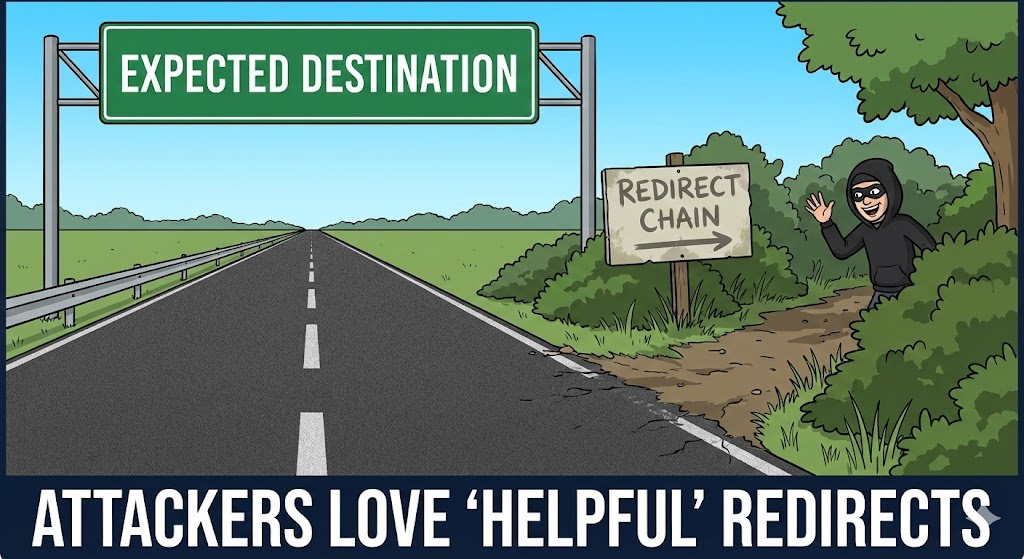
What Is a Bypass Link?
A bypass link is a URL or hyperlink technique crafted to evade detection, filtering, or security controls that normally protect users from malicious content. This can happen in multiple ways:
- A link that evades blacklist filters by using URL shorteners or multiple redirects.
A link that bypasses safe link rewriting used by secure email gateways.
A crafted URL exploit that triggers a parser bug to bypass security protections in an application (e.g., email client or security feature).
Attackers leverage bypass links as part of phishing campaigns, malware delivery, credential harvesting, and evasion of URL scanning systems.
Modern Threats That Use Bypass Link Techniques
URL Wrapping & Rewriting Abuse
Security products like email gateways often rewrite URLs inside messages so they can be scanned on click for threats. However, attackers can exploit this mechanism by embedding malicious destinations behind seemingly legitimate wrapped URLs. The result is that a link appears safe to filters but redirects victims to malicious payloads after the rewrite.
URL Shortening to Evade Detection
URL shorteners are commonly abused to hide the final payload domain. Because security scanners maintain blacklists of known malicious URLs, attackers can generate fresh shortened links that aren’t yet flagged, increasing the chance of bypassing filters.
This technique also allows attackers to chain multiple redirects, making it harder for automated tools to follow and inspect the endpoint.
Parser or Client Security Bypass Exploits
Some bypass link behaviors are grounded in vulnerabilities. For example, in CVE-2020-0696, a parsing bug in Microsoft Outlook allowed an attacker to craft URLs using alternate URI formats that bypassed Outlook’s URL protection, so a malicious link in an email displayed incorrectly and executed when clicked.
This kind of exploit demonstrates how attackers can craft links that bypass application-level protections due to logic or parsing flaws.
Security Risks of Bypass Links
Bypass links present several threats:
| Risk Category | Example | Impact |
|---|---|---|
| Phishing & Credential Theft | Malicious link disguised via shortening | Users submit credentials to fake sites |
| Malware Delivery | Link bypasses URL filters to download payload | Endpoint compromise |
| Security Control Evasion | Exploit bypasses URL scanning feature | Malicious content reaches network |
| Reputation Abuse | Legitimate service URLs used as redirection hosts | Increased attack success |
Attackers increasingly combine bypass techniques—redirects, obfuscation, timing-based delivery, and conditional routing—to slip through even advanced defenses like AI-powered scanning.
How Attackers Obfuscate Links
Security teams should understand how obfuscation facilitates link bypass. Common tactics include:
URL Shortening
Attackers use services like Bitly, TinyURL, and others to mask the actual destination. Because shorteners aren’t inherently malicious, security tools may not flag them by default.
Multi-Layer Redirect Chains
A sequence of redirects may confuse scanners. Each hop can be on a benign domain before finally leading to a malicious landing page.
Conditional Redirects for Scanners
Some attackers deliver clean content to scanners or bots but malicious content to real users based on user agent, geographic location, or timing.
These obfuscations often work together, making automated detection difficult without deep analysis.
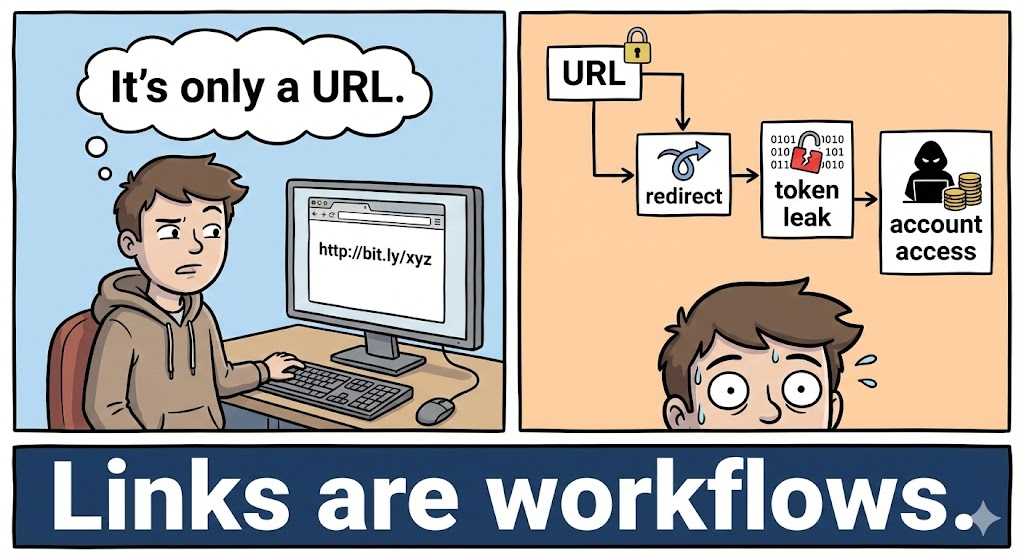
Real-World Example: Email Gateway Bypass
Email security gateways rewrite and inspect links to protect users. For example:
- A user receives an email with a link.
- The security gateway rewrites the link to a safe scan URL.
- On click, the gateway scans and either allows or blocks the destination.
But attackers can bypass this by embedding already rewritten or obfuscated URLs that mislead scanners into trusting the link, or by rotating links quickly faster than blacklists update.
This can result in users clicking links thought to be safe but ultimately reaching malicious payloads.
Detection and Defense Strategies
To protect against bypass link attacks, defenders should:
Endpoint & Email Security Enhancements
- Use advanced URL analysis that follows full redirect chains.
- Deploy AI/ML-based scanners that detect obfuscated indicators rather than relying solely on blacklists.
- Log and analyze mismatches between scanner behavior and actual user navigation.
User Awareness & Phishing Simulation
Simulated phishing and training help users recognize disguised or manipulated links.
Reputation and Behavior Analysis
Flag links that:
- Use multiple redirects
- Are recently created and short-lived
- Contain abnormal encoding patterns
Behavioral anomaly detection helps spot malicious intent even if a link isn’t yet known to be bad.
Attack & Defense Code Examples: Bypass Link Techniques in Practice
Below are four real-world bypass link attack patterns with corresponding defensive detection or mitigation code, commonly observed in phishing campaigns, malware delivery, and security control evasion.
Attack Example 1: URL Shortener Abuse to Bypass Email Filters
Attackers use URL shortening services to hide the final malicious destination, allowing links to bypass blacklist-based filters.
Attack (Malicious Shortened Link)
text
Behind the scenes, the shortened URL redirects to:
text
https://login-secure-update[.]example/phish
Email gateways often treat shortened domains as low-risk until reputation catches up.
Defense: Resolve and Inspect Redirect Chains (Python)
python
import requests
def resolve_url(url):
response = requests.get(url, allow_redirects=True, timeout=10)
return response.url, response.history
final_url, chain = resolve_url("<https://bit.ly/3ZxQabc>")
print("Final URL:", final_url)
print("Redirect hops:")
for hop in chain:
print(hop.status_code, hop.url)
Defense value:
- Forces inspection of the final destination, not just the first hop
- Enables policy enforcement on resolved domains rather than shorteners
Attack Example 2: Multi-Layer Redirect Chain for Scanner Evasion
Attackers chain multiple benign redirects before reaching the malicious payload, exhausting or confusing scanners.
Attack Flow
text
email link ↓ <https://cdn.example.com/redirect> ↓ <https://tracking.example.net/click> ↓ <https://malicious-dropper.example/payload>
Some scanners stop after one or two hops.
Defense: Redirect Depth Threshold Enforcement
python
def check_redirect_depth(response, max_hops=3):
if len(response.history) > max_hops:
return False
return True
r = requests.get("<https://suspicious.example>", allow_redirects=True)
if not check_redirect_depth(r):
print("Blocked: excessive redirect depth detected")
Defense value:
- Flags suspicious redirect behavior
- Effective against phishing kits using redirect laundering
Attack Example 3: Conditional Bypass Link (Bot vs Human Detection)
Attackers serve clean content to scanners but malicious content to real users based on User-Agent or headers.
Attack (Server-Side Logic)
python
from flask import Flask, request
app = Flask(**name**)
@app.route("/link")
def bypass():
ua = request.headers.get("User-Agent", "")
if "curl" in ua or "scanner" in ua.lower():
return "Welcome to our site"
return "<script>window.location='<https://malicious.example>'</script>"
Security scanners see benign content; users get redirected.
Defense: Multi-Profile Fetching
python
headers = [
{"User-Agent": "Mozilla/5.0"},
{"User-Agent": "curl/8.0"},
{"User-Agent": "SecurityScanner"}
]
for h in headers:
r = requests.get("<https://target.example/link>", headers=h)
print(h["User-Agent"], r.text[:80])
Defense value:
- Detects inconsistent responses
- Exposes conditional delivery used in bypass links
Attack Example 4: URL Encoding & Parser Confusion Bypass
Attackers exploit inconsistent URL parsing across systems using encoding tricks.
Attack (Encoded Bypass Link)
text
https://example.com/%2e%2e/%2e%2e/login
Some filters normalize URLs differently than browsers or servers.
Defense: Canonical URL Normalization
python
from urllib.parse import unquote, urlparse
def normalize_url(url):
parsed = urlparse(url)
normalized_path = unquote(parsed.path)
return f"{parsed.scheme}://{parsed.netloc}{normalized_path}"
url = "<https://example.com/%2e%2e/%2e%2e/login>"
print(normalize_url(url))
Defense value:
- Prevents parser mismatch exploitation
- Essential for WAF, proxy, and email security pipelines
Secure Link Alternatives & Safe Bypass Use Cases
Not all bypass links are malicious. For example, secure bypass links (also called signed or tokenized URLs) grant temporary access to protected content while still checking signatures and expiry tokens before allowing access.
A properly implemented bypass link may include:
- A server-signed token to prevent guessing
- Expiration timestamps
- Revocation support
These mechanisms balance convenience and security and are used legitimately in content distribution workflows.
Best Practices for Handling URLs in Security Tools
Security teams should ensure that:
- URL analysis engines fetch and inspect the final landing page destination rather than just the first hop.
- Redirect chains are fully unraveled before security decisions.
- Suspicious patterns like repeated domain changes, homoglyph domains, or conditional content delivery by server are logged and blocked.
- Integration with threat intelligence feeds boosts detection of rapidly changing bypass techniques.
Conclusion
A bypass link isn’t just a shortcut—it’s a security battleground where attackers hide malicious intent behind layers of obfuscation, redirection, or exploitation of parsing logic. Whether used in phishing, malware delivery, or to exploit application vulnerabilities, bypass links can severely undermine security protections.
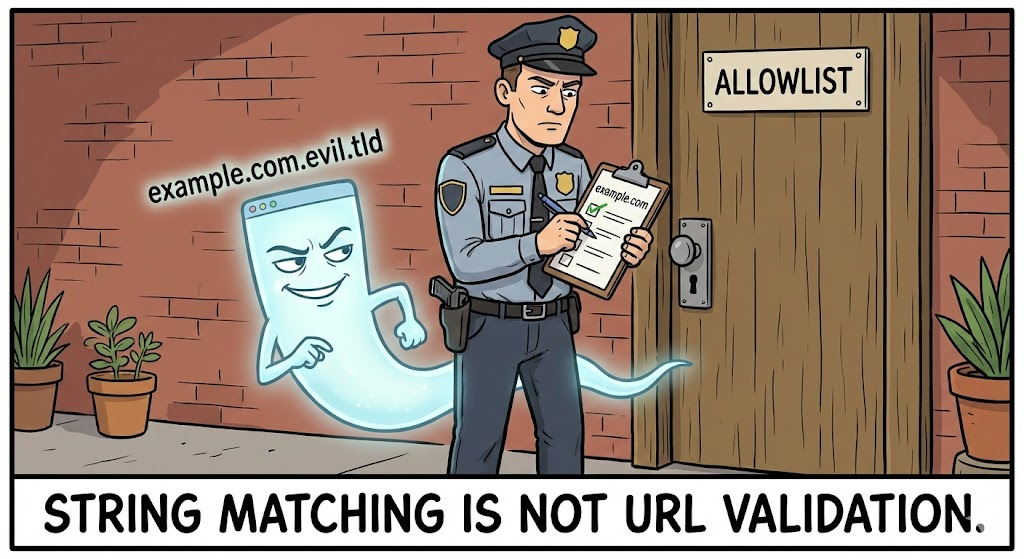
Effective defense requires multi-layered analysis, combining reputation, behavioral indicators, redirect unraveling, and AI-driven detection — not just static blacklists or simple string matching. By understanding attacker techniques and applying rigorous detection policies, security teams can stay ahead of ever-evolving link bypass threats.
 English
  German
  French
  Spanish
  Portuguese
  Japanese
  Korean
  Hindi
Hindi  Arabic
  Turkish
  Hebrew