
Nosql umfasst eine breite Palette nicht-relationaler Datenbanktechnologien, die in modernen Anwendungen zur Unterstützung flexibler Schemata und horizontaler Skalierbarkeit weit verbreitet sind. Trotz ihrer Vorteile sind NoSQL-Systeme nicht von Haus aus sicher - Entwickler müssen verstehen NoSQL-Injection-Schwachstellen, wie Angreifer sie ausnutzen können und wie man sich systematisch dagegen verteidigt. Dieser Artikel bietet eine eingehende technische Untersuchung für Sicherheitsingenieure, einschließlich realer Bedrohungsszenarien, Präventivstrategien, Codebeispiele und Verweise auf wichtige CVEs.
Was NoSQL ist und warum es für die Sicherheit wichtig ist
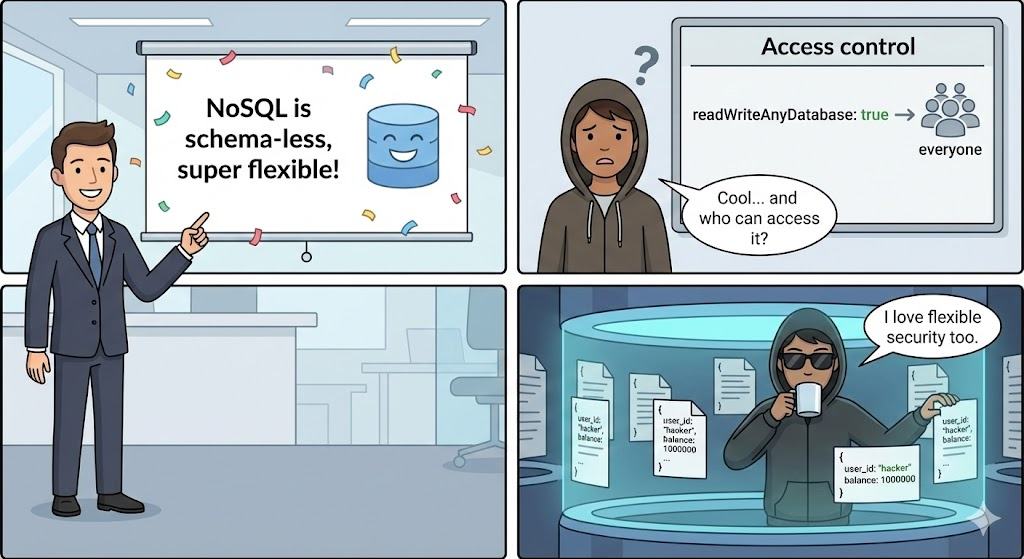
NoSQL-Datenbanken (kurz für "Not Only SQL" oder "nicht-relationales SQL") verzichten auf traditionelle relationale Modelle zugunsten von flexiblen Datenmodellen wie Key-Value-Stores, Dokumentenspeichern, spaltenbasierten und Graphdatenbanken. Beliebte Implementierungen sind MongoDB, CouchDB, Redis, Cassandraund Neo4j. Diese Systeme bieten Skalierbarkeit und Schemaflexibilität, aber sie führen auch neue Abfragesemantiken und Sicherheitslücken die für Ingenieure, die an SQL-Systeme gewöhnt sind, ungewohnt sind. vaadata.com
Im Gegensatz zu SQL hat jedes NoSQL-System seine eigene Abfragesprache (z. B. JSON-basierte Abfragen in MongoDB) und unterschiedliche Operator-Semantiken. Diese Vielfalt verbessert zwar die Flexibilität, führt aber auch zu einzigartige Angriffsvektoren für Injektionen weil Benutzereingaben oft ohne angemessene Bereinigung in Datenbankabfragen interpoliert werden. vaadata.com
NoSQL-Einschleusung: Was es ist und wann es auftritt
Im Kern tritt eine NoSQL-Injektion auf, wenn ein Angreifer Folgendes sendet handwerkliche Eingabe die die beabsichtigte Struktur einer Datenbankabfrage verändert. Im Gegensatz zur traditionellen textbasierten Grammatik der SQL-Injektion wird bei der NoSQL-Injektion häufig Folgendes missbraucht JSON-Payloads oder Abfrageoperatoren wie zum Beispiel $ne, $gt, $lt, $regex, oder $wo um die Logik zu manipulieren. vaadata.com
Beispiele und Szenarien aus der realen Welt
Betrachten Sie ein typisches Node.js + MongoDB-Authentifizierungs-Snippet, bei dem Entwickler direkt die Client-Eingabe zur Abfrage von Anmeldedaten verwenden:
javascript
// Anfällige Authentifizierung
db.users.find({
E-Mail: req.body.email,
Passwort: req.body.password
});
Ein Angreifer könnte einen Wert wie diesen eingeben:
json
{ "E-Mail": { "$ne": null }, "Passwort": { "$ne": null } }
Diese Abfrage gibt Dokumente zurück, bei denen die E-Mail lautet nicht null UND das Passwort ist nicht null, wodurch die Authentifizierung umgangen wird, ohne dass gültige Anmeldedaten bekannt sind. vaadata.com
Typische NoSQL-Datenbanken und wo Injektion auftritt
| Datenbank-Typ | Beispiele | Risiko der Injektion |
|---|---|---|
| Dokumentenspeicher | MongoDB, CouchDB | High-JSON-Abfragen und JS-Ausführung |
| Schlüssel-Wert | Redis, DynamoDB | Mittlere Skriptauswertungen oder komplexe Operationen erfordern einen sorgfältigen Umgang |
| Spalten-Familie | Cassandra, HBase | Risiko der Interpolation bei mittleren Abfragen |
| Grafik | Neo4j | Hochabfragesprachen wie Cypher können manipuliert werden |
Jedes Modell weist aufgrund der unterschiedlichen Abfragesprache ein anderes Risikoprofil auf. Zum Beispiel, MongoDB erlaubt Abfragen mit Operatoren wie $wo die beliebiges JavaScript ausführen, was die Angriffsfläche vergrößert. InfoQ
Hochwirksame CVE-Beispiele im Zusammenhang mit NoSQL Injection
Obwohl über NoSQL-Injections im Vergleich zu SQL-Injections eher wenig berichtet wird, zeigen dokumentierte Sicherheitsprobleme, dass sie sehr real sind. Zum Beispiel:
- CVE-2024-48573: Eine NoSQL-Injektion in Aquila CMS ermöglichte einem Angreifer das Zurücksetzen von Konto-Passwörtern, da vom Benutzer bereitgestellte Filter nicht bereinigt wurden, was eine bösartige Operator-Injektion ermöglichte. vaadata.com
Andere gemeldete Fehler (z. B. Probleme mit $wo Missbrauch in ODMs) unterstreichen, dass Injektionsvektoren nicht nur aus Anwendungscode, sondern auch aus unsicherer Umgang mit Bibliotheken oder Schemata. Helle Sicherheit
Wie NoSQL Injection ausgenutzt werden kann
NoSQL-Injection-Angriffe haben je nach Datenbank und Sicherheitsposition unterschiedliche Auswirkungen. Sie können verwendet werden, um:
- Umgehung der Authentifizierungslogik
- Sensible Datensätze extrahieren
- Ändern oder Löschen wichtiger Daten
- Erhöhen Sie die Privilegien
- Auslösen sekundärer Anwendungsschwachstellen (z. B. RCE über die Ausführung von JavaScript)
Beispiel: Umgehung der Authentifizierung
javascript
// Angreifer-Nutzdaten ändern Abfragelogik
db.users.find({
E-Mail: { $regex: ".*" },*
*Passwort: { $regex: ".*" }
});
Dies passt zu jedem Berechtigungsnachweis, denn .* ist eine Regex, die auf alles zutrifft und somit die Anmeldeprüfungen umgeht. vaadata.com
Erkennung von NoSQL Injection
Das Testen auf NoSQL-Injektion beinhaltet:
- Identifizierung von Punkten, an denen Benutzereingaben direkt in Datenbankabfragen übernommen werden
- Fuzzing von Benutzerparametern mit Operator-Tasten wie
$ne,$gt,$lt - Beobachtung von Änderungen im Anwendungsverhalten (z. B. Umgehung der Authentifizierung, unterschiedliche Abfrageergebnisse)
- Tests mit automatisierten Scannern und manuellen Pentesting-Techniken Indusface
Ingenieure verlassen sich oft sowohl auf manuelle Tests als auch auf automatisierte Tools, um bösartige Nutzlasten zu simulieren.
Defensiv-Strategien: Eingabevalidierung und Abfrageverhärtung
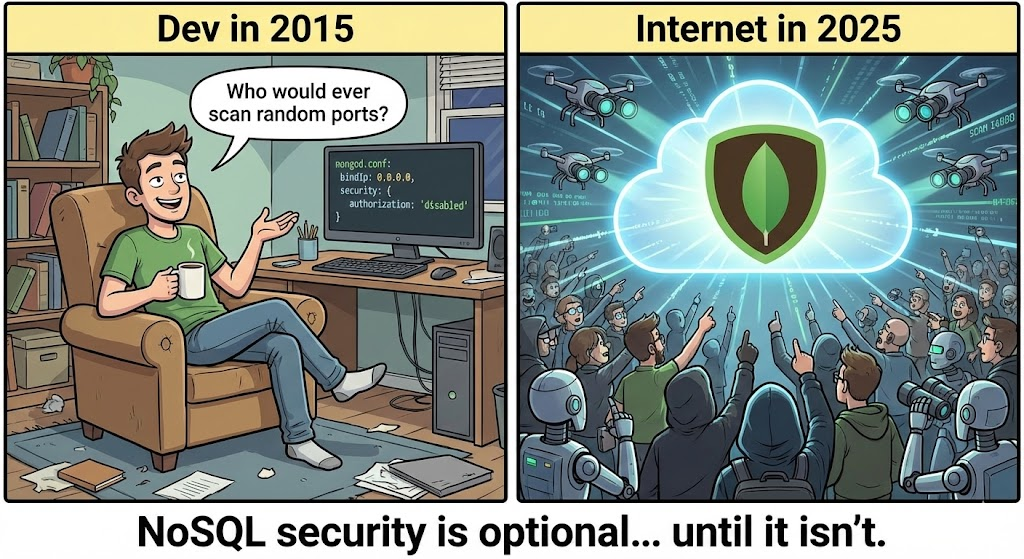
Das Wesentliche bei der Verteidigung gegen NoSQL-Injection ist die Behandlung alle Benutzereingaben als nicht vertrauenswürdig und beseitigt jede Möglichkeit, dass diese Eingabe die Abfragestruktur verändert.
Bewährte Praktiken
- Eingabevalidierung und Whitelisting Lassen Sie nur erwartete Felder und Datentypen zu. Verwerfen oder bereinigen Sie Sonderzeichen und JSON-Operatoren, die die Abfragelogik verändern könnten. Indusface
- Parametrisierte/vorbereitete Abfragen Obwohl es bei NoSQL keine universellen vorbereiteten Anweisungen gibt, unterstützen viele Treiber sicherere Abfrageerstellungsprogramme, die eine Stringverkettung vermeiden.
- Schema-Validierung Verwenden Sie Dokumentenschemata oder Modellvalidierung (z. B. Mongoose-Schemata), um die erwarteten Eingabeformen durchzusetzen.
- Deaktivierung gefährlicher Operatoren Deaktivieren Sie die Auswertung von
$wo,$evaloder die Ausführung von JavaScript in Datenbankkonfigurationen. Indusface - Least-Privilege-Regelungen Schränken Sie die Berechtigungen der Datenbankbenutzer ein, so dass selbst bei einer Injektion der Aktionsradius der Operationen (Lesen/Schreiben) begrenzt ist.
- Protokollierung und Überwachung Protokollieren Sie ungewöhnliche Abfragemuster, um Injektionsversuche zu erkennen und Warnungen auszulösen.
Code-Beispiele: Angriffs- und Verteidigungspatterns
Nachfolgend finden Sie praktische Codeschnipsel, die sowohl die Ausnutzung als auch die Schadensbegrenzung veranschaulichen.
Angriff zur Umgehung der MongoDB-Authentifizierung
javascript
// Unsicher: Direkte Benutzereingabe in Abfrage
db.users.find({
username: req.body.user,
Passwort: req.body.pass
});
Defensiv-Muster: Whitelist und Cast-Eingaben
javascript
const userInput = {
Benutzer: String(req.body.user || ""),
pass: String(req.body.pass || "")
};
db.users.find({ username: userInput.user, password: userInput.pass });
Regex-Missbrauch in Abfragen
Angriffs-Nutzlast:
json
{ "Name": { "$regex": ".*" } }
Verteidigung (Disallow Regex):
javascript
if (!/^[A-Za-z0-9_]+$/.test(req.body.name)) {
throw new Error("Ungültige Zeichen");
}
Verhindern der JavaScript-Ausführung in MongoDB
Unsicher:
javascript
db.users.find({ $where: "this.age > 25" });
Sichere Konfiguration:
bash
# mongod.conf
Parameter setzen:
javascriptEnabled: false
Parametrisierte Abfragesimulation
Unsicher:
javascript
collection.find({ filter: JSON.parse(req.body.filter) });
Sicheres Parsing mit Sanitization Library
javascript
const sanitize = require('mongo-sanitize');
const filter = sanitize(req.body.filter);
collection.find(filter);
REST API Eingabefilterung
Verwundbar:
javascript
app.post("/search", (req, res) =>
db.collection("items").find(req.body).toArray()
);
Abgehärtet:
javascript
const allowedFields = ["Kategorie", "Preis"];
const Abfrage = {};
allowedFields.forEach(f => {
if (req.body[f]) query[f] = req.body[f];
});
db.collection("items").find(query).toArray();
Penetrante und automatisierte NoSQL-Sicherheitstests
In komplexen Anwendungen ist die manuelle Identifizierung jedes Injektionsvektors über APIs, dynamische Eingaben und Microservices hinweg oft unhaltbar. Sträflicheine KI-gesteuerte Plattform für Penetrationstests, unterstützt Sicherheitsteams durch:
- Automatische Generierung und Einspeisung von manipulierten NoSQL-Nutzdaten, um nach Schwachstellen zu suchen
- Korrelation von Abfragemustern mit risikoreichen Verhaltensweisen
- Integration in CI/CD-Pipelines, um Regressionen frühzeitig zu erkennen
- Erstellung von nach Prioritäten geordneten Berichten im Einklang mit OWASP- und CWE-Klassifizierungen
Dieser Ansatz ergänzt die traditionelle SAST/DAST durch kontextabhängige AnalyseDies ist besonders nützlich für dynamische NoSQL-Abfragesprachen, bei denen statische Regeln allein unzureichend sein können.
Schlussfolgerung: NoSQL ist nicht immun - sicheres Design
NoSQL-Datenbanken bieten Skalierbarkeit und Flexibilität, aber sie sind nicht immun gegen Injektionsrisiken, nur weil sie eine andere Syntax verwenden. Injektionsfehler in NoSQL-Datenbanken können die Authentifizierung umgehen, Daten offenlegen oder nicht autorisierte Operationen ermöglichen, wenn die Eingabe unsachgemäß behandelt wird. Durch die Kombination von strenger Eingabevalidierung, Schemaerzwingung, sicherer Treibernutzung und automatisierten Tests (einschließlich KI-gestützter Plattformen wie Penligent) können Ingenieure die Anfälligkeit für Nosql-Injection-Angriffe erheblich reduzieren.

 German
  English
  French
  Spanish
  Portuguese
  Japanese
  Korean
  Hindi
Hindi  Arabic
  Turkish
  Hebrew