
Data privacy regulations are legal frameworks that govern how organizations collect, process, store, share, and protect personal data. In practice, these regulations aim to limit unnecessary data exposure, enforce accountability, and reduce harm when data is misused or breached. For engineers and security teams, compliance is not achieved through policy documents alone—it requires technical controls, monitoring, and verifiable enforcement embedded directly into systems and workflows.
What Data Privacy Regulations Actually Require Beyond Legal Text
Despite differences in scope and jurisdiction, most data privacy regulations converge on a small set of enforceable principles:
- Lawful and limited data collection
- Purpose limitation and data minimization
- Access control and least privilege
- Transparency and user rights
- Breach detection and notification
- Accountability with evidence
From an engineering perspective, this means:
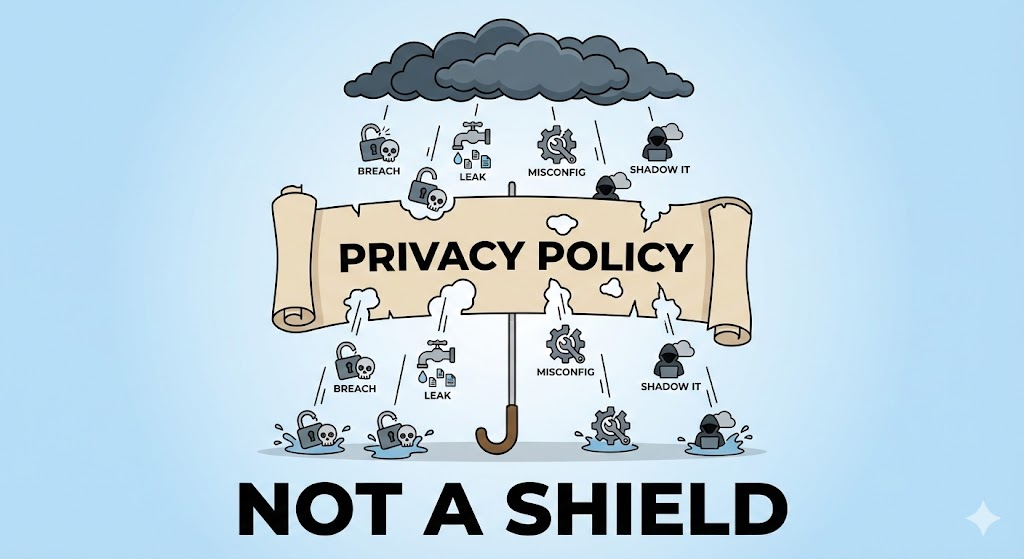
If you cannot technically prove how data is accessed, processed, and protected, you are not compliant—regardless of policy wording.
Major Global Data Privacy Regulations You Must Account For
Expanded Overview: Data Privacy Regulations in Europe and the United States
For engineers, data privacy regulations are not abstract legal concepts—they are operational constraints that shape system design, access control, logging, and incident response. Europe and the United States together define the most influential and enforcement-active privacy regimes globally. Understanding their differences is critical for building compliant systems that scale.
Key European Data Privacy Regulations EU & EEA
Europe takes a rights-first, enforcement-driven approach to data privacy. Regulations tend to be comprehensive, extraterritorial, and backed by significant fines.
General Data Protection Regulation (GDPR)
GDPR remains the global benchmark for data privacy regulation.
Applies to: Any organization processing personal data of individuals located in the EU/EEA, regardless of company location.
Core engineering implications:
- Lawful basis for processing (consent, contract, legal obligation, etc.)
- Data minimization and purpose limitation
- Strong access control and auditability
- Mandatory breach notification within 72 hours
- Enforceable data subject rights (access, erasure, portability)
Why engineers care: Most GDPR enforcement actions involve over-collection, excessive internal access, or insecure storage, not exotic exploits.
ePrivacy Directive (and upcoming ePrivacy Regulation)
Often called the “cookie law,” but broader in scope.
Focus areas:
- Electronic communications data
- Metadata and tracking technologies
- Confidentiality of communications
Engineering impact:
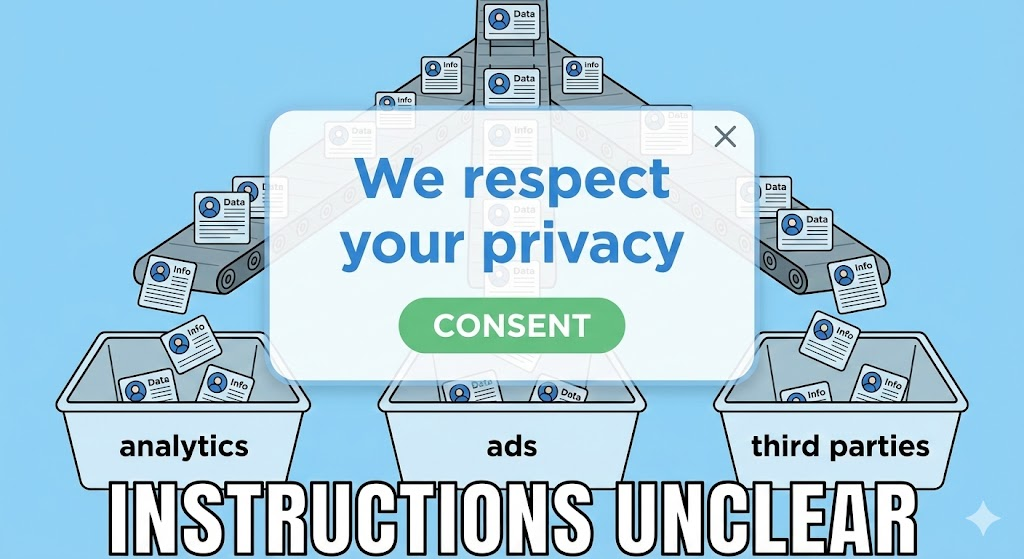
- Consent mechanisms for tracking
- Logging and enforcement around user choices
- Interaction with analytics and advertising systems
NIS2 Directive (Security + Privacy Adjacent)
While primarily a cybersecurity directive, NIS2 has strong privacy implications.
Applies to: Essential and important entities (cloud providers, SaaS, infrastructure, digital services).
Engineering impact:
- Incident detection and reporting
- Risk management measures
- Accountability of management
Why it matters for privacy: Security failures that expose personal data often trigger both NIS2 and GDPR consequences.
Digital Services Act (DSA) & Digital Markets Act (DMA)
Not pure privacy laws, but relevant for platforms handling large volumes of personal data.
Key privacy-related aspects:
- Transparency in data usage
- Limits on cross-service data combination
- Stronger user rights around profiling
Country-Specific European Privacy Laws (Still Relevant)
Even under GDPR harmonization, local laws still matter:
| Country | Regulation | Practical Impact |
|---|---|---|
| Germany | BDSG | Strong employee data protections |
| France | CNIL guidance | Strict enforcement interpretations |
| UK | UK GDPR + Data Protection Act 2018 | GDPR-like, but diverging post-Brexit |
Key United States Data Privacy Regulations (Federal + State)
The US follows a sectoral and state-based model, which is more fragmented but rapidly expanding.
California Consumer Privacy Act (CCPA) & CPRA
The most influential US privacy law.
Applies to: Businesses meeting revenue, data volume, or data sale thresholds involving California residents.
Core rights:
- Right to know
- Right to delete
- Right to opt out of sale/share
- Right to limit use of sensitive personal information (CPRA)
Engineering implications:
- Data inventory and mapping
- Deletion workflows across systems
- Identity verification for requests
- Audit-ready access logs
Key difference from GDPR: Less focus on lawful basis, more focus on consumer control and transparency.
Virginia Consumer Data Protection Act (VCDPA)
Virginia’s GDPR-inspired state law.
Key requirements:
- Data protection assessments
- Opt-out rights for targeted advertising
- Purpose limitation
Engineering teams often underestimate VCDPA because enforcement is quieter—but requirements are real.
Colorado Privacy Act (CPA)
Notable for its universal opt-out mechanism.
Engineering impact:
- Must honor browser-based opt-out signals
- Strong consent enforcement for sensitive data
Connecticut Data Privacy Act (CTDPA)
Closely aligned with VCDPA and CPA.
Engineering focus:
- Data minimization
- Secure processing
- Consumer rights handling
Utah Consumer Privacy Act (UCPA)
More business-friendly, but still requires:
- Notice
- Reasonable security
- Consumer access and deletion rights
Federal Sector-Specific US Privacy Laws
Unlike Europe, many US privacy obligations are industry-specific:
| Regulation | Sector | Schwerpunkt Technik |
|---|---|---|
| HIPAA | Healthcare | Access logging, encryption, audit trails |
| GLBA | Financial services | Safeguards rule, risk assessments |
| COPPA | Children’s data | Age gating, consent verification |
| FERPA | Bildung | Student data access controls |
Key takeaway: You may be fully compliant in one sector and non-compliant in another.
Why Multiple Regulations Must Be Modeled Together
Most real-world systems are subject to multiple overlapping regulations:
- GDPR + CCPA for global SaaS
- HIPAA + state privacy laws for health tech
- CPRA + CPA + VCDPA for US consumer platforms
From an engineering standpoint, this means:
- One unified data inventory
- One unified access control model
- One unified audit and logging pipeline
- Jurisdiction-aware policy enforcement
Designing per-law logic does not scale.
Practical Engineering Insight: Regulators Don’t Care About Intent
Across both Europe and the US, enforcement actions show a consistent pattern:
Regulators penalize lack of control and visibility, not just bad intent.
General Data Protection Regulation (GDPR – EU)
GDPR applies to any organization processing EU residents’ personal data, regardless of company location. Core technical obligations include:
- Lawful processing and explicit consent where required
- Data subject rights (access, deletion, portability)
- Security of processing (Article 32)
- Mandatory breach notification within 72 hours
GDPR enforcement actions consistently target over-collection, insecure storage, and excessive access, not just breaches.
California Consumer Privacy Act / CPRA (CCPA – US)
CCPA/CPRA focuses on consumer rights and transparency, including:
- Right to know what data is collected
- Right to delete personal data
- Right to opt out of sale or sharing
- Reasonable security procedures
From a systems perspective, this requires data inventory, deletion workflows, and access logging across services.
Other Influential Privacy Laws (Short List)
| Regulation | Region | Key Engineering Impact |
|---|---|---|
| LGPD | Brazil | Consent, breach notification |
| PIPL | China | Strict data localization & access control |
| HIPAA | US (Healthcare) | Access auditing, encryption |
| GLBA | US (Finance) | Data protection safeguards |
Wichtige Erkenntnis: Most organizations are subject to multiple overlapping privacy regulations, making a unified technical approach essential.
The Engineering Reality: Where Privacy Compliance Fails
Across breach investigations and enforcement cases, failures typically fall into a few repeatable categories:
- No accurate data inventory (unknown data flows)
- Overly broad internal access
- Plaintext or weakly protected sensitive data
- Lack of breach detection or delayed response
- Inability to prove compliance retroactively
Privacy regulations penalize absence of control, not just malicious intent.
Attack Example 1: Unauthorized Data Access via Over-Privileged Roles
Many privacy incidents are internal or credential-based, not external hacks.
bash
#Simulated audit: list who can access a sensitive data tabledb-cli list-permissions --table user_profiles
If this command returns:
- Service accounts that don’t require access
- Engineers without business justification
- Legacy roles with wildcard permissions
You already have a privacy compliance violation, even without a breach.
Defense Example 1: Enforce Least-Privilege Access Automatically
python
def check_privacy_access(role):
allowed = ["data-service", "privacy-admin"]
if role not in allowed:
raise Exception("Privacy access violation detected")
Automated enforcement like this underpins compliance with GDPR Article 32 and similar “appropriate security measures” clauses.
Data Minimization: The Most Ignored Privacy Requirement
Most privacy regulations explicitly require collecting only the data necessary for a defined purpose. Yet engineering teams often retain data “just in case.”
Attack Example 2: Identifying Excessive PII Storage
sql
- Find unused sensitive columns SELECT column_nameFROM information_schema.columnsWHERE table_name='users' AND column_name IN ('ssn','passport','birth_date');
If these fields are:
- Rarely accessed
- Not required for current features
- Stored indefinitely
They represent regulatory and breach risk, not value.
Defense Example 2: Automated Data Retention Enforcement
python
def enforce_retention(record):
if record.age_days > 365 and record.contains_pii:
delete(record)
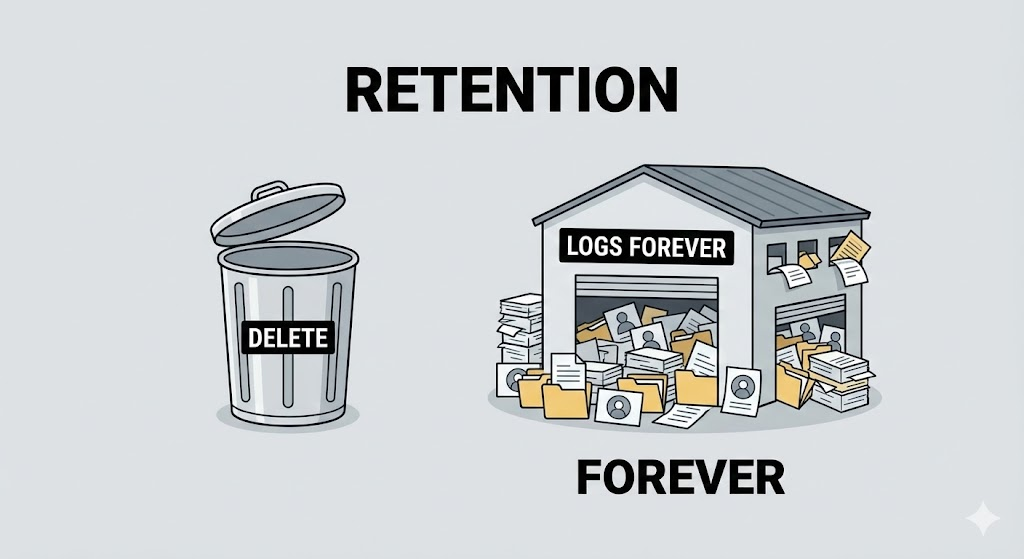
Retention enforcement directly supports GDPR’s storage limitation principle and reduces breach impact.
Encryption and Data Protection: Table Stakes, Not Differentiators
Most regulations require “appropriate security,” which enforcement bodies interpret as:
- Encryption at rest
- Encryption in transit
- Key access control and rotation
Encryption alone does nicht equal compliance if keys are broadly accessible or logs are missing.
Breach Detection and Notification Obligations
Privacy regulations assume breaches will happen. What matters is detection speed and response quality.
Attack Example 3: Silent Data Exfiltration Pattern
bash
#Monitor unexpected outbound data transfersnetstat -an | grep ESTABLISHED
Persistent outbound connections to unfamiliar destinations may indicate data leakage—intentional or accidental.
Defense Example 3: Privacy-Focused Access Logging
python
def log_sensitive_access(user, resource):
audit_log.write({
"user": user,
"resource": resource,
"timestamp": now()
})
Without high-quality access logs, you cannot:
- Investigate incidents
- Meet breach notification timelines
- Prove regulatory compliance
Data Subject Rights: Where Engineering Meets Law
GDPR, CCPA, and similar laws grant individuals rights such as:
- Access
- Deletion
- Correction
- Portability
Engineering implications:
- Data must be discoverable across systems
- Deletion must propagate to backups where feasible
- Requests must be verifiable and auditable
Manual handling does not scale and often fails audits.
Automating Privacy Compliance Checks
Modern compliance programs embed checks directly into pipelines.
python
def privacy_compliance_check(dataset):
assert dataset.has_owner
assert dataset.retention_policy
assert dataset.encrypted
This mirrors how mature organizations shift privacy “left” into development and deployment workflows.
Where Security Testing Supports Privacy Compliance
Privacy violations often stem from exploitable misconfigurations or access paths, not policy gaps.
Automatisierte Penetrationstest-Plattformen wie Sträflich können helfen:
- Verifying whether sensitive endpoints are exposed
- Testing access controls around personal data
- Providing reproducible evidence for audits
This is especially useful when regulators ask “could this data have been accessed?”, nicht nur “did you intend to protect it?”
Data Privacy Regulations and AI Systems
Modern privacy enforcement increasingly targets AI systems that:
- Train on personal data without lawful basis
- Retain training data indefinitely
- Cannot explain or delete specific data records
Engineers building AI systems must treat training data governance as a first-class privacy concern, not an afterthought.
Practical Privacy Compliance Checklist for Engineers
- Maintain an always-current data inventory
- Enforce least privilege for all sensitive data
- Minimize and expire data aggressively
- Log and monitor all sensitive access
- Test exposure, not just document controls
Privacy compliance is continuous engineering work, not a one-time certification.
Schlussfolgerung
Data privacy regulations are not abstract legal constraints—they are operational security requirements enforced through audits, investigations, and fines. Organizations that succeed treat privacy as an engineering discipline: measurable, testable, and verifiable. By embedding privacy controls into systems and validating them through automation and testing, teams can meet regulatory obligations while reducing real-world risk.


 German
  English
  French
  Spanish
  Portuguese
  Japanese
  Korean
  Hindi
Hindi  Arabic
  Turkish
  Hebrew