
Introduction: Why “Cloud Security Tips” Still Fail in Practice
Search results for cloud security tips are filled with checklists that sound reasonable but rarely survive real attacks. Most cloud breaches today are not caused by exotic zero-days, but by identity abuse, misconfiguration, and automation gaps — problems that defensive guidance often oversimplifies.
This article is written for security engineers, penetration testers, and AI-driven security teams who need operationally useful cloud security tips, not surface-level advice. Every recommendation is tied to a concrete attack path, real-world incidents, and defensible controls that actually work in modern cloud environments.
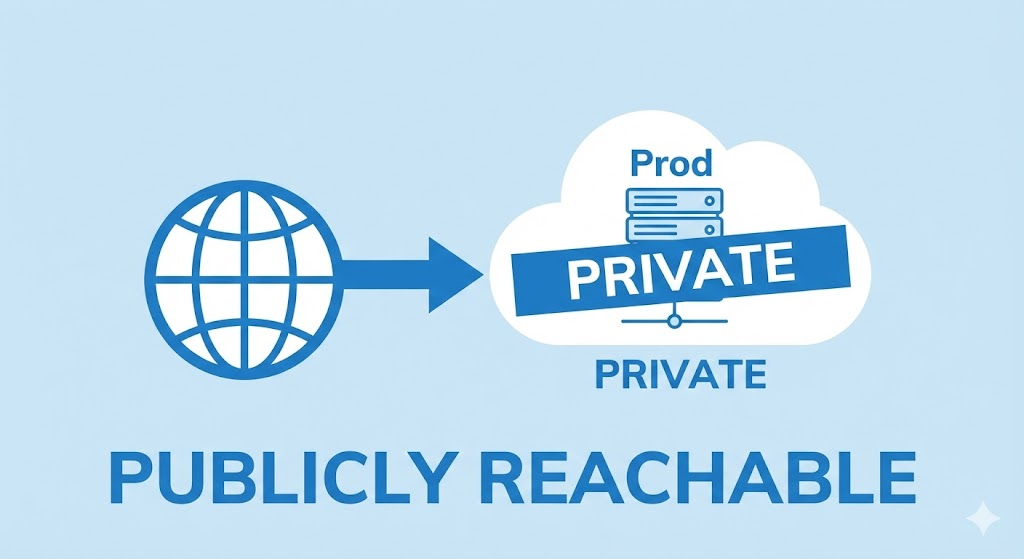
Understanding the Modern Cloud Attack Surface
Cloud platforms dramatically change how attackers operate:
- No perimeter in the traditional sense
- Identity becomes the new control plane
- APIs replace hosts as primary targets
- Automation magnifies both attack speed and blast radius
The shared responsibility model means cloud providers secure the infrastructure, while customers remain fully responsible for IAM, network configuration, workloads, and data exposure. The majority of high-impact cloud incidents stem from failures in these areas.
Identity Is the New Perimeter: Core Cloud Security Tips
Why IAM Failures Dominate Cloud Breaches
In cloud environments, compromising identity often means compromising everything. Unlike on-prem systems, attackers do not need to maintain persistence on a single host — valid credentials grant durable access across regions, services, and APIs.
Common IAM failure modes include:
- Over-privileged roles
- Long-lived access keys
- Lack of MFA enforcement
- Poor separation between human and workload identities
Attack & Defense Example 1: IAM Over-Permission Abuse
Attack Scenario: Privilege Escalation via Over-Permissive IAM Roles
An attacker gains access to a low-privileged role (often via leaked credentials or compromised CI/CD pipeline). The role has unintended permissions such as iam:PassRole o sts:AssumeRole.
Example: Abusing iam:PassRole
bash
aws iam list-attached-role-policies --role-name compromised-role
If the role can pass higher-privileged roles, the attacker escalates:
bash
aws sts assume-role \\ --role-arn arn:aws:iam::123456789012:role/AdminRole \\ --role-session-name attacker
This pattern has appeared repeatedly in real cloud incidents because IAM policies are complex and rarely audited deeply.
Defense: Enforcing Least Privilege with Policy-as-Code
Cloud security tips that do not include automated IAM validation are incomplete.
Use policy-as-code tools to prevent privilege escalation paths before deployment.

Example: Terraform + Checkov IAM Guardrail
hcl
resource "aws_iam_policy" "example" { policy = jsonencode({ Statement = [{ Effect = "Allow" Action = ["s3:GetObject"] Resource = "arn:aws:s3:::example-bucket/*" }] }) }
Run automated checks:
bash
checkov -d .
Key defensive controls:
- Block
iam:*wildcard permissions - Prohibit
PassRoleunless strictly necessary - Enforce short-lived credentials
- Separate human and machine identities
Cloud Metadata Services: Small Endpoint, Massive Impact
Cloud metadata services were designed for convenience, not hostile environments. When combined with SSRF vulnerabilities, they become a powerful credential theft vector.
Attack & Defense Example 2: Metadata Service Credential Theft
Attack Scenario: SSRF → Cloud Credential Exfiltration
If a cloud application allows outbound HTTP requests based on user input, attackers may exploit SSRF to query metadata services.
Example: AWS IMDS v1 Exploitation
bash
curl <http://169.254.169.254/latest/meta-data/iam/security-credentials/>
Once role credentials are retrieved, attackers can interact with cloud APIs:
bash
export AWS_ACCESS_KEY_ID=...export AWS_SECRET_ACCESS_KEY=... aws s3 ls
This technique has been widely abused in containerized and serverless environments.
Defense: IMDSv2 and Network Controls
Modern cloud security tips mandate IMDSv2 only.
Enforce IMDSv2 (AWS Example)
bash
aws ec2 modify-instance-metadata-options \\ --instance-id i-1234567890abcdef0 \\ --http-tokens required \\ --http-endpoint enabled
Additional defenses:
- Egress filtering
- SSRF protection libraries
- Network policies for containers
- Runtime detection of metadata access patterns
Misconfiguration: The Silent Cloud Killer
Public buckets, open dashboards, exposed APIs — cloud misconfigurations remain the fastest path to mass data exposure.
Why they persist:
- Rapid infrastructure changes
- Multiple teams deploying independently
- Incomplete ownership of cloud resources
Attack & Defense Example 3: CI/CD Secrets Leakage
Attack Scenario: Secrets Leaked via CI Logs or Repositories
Attackers actively scan public and private repositories for credentials accidentally committed or printed in CI logs.
Example: Extracting Secrets from CI Output
bash
grep -R "AWS_SECRET_ACCESS_KEY" .
Even temporary exposure can allow attackers to:
- Enumerate cloud assets
- Create persistence mechanisms
- Exfiltrate data
Defense: Centralized Secrets Management + Scanning
Cloud security tips must include automated secret detection.
Example: GitHub Actions Secret Scanning
yaml
name: Secret Scan on: [push]jobs: scan: runs-on: ubuntu-latest steps: - uses: actions/checkout@v3 - uses: trufflesecurity/trufflehog@v3 with: path: .
Best practices:
- Never store secrets in environment variables long-term
- Use managed secret stores (AWS Secrets Manager, Azure Key Vault)
- Rotate credentials automatically
- Monitor for anomalous credential usage
Runtime Protection and Detection
Preventive controls fail eventually. Detection matters.
Effective runtime cloud security includes:
- Behavioral monitoring, not signatures
- Correlation across identity, network, and workload telemetry
- Automated containment actions
This is where AI-driven platforms increasingly provide value by prioritizing exploitable paths, not just theoretical risk.
Where Automated Penetration Testing Fits
Plataformas como Penligent.ai can complement traditional CSPM and SIEM tools by simulating attacker behavior against cloud environments.
En la práctica, esto significa:
- Identifying real privilege escalation chains
- Validating whether misconfigurations are exploitable
- Reducing alert fatigue by focusing on attack feasibility
Used correctly, automated penetration testing helps teams move from “secure on paper” to “secure in reality”.
Multi-Cloud Reality and Security Debt
Most organizations operate across AWS, Azure, and GCP. Each platform introduces:
- Unique IAM models
- Different logging semantics
- Inconsistent security defaults
Cloud security tips that assume a single provider are incomplete. Centralized visibility and normalized policy enforcement are mandatory for real-world environments.
Measuring Cloud Security Effectiveness
Track what matters:
| Métrica | Por qué es importante |
|---|---|
| Mean Time to Detect | Indicates visibility |
| Mean Time to Respond | Indicates operational maturity |
| Privileged Identity Count | Predicts blast radius |
| Misconfiguration Rate | Measures hygiene |
| Exploitable Paths | Measures real risk |
Reflexiones finales
The best cloud security tips are not static rules — they are feedback loops. Attackers continuously adapt. Defensive teams must do the same, using automation, offensive validation, and continuous learning.
If your cloud security program cannot explain how it would be attacked today, it is not finished.


 Spanish
  English
  German
  French
  Portuguese
  Japanese
  Korean
  Hindi
Hindi  Arabic
  Turkish
  Hebrew