
For the uninitiated, what is iam in cyber security+ usually returns a simple answer: “It manages who can access what.” But for the modern security architect or penetration tester, Identity and Access Management (IAM) is no longer just a gatekeeper—it is the entire perimeter.
In an era where “internal networks” are effectively zero-trust zones, IAM has evolved from a compliance checklist into a complex graph theory problem. This guide moves beyond the standard Fortinet definitions to explore the mechanics of modern authorization, the logic flaws that break them, and how AI is changing the game.
The Evolution: From Lists to Logic Graphs
Historically, IAM was a static list of users and passwords. Today, it is a dynamic decision engine processing millions of signals. To understand the attack surface, we must first distinguish the structural models currently in production.
בעוד Role-Based Access Control (RBAC) is the industry standard, it is rapidly failing to meet the needs of granular, AI-driven environments.
Comparative Analysis: RBAC vs. ABAC vs. ReBAC
| תכונה | RBAC (Role-Based) | ABAC (Attribute-Based) | ReBAC (Relationship-Based) |
|---|---|---|---|
| Logic | “User is a Manager” | “User is in Dept=IT & Time<5PM” | “User is owner of Document” |
| Scalability | High maintenance (Role explosion) | High compute latency | High complexity (Graph-based) |
| דוגמה | AD Group: Admin | AWS Policy: Condition: IP | Google Zanzibar / Auth0 FGA |
| סיכון ביטחוני | Over-provisioning (Static) | Policy conflicts | Graph traversal errors |
Engineering Insight: The industry is shifting towards ReBAC (Relationship-Based Access Control), popularized by Google’s Zanzibar paper. For a security engineer, this means the attack vector is shifting from “stealing credentials” to “manipulating the graph relationship” (e.g., forcing an inheritance edge where none should exist).
The Attack Surface: Exploiting Logic, Not Just Passwords
When we ask what is iam in cyber security+ in the context of offensive operations, we are looking for logic gaps. The most dangerous vulnerabilities today are not buffer overflows, but authentication bypasses where the לוגיקה of the IAM provider is tricked.
Case Study: CVE-2024-45409 (Ruby-SAML Authentication Bypass)
One of the most critical recent examples of IAM failure is CVE-2024-45409 (CVSS 10.0). It devastated systems relying on the Ruby-SAML library (used by GitLab and others) by allowing attackers to bypass authentication entirely.
המנגנון:
The vulnerability lay in how the library verified XML signatures using XPath. An attacker could manipulate the XML structure of a SAML response to “hide” the malicious assertion while presenting a valid signature for a different element.
Here is a conceptual look at the XML manipulation (simplified for educational purposes):
XML
`<Response> <Extensions> <Signature> [Valid Signature of a different block] </Signature> </Extensions>
<Assertion ID="MaliciousAssertion">
    <Attribute Name="Role">Admin</Attribute>
</Assertion>
</Response>`
הפגם: The vulnerable code effectively said, “Is there a valid signature in this document?” (Yes) and “Is the Assertion valid?” (Yes, but it wasn’t the one signed). This is a classic cryptographic context confusion.
For an AI security engineer, this reinforces a critical lesson: IAM is code. And like all code, it is susceptible to logic parsing errors that standard vulnerability scanners often miss.

Cloud IAM: The “Shadow” Identity Crisis
In cloud environments (AWS, Azure, GCP), IAM is even more porous. The primary risk here is העלאת הרשאות via misconfigured JSON policies.
A common misconfiguration involves the iam:PassRole permission. If a developer is granted this permission on a wildcard resource, they can effectively become an administrator by passing a high-privilege role to a service they control (like an EC2 instance).
Code Audit: The PassRole מלכודת
JSON
// VULNERABLE IAM POLICY { "Version": "2012-10-17", "Statement": [ { "Effect": "Allow", "Action": [ "ec2:RunInstances", "iam:PassRole" ], "Resource": "*" } ] }
The Exploit Path:
- Attacker compromises a developer account with this policy.
- Attacker launches a new EC2 instance.
- Attacker passes the
AdministratorAccessrole to this new EC2 instance (allowed byiam:PassRoleon ). - Attacker logs into the EC2 instance and now has full Admin rights over the cloud account.
Automating IAM Security with AI Agents
This brings us to the modern challenge: Scale. A mid-sized enterprise may have 5,000 roles and 20,000 distinct permissions. Auditing this matrix manually is impossible. Static analysis tools (SAST) struggle because they lack runtime context.
זה המקום שבו Penligent.ai enters the conversation. As an AI-driven penetration testing platform, Penligent moves beyond static checks to perform Agentic Verification.
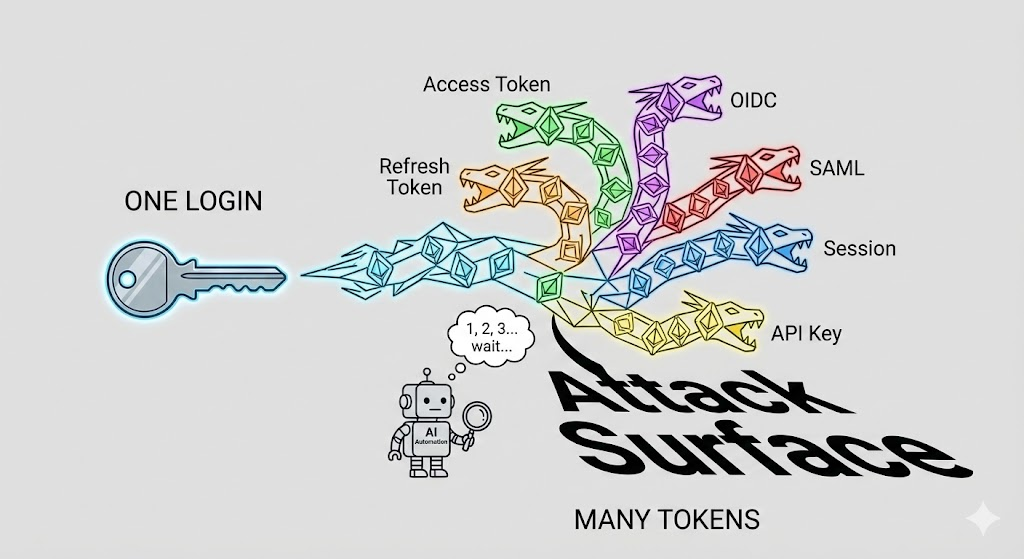
The Penligent Approach to IAM Testing
Traditional scanners might flag “Potential Privilege Escalation.” Penligent’s AI agents actually attempt to traverse the graph (in a safe, sandboxed mode).
- מודעות להקשר: The AI agent analyzes not just the JSON policy, but the מערכות יחסים between services. It understands that
Function AtriggersFunction B, which has access toDatabase C. - Logic Probing: Unlike a regex script, the agent can synthesize complex exploit chains (like the
PassRoleexample above) to validate if a theoretical risk is effectively blocked by a Service Control Policy (SCP) or boundary. - תיקון: It provides the exact least-privilege policy snippet to fix the gap without breaking the application.
By using autonomous agents, security teams can answer the question “Can any user delete the production database?” with mathematical certainty, rather than theoretical compliance.
סיכום
So, what is iam in cyber security+? It is the discipline of defining and defending the logic of trust. It is no longer about resetting passwords; it is about architecting systems that can withstand cryptographic confusion (like CVE-2024-45409) and cloud permission pivots.
For the hard-core engineer, the future lies in moving away from manual role assignments to automated, relationship-based access control (ReBAC) and utilizing AI-driven verification to police the infinite complexity of the cloud.


 Hebrew
  English
  German
  French
  Spanish
  Portuguese
  Japanese
  Korean
  Hindi
Hindi  Arabic
  Turkish