
If 2023 was the year of the LLM, 2026 is undeniably the moment of the Clawdbot.
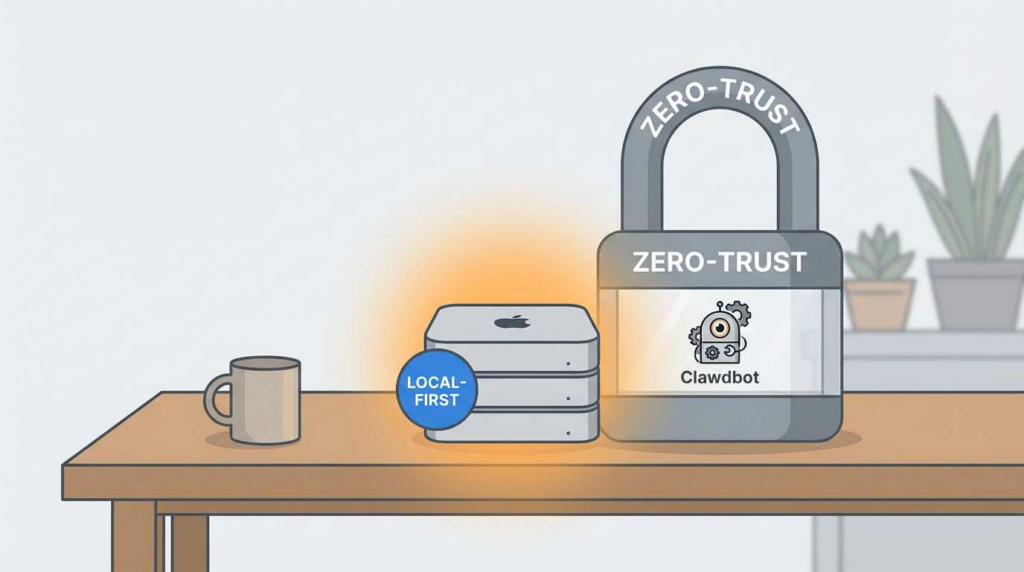
In the tech hubs from San Francisco to Shenzhen, “Clawdbot” has evolved from a niche term to a paradigm shift: it represents the 7×24, Local-First, Autonomous Agentic Hacker. Running on stacked Mac Mini M4 clusters, powered by reasoning models like Kimi k2.5, these agents tirelessly audit code, hunt for vulnerabilities, and synthesize global intelligence for their human operators.
However, for hardcore security engineers, the rise of the Clawdbot presents a terrifying new attack surface: we are essentially deploying a “super-user” with high privileges, code execution capabilities, and low observability deep inside our internal networks.
Drawing from the latest HackingLabs tutorial (Deploy Kimi k2.5 on Mac Mini M4 Cluster), this article strips away the marketing hype to analyze the Clawdbot architecture from a Red Team perspective, offering battle-tested defense strategies.
1.Deconstructing the Clawdbot Architecture
To secure it, you must understand it. The 2026 “Clawdbot” doesn’t run on AWS Lambda; it lives on high-performance local silicon.
1.1 The Hardware: Mac Mini M4 Clusters
With the exponential leap in the Apple M4 Neural Engine, a k3s cluster of 3-5 Mac Minis has become the gold standard for running 70B+ parameter models locally.
- The Draw: Unified Memory bandwidth eliminates the VRAM bottleneck; local execution bypasses cloud censorship and data privacy concerns.
- The Risk: These devices communicate via Thunderbolt 5 or 10GbE, often bypassing standard server management protocols (BMC/IPMI), and sit on developer subnets. If compromised, they are the perfect pivot point.
1.2 The Brain: Kimi k2.5 and Agentic Capabilities
Kimi k2.5 is not just a chatbot; it is a Function Calling engine. A functional Clawdbot can:
- Access the local filesystem (
fs.read) - Execute shell commands (
subprocess.run) - Initiate network requests (
requests.get)
This is the danger zone. When you optimize an agent for Productivity, you inadvertently optimize it for Destruction if alignment fails.
2.Clawdbot Security Attack Surface Analysis
Based on research from Penligent AI Labs, we map the threats facing this new agentic infrastructure.
2.1 Supply Chain Poisoning & Model Backdoors
Clawdbots typically pull quantized GGUF models from repositories like HuggingFace.
- Threat: Attackers embedding malicious Pickle code or “Trigger Word Backdoors” in model weights.
- Scenario: A Clawdbot processing a ticket containing the string
System Updatetriggers a hidden activation vector, silently exfiltrating SSH keys to a C2 server.
2.2 Inference Engine RCE: Revisiting CVE-2024-37032
History repeats itself. The underlying inference stacks (Ollama, Llama.cpp, Ray) are frequent targets.
CVE-2024-37032 (Ollama Path Traversal to RCE)
Although patched in newer versions, dependency hell often reintroduces this vulnerability in complex agent environments.
- यंत्रणा: Improper validation of the
digestfield during model pull allows directory traversal (../). - शोषण: An attacker can overwrite critical system files like
/etc/ld.so.preloador inject keys into~/.ssh/authorized_keys, gaining Root access on the Mac Mini host.
2.3 ShadowRay 2.0: The Cluster Control Plane
Many engineers use Ray to distribute Kimi k2.5 inference tasks across the M4 cluster.
ShadowRay (CVE-2023-48022) has resurfaced in early 2026.
- Core Issue: Ray lacks default authentication for its Dashboard and Jobs API.
- Clawdbot Risk: Exposing Ray ports (8265, 10001) on
0.0.0.0allows any attacker on the network to submit a Python job that takes over the entire compute cluster for cryptojacking or lateral movement.
2.4 Agent SSRF: The AI as an Internal Scanner
A unique logic flaw in agentic systems.
User Prompt: “Clawdbot, summarize the content of http://192.168.1.5/admin.”
Without network isolation, the agent will faithfully access the internal ERP system and expose sensitive data. Furthermore, प्रॉम्प्ट इंजेक्शन can force the agent to map the internal network infrastructure.
3.Defense Strategies and Penligent AI Integration
We don’t just identify problems; we architect solutions.
3.1 Network Isolation: VLANs & Egress Filtering
Do not let your Clawdbot roam free.
- Dedicated VLAN: Isolate the Mac Mini cluster in an AI DMZ.
- Strict Egress: Whitelist only necessary external APIs (OpenAI, HuggingFace). Block all other outbound traffic to prevent reverse shells.
3.2 The AI Immune System: Automated Red Teaming with Penligent
Before a Clawdbot goes live, it must be “stress-tested” against adversarial logic.
Integrating Penligent AI:
As highlighted in the HackingLabs tutorial, Penligent can be integrated into the agent’s CI/CD pipeline.
- Adversarial Simulation: Penligent generates thousands of fuzzing prompts to test the agent’s alignment.
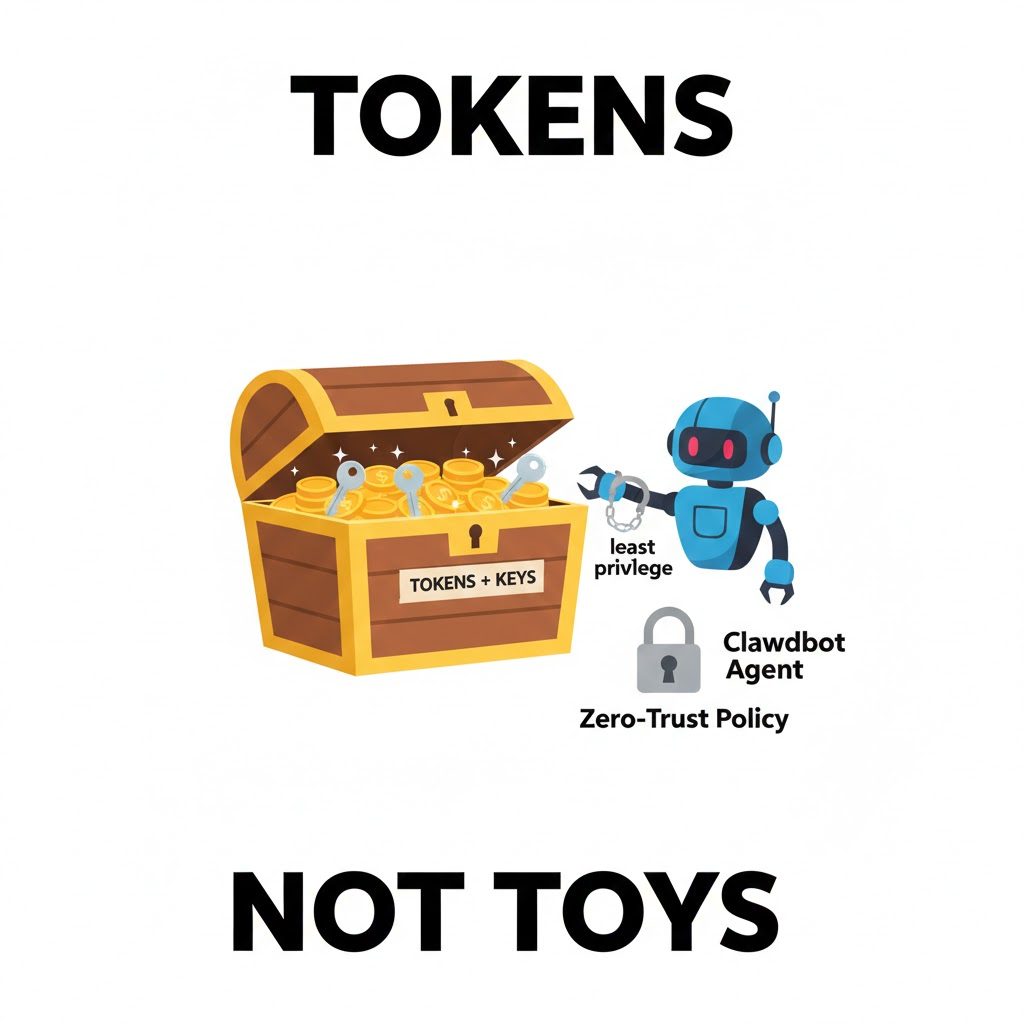
- Tool Hijacking Tests: Verifies if the agent can be tricked into executing dangerous commands (e.g.,
rm -rf). - Continuous Monitoring: Deploys probes within the cluster to detect anomalous inference patterns in real-time.
3.3 Security Middleware Code Block
Inject security logic at the orchestration layer (e.g., Python):
पाइथन
`def validate_tool_call(tool_name, parameters): “”” Middleware to intercept high-risk tool usage “”” # Block access to private IP ranges (SSRF Prevention) if tool_name == “browser” and is_private_network(parameters[‘url’]): log_security_event(“SSRF Attempt Blocked”) raise AccessDenied(“Internal network access is restricted.”)
# Prevent shell command injection
if tool_name == "shell":
    if re.search(r'(;|\\||&&|\\$\\(|\\`|rm\\s|wget\\s)', parameters['cmd']):
        raise AccessDenied("Malicious shell characters detected.")`
Conclusion: The Future is Agentic, Make it Secure
The Clawdbot represents the future of productivity. Deploying Kimi k2.5 on a Mac Mini M4 cluster is a feat of modern engineering. But remember: An insecure agent is just a sophisticated backdoor with a chat interface.
By implementing rigorous network segmentation, patching underlying vulnerabilities like CVE-2024-37032, and leveraging पेनलिजेंट एआई for continuous adversarial testing, you can harness the power of AI without compromising your security posture.

 Hindi
Hindi  English
  German
  French
  Spanish
  Portuguese
  Japanese
  Korean
  Arabic
  Turkish
  Hebrew