
What happened, in plain terms
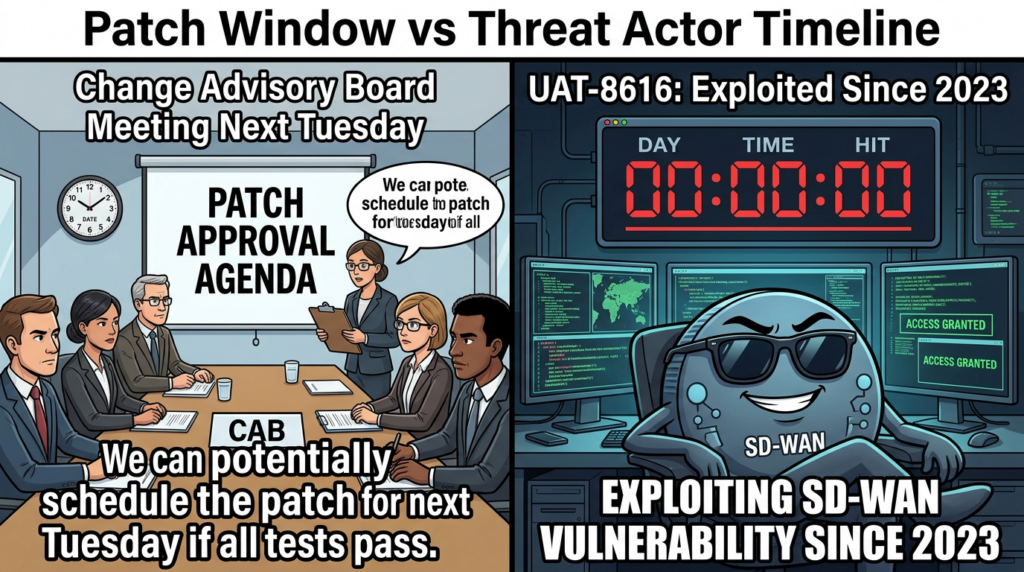
A maximum-severity zero-day, CVE-2026-20127, affects Cisco Catalyst SD-WAN Controller formerly vSmart and Cisco Catalyst SD-WAN Manager formerly vManage. A public PoC has been released, and exploitation has been observed in the wild dating back to at least 2023. (साइबर सुरक्षा समाचार)
At a high level, the issue allows an unauthenticated remote attacker को bypass authentication by sending crafted requests, then log in as an internal high-privileged non-root user, which is enough to manipulate SD-WAN fabric configuration via NETCONF. (एनवीडी)
Cisco Talos tracks the exploitation cluster as UAT-8616, describing it as sophisticated and focused on SD-WAN components. (Cisco Talos Blog)
Why this zero-day is uniquely dangerous for real networks
SD-WAN is not “just another app server.” When attackers gain privileged access to the management and control plane, they’re not trying to steal a single database. They’re trying to rewrite network reality:
- Push policy changes across sites
- Reroute traffic or create inspection detours
- Add or impersonate trusted SD-WAN components
- Create durable, hard-to-see persistence inside the overlay fabric (द हैकर न्यूज़)
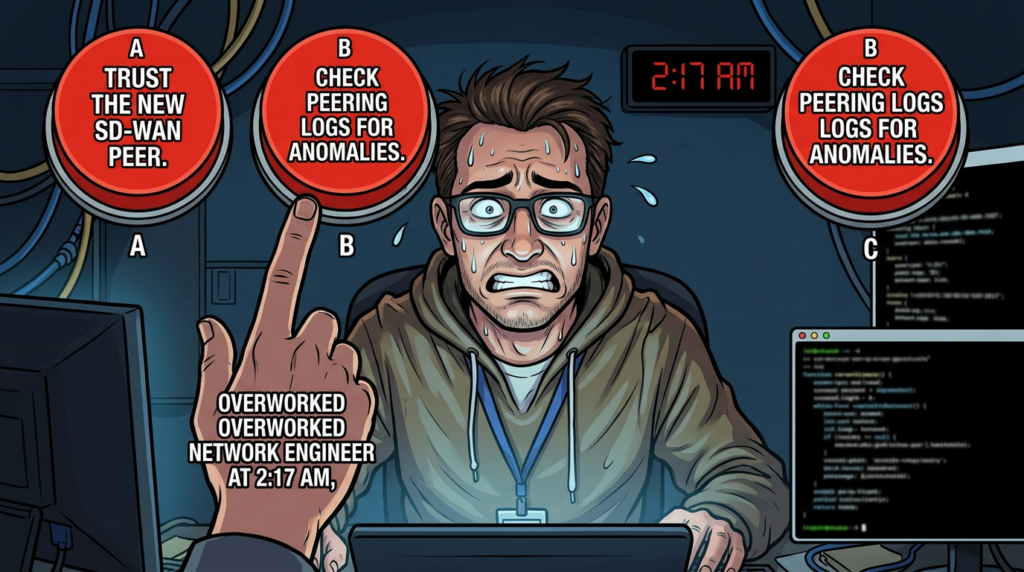
The multi-agency threat hunting guide describes a key concept that matters operationally: the actor can create a rogue peer that briefly appears as a trusted SD-WAN component and can take “trusted actions” in the management/control plane. (Cyber.gov.au)
That’s why defenders keep repeating one blunt rule: do not expose SD-WAN management interfaces to the internet—patching is mandatory, but exposure reduction is what buys you time. (द हैकर न्यूज़)
Technical summary of CVE-2026-20127
Vulnerability class and impact
CVE-2026-20127 is an authentication bypass in the peering authentication mechanism of Cisco Catalyst SD-WAN Controller and Manager. Successful exploitation enables an attacker to gain administrative privileges and log in as a high-privileged non-root internal account, then use that access to interact with NETCONF and manipulate SD-WAN fabric configuration. (एनवीडी)
Observed exploitation and timeline
- Exploitation has been observed “in the wild,” with evidence going back to at least 2023. (साइबर सुरक्षा समाचार)
- Cisco Talos clusters the activity as UAT-8616. (Cisco Talos Blog)
A common real-world chain: auth bypass to root
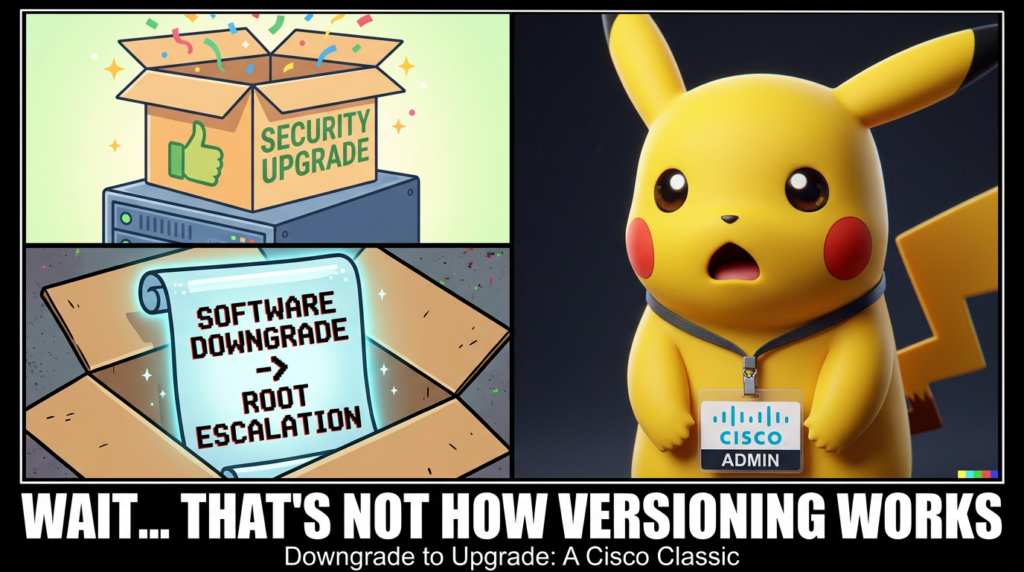
Multiple sources describe a practical pattern: after initial access via CVE-2026-20127, the actor escalates privileges via software downgrade and then leverages CVE-2022-20775 to reach root, before restoring versions to reduce obvious indicators. (Cisco Talos Blog)
CVE-2022-20775 is a privilege escalation vulnerability in the CLI of Cisco SD-WAN software that can allow elevated commands as root under certain conditions. (एनवीडी)
Related Cisco SD-WAN CVEs you should triage alongside CVE-2026-20127
Attackers rarely stop at the first door. Multiple write-ups and vendor references highlight two additional SD-WAN Manager vulnerabilities confirmed as exploited in the wild:
- CVE-2026-20122 Cisco Catalyst SD-WAN Manager arbitrary file overwrite
- CVE-2026-20128 Cisco Catalyst SD-WAN Manager information disclosure (उपयुक्त®)
Treat these as part of the same operational incident class: edge/control-plane targeting with rapid exploit maturation.
Attack chain, mapped to what defenders can actually see
This section compresses the tradecraft into a sequence you can hunt.
Stage 1 Initial access through control-plane peering abuse
Cisco Talos highlights that a “most critical activity to look for” early is control connection peering events in SD-WAN logs, because they may indicate initial access attempts via CVE-2026-20127. Talos calls out extra scrutiny on vManage peering types. (Cisco Talos Blog)
The hunt guide also focuses heavily on anomalous peering behaviors and related telemetry in vSmart logging. (Cyber.gov.au)
Stage 2 Privileged access via high-privilege non-root account
Once the attacker can log in as the internal high-privileged user, the SD-WAN control plane becomes the objective. One of the key pivots discussed in public reporting is NETCONF usage. (द हैकर न्यूज़)
Stage 3 Root escalation via downgrade and CVE-2022-20775
The multi-agency hunt guide explicitly notes a downgrade sequence followed immediately by exploitation of CVE-2022-20775. (Cyber.gov.au)
This matters because it gives defenders a time-correlation handle: downgrade artifacts + reboot markers + privilege escalation signs.
Stage 4 Persistence and defense evasion
Two signals repeatedly emphasized:
- SSH authorized keys added for privileged access
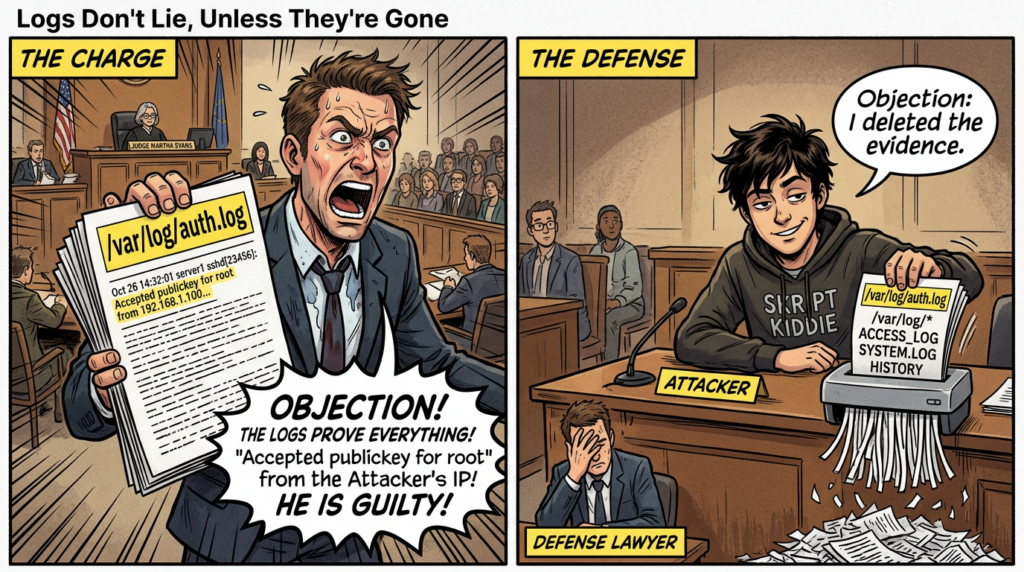
- Efforts to clear logs under /var/log and command history (द हैकर न्यूज़)
The hunt guide also stresses centralizing logs off-device specifically to reduce the effectiveness of this style of cleanup.
Fast exposure check, what to confirm in the first hour
1 Confirm whether your management plane is internet-reachable
If vManage or the controller management interfaces are exposed to the internet, treat this as an emergency. Public reporting emphasizes that exposure is a major risk factor for compromise. (द हैकर न्यूज़)
At minimum, you want:
- strict ACL allowlists from admin jump hosts
- VPN-only access for management
- no direct public inbound to management UI, SSH, or NETCONF (unless your architecture explicitly requires it and it’s tightly controlled)
2 Identify versions and patch posture
Vendor and security research write-ups indicate patches are available and that immediate patching is recommended. (उपयुक्त®)
Because Cisco advisory pages may be access-restricted in some environments, rely on your internal Cisco software inventory and cross-check against the official advisory in your change process. (Don’t “guess” versions from blogs—use your own device version output and Cisco’s fixed release list.)
3 Assume compromise if you find downgrade artifacts
The hunt guide provides a concrete detection idea: a software downgrade on vSmart often precedes escalation, typically triggers a reboot, and produces distinctive version-change artifacts (with example markers like cdb_set and master install initialization).
Threat hunting, logs to pull and what to query
Log locations repeatedly referenced by guidance
Multiple public sources point defenders to specific log files for identifying suspicious access patterns and downgrade behavior.
From public reporting and the hunt guidance references:
/var/log/auth.logfor suspicious SSH key acceptance (including root or vmanage-admin patterns) (द हैकर न्यूज़)- vdebug-related logs used for downgrade and reboot correlation (example paths shown in reporting) (द हैकर न्यूज़)
What “good” hunting looks like
Stop looking for a single IOC. This incident class is best hunted as behavioral correlation:
- unusual control-plane peering event
- followed by version downgrade or reboot anomalies
- followed by privileged auth artifacts
- followed by NETCONF activity or configuration changes
- followed by log tampering signals
That’s exactly why the hunt guide publishes structured detections and emphasizes off-device logging. (Cyber.gov.au)
Ready-to-adapt queries and checks
The following are defender-side examples you can adapt to your environment. They are not exploit code.
Bash triage on-device, validate quickly
# 1) Check for suspicious SSH key acceptance
sudo grep -E "Accepted publickey for (root|vmanage-admin)" /var/log/auth.log | tail -n 200

# 2) Quick scan for sudden version-change / downgrade words in vdebug-like logs
sudo grep -RInE "cdb_set|master install|older_version|system-reboot-issued" /var/log /var/volatile/log 2>/dev/null | head -n 200

# 3) Identify recently modified SSH authorized_keys for privileged accounts
sudo find /home -maxdepth 3 -type f -name "authorized_keys" -printf "%TY-%Tm-%Td %TT %p\\n" 2>/dev/null | sort
Why these checks: the hunt guide explicitly calls out “root SSH public key accepted” as high severity and describes downgrade artifacts and reboot markers as a useful sequence.
Splunk example, privilege auth and suspicious peer patterns
index=sdwan sourcetype=linux_secure ("Accepted publickey for root" OR "Accepted publickey for vmanage-admin")
| stats count min(_time) as firstSeen max(_time) as lastSeen values(src) as srcIP values(host) as host by user
| sort -lastSeen
Elastic example, auth.log key acceptance
GET logs-*/_search
{
  "query": {
    "bool": {
      "must": [
        { "match_phrase": { "message": "Accepted publickey" } }
      ],
      "should": [
        { "match_phrase": { "message": "for root" } },
        { "match_phrase": { "message": "for vmanage-admin" } }
      ],
      "minimum_should_match": 1
    }
  },
  "size": 200,
  "sort": [{ "@timestamp": "desc" }]
}
Sigma-style logic inspired by the published hunt guide structure
The hunt guide provides a structured detection entry for “Application Downgrade” and outlines conditions such as version-change artifacts, master install initialization, and reboot markers.
You can translate that into a Sigma-like rule conceptually:
title: Cisco SD-WAN vSmart suspicious downgrade sequence
logsource:
  product: cisco_sdwan
detection:
  downgrade_markers:
    - 'cdb_set'
    - 'Set software'
    - 'older_version'
  install_markers:
    - 'master install'
  reboot_markers:
    - 'system-reboot-issued'
  condition: (1 of downgrade_markers) and (1 of install_markers) and (1 of reboot_markers)
level: high
falsepositives:
  - authorized rollback
  - failed upgrade fallback
This mirrors the sequence logic shown in the guide and keeps the same false-positive framing.
Mitigation and hardening that actually reduces risk
Patch strategy, the only durable fix
For CVE-2026-20127, multiple reputable sources emphasize immediate patching because exploitation has been observed and a PoC is public. (साइबर सुरक्षा समाचार)
At the same time, patching alone is not enough if your management plane is internet exposed or if your logging is only local.
Exposure reduction and control-plane hygiene
The hunt guide’s mitigation section is blunt:
- use the vendor recommended “golden star” version concept
- patch as soon as practical
- do network filtering so only legitimate admin IPs and edge devices can reach sensitive interfaces
- centralize logging off-device
That last point is critical because post-compromise activity includes log clearing. If logs stay only on the appliance, you’re letting the attacker decide what you can prove later. (Cyber.gov.au)
Treat NETCONF like a privileged control-plane API
NETCONF appears in public reporting as a mechanism that an attacker can access after authentication bypass, enabling manipulation of SD-WAN fabric configuration. (एनवीडी)
Practical guardrails:
- restrict who can reach TCP 830 in the management plane
- alert on unusual NETCONF sessions, especially shortly after peering anomalies or reboots
- baseline “normal” management automation so anomalies stand out
Incident response playbook, if you suspect compromise
1 Contain first, then investigate
If you see suspicious peering events, downgrade artifacts, or root key acceptance:
- isolate management plane access to a small set of jump hosts
- snapshot and preserve logs off-device immediately
- engage vendor support processes if required
2 Hunt for persistence
Because reported post-compromise steps include adding SSH authorized keys and creating local users that mimic existing users, prioritize:
- comparing current user lists against last known-good
- reviewing authorized_keys for privileged accounts
- validating root login configuration and unexpected modifications (द हैकर न्यूज़)
3 Validate configuration integrity
Even if you don’t find malware, SD-WAN compromise can be “configuration-first.” Confirm that policy, routes, and trust relationships match your intended state.
When a high-impact edge-device issue goes from “limited exploitation” to “public PoC,” teams usually have two bottlenecks: asset visibility और verification at scale. This is where an AI-assisted workflow can be practical without turning into “AI theater.”
Penligent can be used as an operator-focused cockpit for defensive validation tasks you already need to do: enumerate externally reachable management surfaces, confirm which SD-WAN endpoints are exposed, and run repeatable checks to prove that mitigations are effective after patch windows. The key is to keep it in an authorized, controlled scope and use it to automate the boring parts—inventory confirmation, exposure checks, and evidence collection—so engineers can spend time on the parts that require judgment.
A second natural use is reporting and repeatability. SD-WAN incidents are full of “prove it” questions from leadership: which systems were exposed, when were they patched, what evidence says we’re clean. Automating those checks into a consistent runbook reduces both time-to-answer and the chance that someone forgets a log source or misses a downgrade signal.
Summary table, what to prioritize right now
| आइटम | यह क्यों मायने रखती है | What to do today |
|---|---|---|
| CVE-2026-20127 | Auth bypass, CVSS 10, in-the-wild exploitation, public PoC | Patch immediately, restrict management exposure (साइबर सुरक्षा समाचार) |
| Rogue peering signals | Early indicator of initial access attempts | Review control connection peering events, especially vManage peering types (Cisco Talos Blog) |
| Downgrade artifacts | Often precedes root escalation | Alert on downgrade + reboot sequence markers |
| CVE-2022-20775 | Privilege escalation path used post-access | Ensure versions are fixed and audit for downgrade then privilege escalation (एनवीडी) |
| Root or vmanage-admin SSH keys | Persistence and high-confidence compromise signal | Hunt Accepted publickey events and review authorized_keys (Cyber.gov.au) |
| CVE-2026-20122 / CVE-2026-20128 | Additional exploited SD-WAN Manager bugs | Patch and reduce attack surface on Manager (द हैकर न्यूज़) |
संदर्भ
https://cybersecuritynews.com/poc-exploit-cisco-sd-wan-0-day-vulnerability/ https://thehackernews.com/2026/02/cisco-sd-wan-zero-day-cve-2026-20127.html https://www.darkreading.com/vulnerabilities-threats/cisco-sd-wan-zero-day-exploitation-3-years https://nvd.nist.gov/vuln/detail/CVE-2026-20127 https://blog.talosintelligence.com/uat-8616-sd-wan/ https://www.tenable.com/blog/cve-2026-20127-cisco-catalyst-sd-wan-controllermanager-zero-day-authentication-bypass https://www.cyber.gov.au/sites/default/files/2026-02/ACSC-led Cisco SD-WAN Hunt Guide.pdf https://nvd.nist.gov/vuln/detail/CVE-2022-20775 https://www.cisco.com/c/en/us/support/docs/csa/cisco-sa-sd-wan-priv-E6e8tEdF.html https://thehackernews.com/2026/03/cisco-confirms-active-exploitation-of.html https://www.securityweek.com/cisco-warns-of-more-catalyst-sd-wan-flaws-exploited-in-the-wild/ https://www.helpnetsecurity.com/2026/03/05/cisco-cve-2026-20128-cve-2026-20122-exploited/ https://penligent.ai/ https://www.penligent.ai/hackinglabs/openclaw-virustotal-the-skill-marketplace-just-became-a-supply-chain-boundary/
 Hindi
Hindi  English
  German
  French
  Spanish
  Portuguese
  Japanese
  Korean
  Arabic
  Turkish
  Hebrew