
In the rapidly evolving landscape of offensive security, a new paradigm is emerging. It is no longer about choosing between “Manual Pentesting” and “Automated Scanning.” It is about IA agêntica—autonomous systems that can reason, plan, and execute attacks.
However, for the hard-core security engineer, there has always been a trade-off: Intelligence vs. Privacy.
To get GPT-4 level intelligence, you usually have to send data to the cloud. To keep data private, you had to use “dumb” local tools.
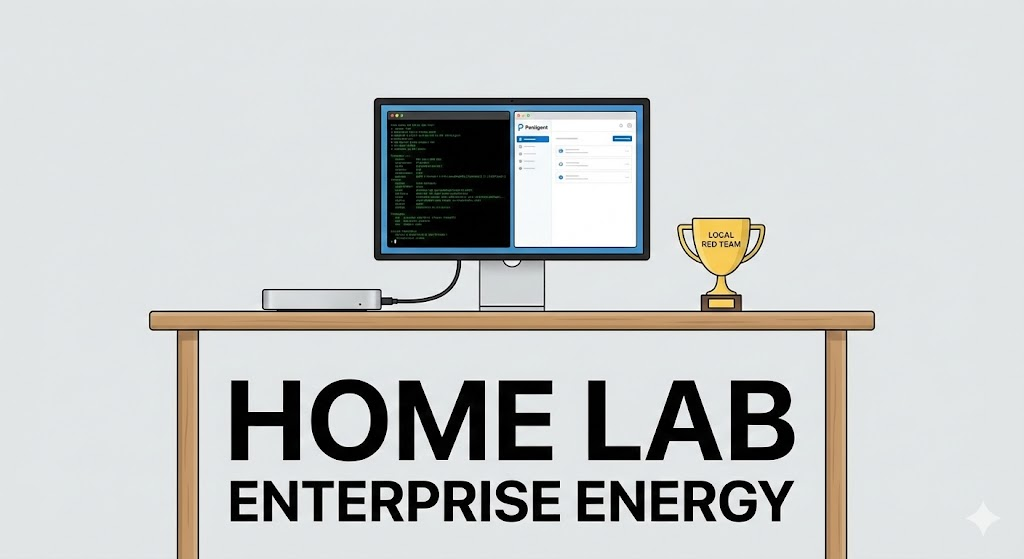
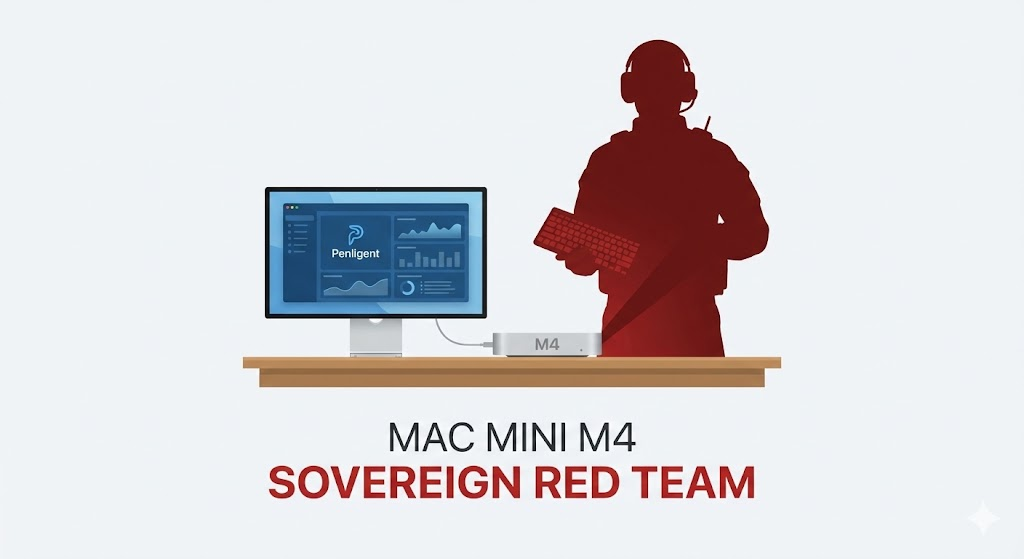
The Mac Mini M4 + Penligent changes this equation.
By combining the massive local memory bandwidth of the Mac Mini M4 with the sophisticated agentic architecture of Penligent, we can achieve the holy grail of modern red teaming: The Private AI Agentic Hacker.
This article dissects the technical architecture of this stack and why it represents the future of testes de penetração.
The Hardware Foundation: Mac Mini M4 as the “Silent Assassin”
To build a private hacker, you need a brain that lives on your desk, not in a data center.
For years, the bottleneck for local AI testes de penetração was VRAM. NVIDIA GPUs are powerful but memory-starved. A consumer RTX 4090 caps at 24GB VRAM.
O problema:
To run a model capable of complex vulnerability analysis (like Llama-3-70B or Qwen-2.5-Coder), you need at least 40GB of memory for decent quantization (4-bit). On an RTX 4090, you are forced to use smaller, “hallucination-prone” models (8B or 13B).
The Solution: Mac Mini M4 Pro
The M4 Pro chip completely disrupts this market with Unified Memory Architecture (UMA).
- Capacity: Up to 64GB of Unified Memory means you can load a 70B parameter model entirely into RAM.
- Bandwidth: 273GB/s memory bandwidth ensures acceptable token generation speeds (inference).
- Neural Engine: Dedicated silicon for accelerating specific tensor operations.
With a Mac Mini M4, you possess a piece of hardware that can “think” as deeply as a server-grade GPU cluster, but it sits silently on your desk, air-gapped from the public internet if necessary.
The Software Brain: Why Hardware Needs Penligent
Having a powerful Mac Mini is like having a Ferrari engine on a go-kart. You have the raw power (Inference), but you lack the steering, navigation, and driver (Orchestration).
Raw LLMs (like Llama 3) are not hackers. They are text predictors. If you ask them to “hack this IP,” they will hallucinate or refuse.
É aqui que Penligente enters the stack.
Penligente is not just a scanner; it is an Agentic Orchestrator. It provides the cognitive architecture that turns a raw LLM into a security expert.
- Task Decomposition: Breaking down “Audit this web app” into “Crawl”, “Fuzz”, “Analyze JS”, “Exploit SQLi”.
- Tool Use: Knowing como e when to use
mapa de sql,nmapouSuíte para arrotos. - Self-Correction: If an exploit fails, Penligent agents analyze the error message and retry with a different payload—something a raw LLM cannot do efficiently.

The “Private AI Agentic Hacker” Architecture
The formula is simple but revolutionary:
Mac Mini M4 (Local Compute/Privacy) + Penligent (Agentic Logic) = Private AI Agentic Hacker.
In this hybrid architecture, the Mac Mini M4 serves as the Secure Edge Node.
1. The Setup: Local Inference via MLX
First, we utilize Apple’s MLX framework to turn the Mac Mini into a local inference server that is compatible with Penligent’s agentic standards.
Python
`# hosting_local_brain.py
Using Apple MLX to serve a 70B model on port 8080
from mlx_lm import load, generate from flask import Flask, request, jsonify
app = Flask(nome)
Load Llama-3-70B-Instruct (4-bit) into 64GB Unified Memory
This is the “Brain” that stays PRIVATE on your Mac
model, tokenizer = load(“mlx-community/Meta-Llama-3-70B-Instruct-4bit”)
@app.route(‘/generate’, methods=[‘POST’]) def query_model(): data = request.json prompt = data.get(“prompt”)
# The Mac Mini processes the sensitive code locally
response = generate(model, tokenizer, prompt=prompt, max_tokens=1024)
return jsonify({"response": response})
se nome == ‘principal‘: app.run(port=8080)`
2. The Logic: Penligent’s “Private Link” Concept
Ideally, we connect the Penligent orchestration layer to this local endpoint.
Instead of sending your target’s source code to OpenAI or Anthropic, the Penligent Agent routes the sensitive reasoning tasks to your local Mac Mini M4.
The Workflow:
- Orchestration (Penligent Cloud/Core): Manages the workflow, report generation, and non-sensitive metadata.
- Execution (Mac Mini M4):
- The Mac receives the raw HTTP response from the target.
- The Mac (using the 70B local model) analyzes the HTML/JS for DOM-based XSS.
- The Mac generates the exploit payload locally.
- The Mac executes the payload against the target.
- Resultado: Only the finding (e.g., “XSS found on parameter
q“) is sent back up to the dashboard. The proprietary code and specific payload logic never leave your local environment.
Case Study: Analyzing PII without Leaks
Imagine you are auditing a healthcare application (HIPAA compliance is mandatory).
- The Old Way: You cannot use cloud AI because you cannot upload patient data or PII (Personally Identifiable Information) to ChatGPT. You are stuck with manual review or regex scanners.
- The Mac Mini + Penligent Way:
- Penligente agents crawl the application and encounter a database dump file.
- The file is downloaded to the Mac Mini M4.
- The local Llama-3-70B model (running on M4 Metal) analyzes the dump to identify PII patterns and logic flaws in the database structure.
- Crucialmente: The patient names and medical records nunca leave the Mac Mini’s unified memory.
- The AI Agent generates a report: “Database dump accessible via IDOR.”
- Success: You used state-of-the-art AI reasoning to find a critical breach, while maintaining zero-trust data privacy.
Why This Matters for Security Engineers
- OPSEC (Operational Security): As a Red Teamer, your tools must be silent and private. An exposed API call to OpenAI is a beacon. A local calculation on an M4 chip is invisible.
- Cost Efficiency: For the price of one month of enterprise cloud GPU instances, you can own the hardware (Mac Mini M4) forever.
- Uncensored Capability: Cloud models have safety filters (“I cannot help you hack”). On your Mac Mini M4, you can run uncensored or fine-tuned versions of open-source models that are specifically trained for testes de penetração (e.g., CyberSecEval tuned models).
Conclusion: The Future is Hybrid
O Mac Mini M4 provides the muscle. Penligente provides the mind. Together, they form the Private AI Agentic Hacker.
This combination allows security teams to scale their operations without compromising on privacy or intelligence. We are moving toward a future where every security engineer has a dedicated “AI Associate” running locally on their desk, tirelessly auditing code and testing networks, guided by the advanced methodologies of platforms like Penligent.
If you are serious about the future of offensive security, it is time to upgrade your hardware and your software stack. The Mac Mini M4 e Penligente are the toolkit for the next generation of ethical hackers.
 Portuguese
  English
  German
  French
  Spanish
  Japanese
  Korean
  Hindi
Hindi  Arabic
  Turkish
  Hebrew