
Scanning Tools: A Security Engineer’s Perspective
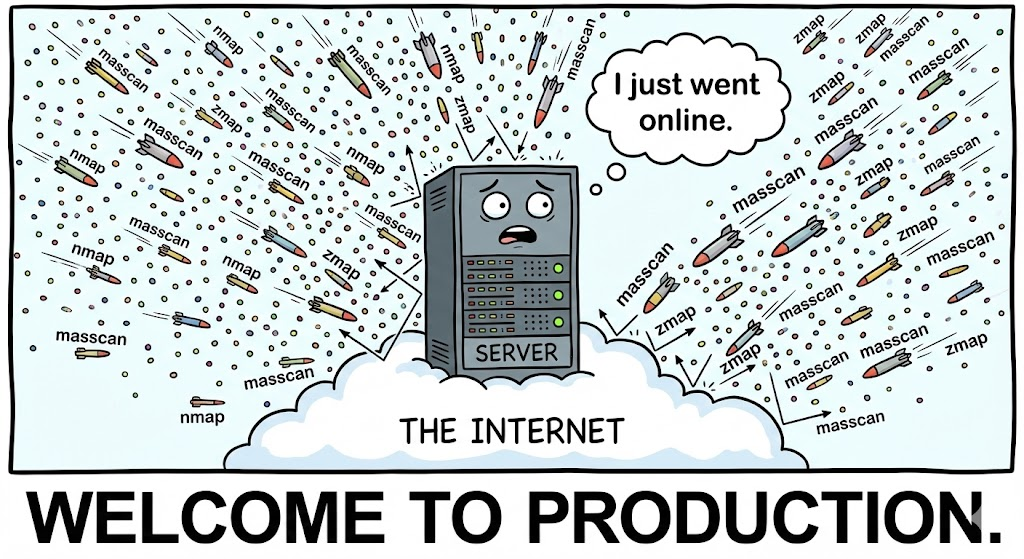
Scanning tools are a double-edged sword in modern cybersecurity. For defenders, they are essential for vulnerability discovery, asset inventory, and continuous security validation. For attackers, scanning tools are often the first stage of exploitation, enabling reconnaissance, fingerprinting, and weakness discovery at scale.
Understanding scanning tools only from a “defensive product” angle is incomplete. To secure systems effectively, security engineers must understand how attackers actually use scanning tools, how scans evade detection, and how defenders can identify and neutralize them.
This article examines scanning tools from both sides, focusing on real-world abuse patterns, followed by four concrete attack and defense code examples that reflect production environments.
What Are Scanning Tools in Practice?
In real-world usage, scanning tools typically fall into several categories:
- Network scanners (port and service discovery)
- Web application scanners (DAST-style probing)
- API scanners (schema and behavior analysis)
- Cloud and asset scanners (misconfiguration discovery)
Attackers rarely rely on a single tool. Instead, they chain lightweight scanners, custom scripts, and evasion techniques to stay below detection thresholds.
Why Scanning Tools Matter in the Attack Chain
Scanning is not noisy by default. Modern attacks favor:
- Low-rate scanning
- Distributed source IPs
- Protocol-compliant requests
- Timing and header randomization
This allows attackers to blend into normal traffic while building a precise attack map.
Attack & Defense Code Examples
Below are four common scanning tool abuse techniques, each paired with a practical defensive countermeasure.
Attack Example 1: Low-Rate Port Scanning to Evade IDS
Instead of classic fast scans, attackers throttle scan speed to avoid triggering alerts.
Attack: Slow TCP Port Scan (Python)
python
import socket
import time
target = "192.168.1.10"
ports = [22, 80, 443, 8080]
for port in ports:
s = socket.socket()
s.settimeout(2)
try:
s.connect((target, port))
print(f"[+] Port {port} open")
except:
pass
s.close()
time.sleep(10) # intentionally slow
This scan may take minutes or hours, but often bypasses rate-based detection.
Defense: Connection Rate Profiling
python
from collections import defaultdict
import time
connection_log = defaultdict(list)
def log_connection(ip):
now = time.time()
connection_log[ip].append(now)
recent = [t for t in connection_log[ip] if now - t < 300]
if len(recent) > 20:
print(f"Suspicious scanning behavior from {ip}")
Defense insight: Detection should focus on behavior over time, not burst traffic alone.
Attack Example 2: Web Scanner Fingerprinting Evasion
Attackers disguise scans to look like normal browser traffic.
Attack: Header-Masqueraded Scanner
python
import requests
headers = {
"User-Agent": "Mozilla/5.0",
"Accept": "text/html,application/xhtml+xml",
}
payloads = ["/admin", "/.git", "/backup.zip"]
for p in payloads:
r = requests.get(f"<https://target.example>{p}", headers=headers)
print(p, r.status_code)
This avoids basic “scanner User-Agent” rules.
Defense: Path Entropy and Access Pattern Detection
python
import math
def entropy(s):
from collections import Counter
probs = [n / len(s) for n in Counter(s).values()]
return -sum(p * math.log2(p) for p in probs)
paths = ["/admin", "/.git", "/backup.zip"]
for p in paths:
if entropy(p) > 2.5:
print("High-risk scanning path detected:", p)
Defense insight: Attack detection should consider what is being requested, not only who requests it.
Attack Example 3: API Scanning via Schema Enumeration
Attackers scan APIs to infer undocumented endpoints and parameters.
Attack: API Parameter Discovery
python
import requests
params = ["id", "user_id", "debug", "admin"]
for p in params:
r = requests.get(
"<https://api.example.com/v1/resource>",
params={p: "1"}
)
if r.status_code != 400:
print(f"Interesting parameter: {p}")
This reveals hidden logic and access control flaws.
Defense: Strict Parameter Allowlisting
python
ALLOWED_PARAMS = {"id"}
def validate_params(request_params):
for p in request_params:
if p not in ALLOWED_PARAMS:
raise ValueError("Invalid parameter detected")
Defense insight: Loose parameter handling turns API scanning into a discovery oracle.
Attack Example 4: Distributed Scanning Across IPs
Attackers distribute scans across multiple IP addresses to evade correlation.
Attack: Rotating Source Scan (Conceptual)
python
targets = ["<https://target.example/login>", "<https://target.example/api>"]
for t in targets:
# executed from different hosts or proxies
send_request_from_random_ip(t)
Each IP appears benign, but collectively they map the application.
Defense: Cross-IP Behavioral Correlation
python
def correlate_requests(logs):
fingerprint = {}
for entry in logs:
key = (entry["path"], entry["method"])
fingerprint.setdefault(key, set()).add(entry["ip"])
for k, ips in fingerprint.items():
if len(ips) > 10:
print("Distributed scan detected on:", k)
Defense insight: Scanning tools often reveal themselves only when viewed holistically.

Key Takeaways for Security Teams
Scanning tools are not inherently malicious, but their abuse patterns are predictable. Defenders who rely solely on signatures or static rules will miss:
- Slow scans
- Header-masqueraded probes
- API inference attacks
- Distributed reconnaissance
Effective defense requires:
- Behavioral baselines
- Temporal correlation
- Semantic request analysis
- Context-aware logging
Final Thoughts
Scanning tools represent the opening move of almost every serious attack. Treating scanning as “background noise” is one of the most common defensive blind spots.
By understanding how attackers actually scan — and by instrumenting defenses at the protocol, logic, and behavior layers — organizations can detect threats before exploitation begins, not after damage is done.

 English
  German
  French
  Spanish
  Portuguese
  Japanese
  Korean
  Hindi
Hindi  Arabic
  Turkish
  Hebrew