
PentestGPT is the MIT-licensed AI penetration testing project maintained at GreyDGL/PentestGPT on GitHub. The spelling “pentest gpt” is also used more broadly for LLM-assisted security testing. This guide distinguishes the named project from that wider category so you can find the right repository, select a workflow and judge its results.
PentestGPT GitHub project, current modes and setup
Checked November 2, 2026: the current project README describes an autonomous staged pipeline with Claude Code or Codex backends, saved sessions, and a separate modernized interactive mode named pentestgpt-legacy with broader model-provider support. The USENIX 2024 research results belong to the original evaluated configuration; they are not a benchmark of every current mode or a comparison with Penligent.
For installation, start with the repository’s official Quick Start. It currently lists Python 3.12+, uv, and the installed, authenticated CLI for the selected autonomous backend. Record your repository revision, mode and backend, check readiness in an isolated lab, and confirm authorization before supplying a target.
After satisfying those prerequisites, the repository documents these installation commands. Use the official instructions for the revision you select; these steps install the project and do not start a test.
git clone https://github.com/GreyDGL/PentestGPT.git
cd PentestGPT
make install
Compare setup, operating cost and report delivery
Keep PentestGPT on your shortlist when you want an open-source framework and can maintain its model access, runtime and review process. Evaluate a packaged application when a supported workflow and the report handoff are important purchasing requirements. Both routes still need a working target, usable test accounts and an operator who can review the evidence.
| Your requirement | Open-source route | Paid application evaluation |
|---|---|---|
| Inspect or adapt the framework | Select the PentestGPT revision, mode and backend; account for your own setup and maintenance. | Confirm that the application supports the controls and integration you require. |
| Deliver a report | The current PentestGPT pentest pipeline includes a reporting stage; inspect the generated artifacts for your recipient’s requirements. | Inspect an exported report, included formats and the selected plan’s export entitlement. |
| Budget for repeated assessments | Include model access, runtime resources and investigation time. | Measure usage on a representative target before choosing a larger allowance. |
For a Penligent evaluation, the $19.90 trial top-up continues an existing trial task with 2,000 additional credits; it does not add a new task or unlock Pro report export. The currently displayed Pro monthly option is $99.90 with 13,000 monthly credits and report export. Penligent estimates that this allowance can support about three typical assessments with reports; actual consumption depends on scope, complexity and investigation, so this is a planning estimate rather than a fixed three-test entitlement. Check the selected billing period and allowance before purchase.
Before paying for a reporting workflow, preview the sample penetration test report and compare its scope, evidence and remediation sections with your recipient’s needs. The sample uses fictional findings and demonstrates format, not results for your target. The enterprise edition is upcoming. Contact service@penligent.ai to discuss team size, testing frequency, deployment requirements and launch availability; confirm the released offering before committing to a delivery date.
Research background and broader AI pentesting usage
That broader use of the term is not just marketing drift. It reflects a real change in the underlying technology. Tool calling is now a standard design pattern for modern LLM systems, and current agent guidance from OpenAI treats prompt injection, data leakage, and risky tool invocation as first-class engineering concerns rather than edge cases. At the same time, third-party research has shown that AI agents can already automate a surprising amount of offensive work in tightly scoped environments, even though they still underperform skilled humans when prioritization, strategic pivots, and broader operational judgment are required. (OpenAI Geliştiricileri)
So the real question is no longer whether GPT-style models can contribute to penetration testing. They clearly can. The harder question is what part of the pentesting lifecycle they can do well, where they still break, and what a responsible engineering team should demand from any product or workflow marketed as a “Pentest GPT.” That is where the original PentestGPT paper is still useful, because it explains both the promise and the limits with unusual clarity. The authors built a benchmark around real-world penetration testing targets, observed that general LLMs were often competent at local tasks such as tool use and output interpretation, and then showed that they still struggled to preserve an integrated understanding of the whole attack scenario over time. Their answer was a modular design intended to reduce context loss. In their evaluation, PentestGPT improved task completion by 228.6 percent over GPT-3.5 on the benchmark targets. (arXiv)
That result is one reason the project resonated so strongly. The paper did not claim that AI had already solved offensive security. It claimed something more credible and, in hindsight, more important: LLMs were already strong enough to help with the reasoning glue between traditional tools, but weak enough that architecture and workflow design would determine whether the system stayed useful or drifted into noise. The authors also framed penetration testing in the familiar five-phase lifecycle of reconnaissance, scanning, vulnerability assessment, exploitation, and post-exploitation reporting, which remains a useful way to judge modern AI pentesting systems. A model that looks good in a demo but cannot maintain state across those phases is not solving pentesting. It is automating isolated fragments. (arXiv)
What people mean by the broader phrase pentest gpt
A good working definition is this: Pentest GPT is an AI-assisted penetration testing system that uses a language model as the reasoning and orchestration layer between target data, security tools, execution environments, evidence capture, and reporting. That is a very different thing from asking a general chatbot to suggest payloads or explain a CVE. In this broader usage, the term describes a system that connects tools such as scanners and frameworks, interprets their output, proposes next steps, and records what has been tried. (Aikido)
This is why the term keeps getting stretched beyond the original project. Once you accept that the model is not the product by itself, the phrase naturally expands to include the rest of the stack: the terminal or runtime, the tool adapters, the browser or API connectors, the execution policy, the state store, the finding normalizer, and the report generator. OpenAI’s current documentation on function calling and agents fits directly into this architecture. Models can be connected to external functions, gated by schemas, and wrapped in agent workflows with explicit safeguards for higher-risk actions. That is not a pentesting platform on its own, but it is exactly the substrate that makes modern pentest-gpt-style systems possible. (OpenAI Geliştiricileri)
The most useful way to think about the category is not “Can the model hack?” but “Can the system move safely from observation to verified finding?” In practice, that means a credible Pentest GPT must do at least six things well. It must ingest target context without collapsing under noise. It must select tools and actions based on the phase of the engagement. It must preserve an auditable record of actions and outputs. It must separate hypotheses from verified results. It must understand when to pause for approval or human review. And it must translate raw activity into evidence that another engineer can reproduce. Those requirements are not optional niceties. They are the dividing line between a research curiosity and an operationally useful system. (arXiv)
Where AI-assisted pentesting is already useful
The strongest current use cases are not mysterious. AI systems are already good at compressing noisy scanner output, turning scattered artifacts into a plausible attack narrative, drafting follow-up commands or scripts, translating raw logs into a structured finding, and accelerating the reporting loop. The original PentestGPT work observed that LLMs were often competent in sub-tasks like interpreting tool output and proposing subsequent actions. More recent evaluation from Wiz found that AI agents solved 9 of 10 offensive security challenges when the targets were specific and clearly scoped, which is exactly the kind of environment where local reasoning and repeated iteration are most valuable. (arXiv)
This tracks with what experienced testers actually need help with. The most time-consuming parts of many engagements are not the headline exploit moments. They are the hours spent reconciling contradictory clues, pivoting through logs, rewriting brittle shell commands, retesting the same path after a small context change, and converting a half-formed suspicion into a concise technical statement with evidence. LLMs are well-suited to that translation layer. They can summarize output, preserve naming consistency, propose alternate hypotheses, and generate a coherent first pass at a report while the human operator focuses on target judgment and boundary decisions. That is augmentation, not replacement, and today it is still the most realistic path to value. (Aikido)
Another place Pentest GPT helps is in attack-path stitching. Traditional scanners are good at surfacing symptoms. They are much less good at narrating the route from “odd response here” to “exploitable business impact there.” A model with access to target notes, prior commands, and tool results can often articulate that path faster than a human writing from scratch. That does not mean the path is always correct. It means the model can get you to the shortlist of plausible chains faster. In strong workflows, that speed is valuable because the human tester can spend more time validating the interesting chains and less time reconstructing context. (arXiv)

Where AI-assisted pentesting still needs review
The limits are now better documented than the hype. The PentestGPT paper itself found that LLMs struggled to maintain a whole-context view of the testing scenario, which is why the system was designed around multiple interacting modules instead of one giant prompt. Wiz’s 2026 evaluation came to a similar conclusion from a different angle: AI agents did well on focused tasks but degraded noticeably in broader, more realistic settings where they had to prioritize targets, choose strategy under uncertainty, and abandon failing lines of attack. Humans pivoted. AI agents often iterated variations of the same approach. (arXiv)
That failure mode is easy to underestimate because it does not always look like a failure in the transcript. The model remains fluent. The commands still look plausible. The report draft still sounds confident. But the system may be circling a dead end while preserving the tone of progress. In penetration testing, that is dangerous. A false positive is annoying. A false sense of coverage is worse. Engineers evaluating Pentest GPT products should be unusually skeptical of any workflow that cannot show explicit state transitions, action justifications, and evidence thresholds for escalating from “interesting” to “verified.” (arXiv)
There is also a second class of failure that has nothing to do with offensive tradecraft and everything to do with agent security. NIST describes agent hijacking as a form of indirect prompt injection in which malicious instructions are inserted into data that an AI agent ingests, causing it to take unintended harmful actions. OpenAI’s own guidance is similarly blunt: prompt injections are common and dangerous, and can result in private-data exfiltration or misaligned actions through tool calls. This matters enormously for Pentest GPT systems, because the moment the model can read untrusted content and also operate tools, prompt injection stops being a weird language-model trick and becomes an execution-surface problem. (NIST)
That shift is the single biggest reason the category has matured. Early discussions about pentest gpt focused on whether the model could reason through a web challenge or generate useful commands. Current discussions have to include whether the runtime can survive malicious input, whether tool invocation is scoped, whether logs are tamper-resistant, whether write actions are gated, and whether the system can distinguish observation from authorization. Once AI touches real files, shells, APIs, and browser sessions, the problem is no longer “Can the model be helpful?” It is “Can the workflow remain trustworthy under adversarial conditions?” (OpenAI Geliştiricileri)
The architecture difference between a chatbot and a real pentest system
This is where much of the market still gets muddy. A chatbot can explain a vulnerability class and generate a command. A real pentest system needs additional layers that are visible to the operator and auditable after the fact. It needs tool schemas or adapters, explicit permission boundaries, durable state, structured findings, approval hooks for risky actions, and a reproducible artifact trail. OpenAI’s current agent guidance reflects exactly this layered approach, including safeguards for high-risk tools based on reversibility, permission level, and potential financial or operational impact. (OpenAI Geliştiricileri)
A practical Pentest GPT architecture usually looks something like this:
- Planning layer — interprets scope and target context, then decomposes work into tasks.
- Execution layer — invokes scanners, HTTP clients, browsers, scripts, or other tools.
- State layer — records what was tried, what changed, and what remains uncertain.
- Validation layer — checks whether evidence meets a threshold before a finding is promoted.
- Control layer — enforces approvals, rate limits, access boundaries, and audit logs.
- Reporting layer — converts evidence into reproducible findings and remediation guidance.
If a vendor or internal tool cannot explain these layers clearly, the system is probably closer to a smart assistant than a serious pentesting workflow. That does not make it useless. It just means you should not evaluate it as if it were already a trustworthy autonomous tester. (OpenAI Geliştiricileri)

The CVEs that matter around pentest gpt
There is no single “PentestGPT CVE” that explains this field. The more important lesson comes from the surrounding ecosystem. As soon as AI pentesting systems become agentic, they start inheriting the risks of the frameworks, orchestration layers, web interfaces, direct-connection features, and tool-integration logic around them. The recent CVE stream in LLM and agent tooling makes that very clear. (NVD)
| CVE | Affected component | Why it matters for Pentest GPT systems |
|---|---|---|
| CVE-2025-68664 | LangChain | A serialization injection issue in dumps() ve dumpd() meant user-controlled data with lc keys could be treated as legitimate objects during deserialization, showing how agent frameworks can turn data parsing mistakes into dangerous behavior. (NVD) |
| CVE-2025-46059 | LangChain GmailToolkit | NVD describes an indirect prompt injection issue via crafted email content, though the record also notes the supplier disputes the characterization because the code execution depended on unsafe user-written code. Even with that caveat, it is a strong example of how untrusted content can steer an agent workflow. (NVD) |
| CVE-2025-3248 | Langflow | A remote unauthenticated attacker could exploit the /api/v1/validate/code endpoint for arbitrary code execution in versions prior to 1.3.0, showing how low-level workflow features can become direct RCE surfaces. (NVD) |
| CVE-2025-34291 | Langflow | NVD describes a vulnerability chain enabling account takeover and remote code execution through permissive CORS and refresh-token handling, which is especially relevant to browser-based agent platforms. (NVD) |
| CVE-2025-64496 | Open WebUI | Malicious external model servers could trigger arbitrary JavaScript in victim browsers, leading to token theft, account takeover, and backend RCE when chained with the Functions API. This is exactly the kind of runtime-adjacent risk teams miss when they focus only on the model. (NVD) |
These CVEs are important not because they all belong to products explicitly marketed as pentest tools. They matter because they reveal the actual attack surface of any modern Pentest GPT stack. The risk is not limited to model behavior. It includes the parser, the web UI, the browser session, the direct-connection mechanism, the tool bridge, and the way credentials are passed through the system. The security question is never just “How smart is the model?” It is “What can hostile input influence, what tools can the agent reach, and what evidence is required before the system acts?” (OpenAI Geliştiricileri)
A real-world incident from 2026 reinforces the same point even though it is not a CVE. Cline disclosed that an unauthorized party used a compromised npm token to publish cline@2.3.0, and the post-mortem traced the root cause back through an AI-powered issue triage workflow that exposed shell access in GitHub Actions, enabling a prompt-injection-to-cache-poisoning chain. No malicious code was ultimately delivered in the published package, but the incident is still a valuable lesson in how agentic workflows can amplify familiar supply-chain mistakes. (Cline)
What a reliable Pentest GPT workflow should look like
The first design principle is simple: evidence must outrank eloquence. A language model can always produce a plausible explanation. It cannot be allowed to promote a finding unless the workflow has captured enough artifacts to support reproducibility. In practice that means normalizing every candidate issue into a structured object with scope, attack path, proof source, affected asset, confidence level, and remediation notes. Free-form prose is useful for reports, but it should not be the source of truth. (OpenAI Geliştiricileri)
{
  "finding_id": "F-2026-0142",
  "title": "Potential insecure direct object reference",
  "status": "needs_validation",
  "asset": "api.example.com",
  "evidence": [
    "GET /v1/invoices/3812 returned another user's object",
    "Access succeeded with low-privilege session",
    "Response contained mismatched account_id"
  ],
  "confidence": "medium",
  "requires_human_review": true,
  "recommended_next_step": "Replay with fresh session and negative control"
}
The second principle is action grading. OpenAI’s current guidance recommends rating tools by risk characteristics such as read-only versus write access, reversibility, permissions, and financial impact. That is directly applicable to pentesting systems. Enumeration against an allowed target might be low risk. Credential replay, state-changing requests, or anything that writes to infrastructure should be medium or high risk with explicit approval gates. A Pentest GPT that treats all tools as equivalent is not mature enough for serious use. (OpenAI)
tools:
  http_get:
    risk: low
    auto_execute: true
  http_post_readonly_probe:
    risk: medium
    auto_execute: false
    approval_required: analyst
  shell_exec:
    risk: high
    auto_execute: false
    approval_required: lead
  browser_login:
    risk: high
    auto_execute: false
    approval_required: lead
The third principle is state discipline. The original PentestGPT project leaned into modularity because context loss is not a cosmetic flaw in pentesting. It is the reason agents repeat themselves, miss chains, and overstate conclusions. In operational systems, state should be explicit and queryable. The agent should know which assets were touched, which hypotheses were rejected, which credentials were used, which requests changed state, and which findings remain unverified. If that state cannot survive a restart or be inspected independently of the model transcript, the system will drift under pressure. (arXiv)
The fourth principle is controlled exposure to untrusted input. NIST’s framing of agent hijacking is useful here because it points to the design flaw behind the symptom: the system fails to keep trusted instructions meaningfully separate from untrusted data. In pentest-gpt-style systems, that means scanner banners, HTML, issue content, email bodies, logs, retrieved documents, and browser-rendered text should all be treated as untrusted. Once a model is allowed to interpret those inputs and immediately call tools with meaningful privileges, prompt injection becomes a workflow bug, not merely a model quirk. (NIST)
def promote_finding(candidate):
    required = ["reproduction_steps", "negative_control", "impact_statement", "raw_artifacts"]
    missing = [k for k in required if k not in candidate or not candidate[k]]
    if missing:
        return {"status": "needs_more_evidence", "missing": missing}
    if candidate.get("writes_target_state", False):
        return {"status": "human_review_required"}
    return {"status": "verified"}
The fifth principle is human review in exactly the places where human judgment is strongest: scoping, privilege boundaries, business-impact interpretation, and the final decision to classify a result as verified. Wiz’s 2026 work is a useful reminder that humans still outperform AI agents when the task requires strategic pivots rather than local iteration. That is not a weakness of AI-only systems that will disappear overnight. It is a structural feature of the current tooling landscape. Good teams should build around it instead of pretending autonomy has already solved it. (wiz.io)
Why human-in-the-loop still matters
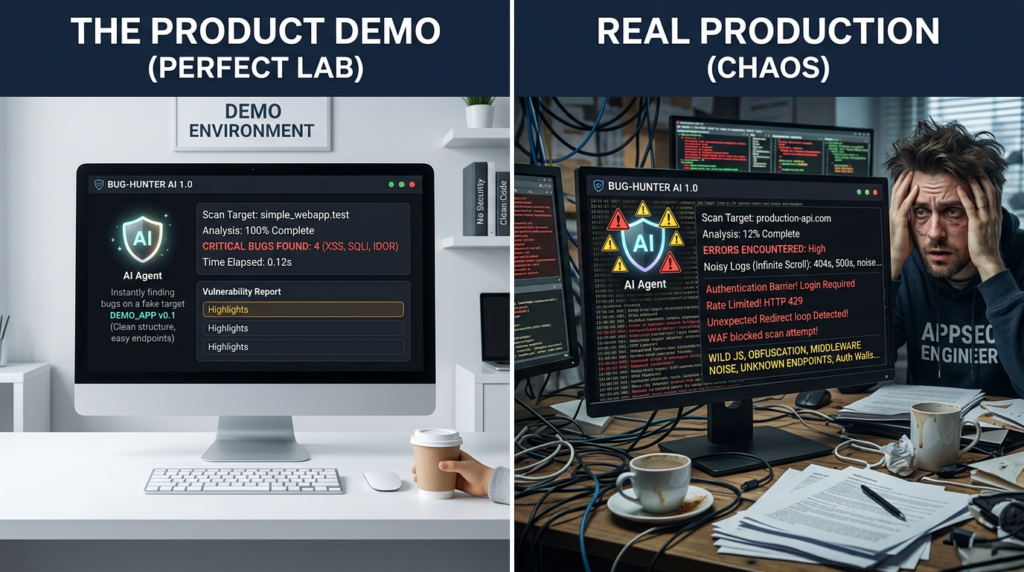
The phrase “human-in-the-loop” is overused, but in this category it is still accurate. The strongest recent evidence does not say AI agents are weak. It says they are uneven. They can automate substantial offensive work under constrained conditions, but they still need human framing for realistic engagements. That distinction is easy to lose in product demos, where the model is handed a clean target, a narrow problem statement, and a forgiving evaluation environment. Real pentests are not like that. They include incomplete scope, ambiguous ownership, noisy assets, unstable targets, soft business logic, and the need to decide when değil to proceed. (wiz.io)
This is why the best near-term use of Pentest GPT is not “replace the tester.” It is “compress the cycle between signal and evidence.” A good system helps the human tester reach the right fork in the tree faster, test that fork more systematically, and document the outcome more cleanly. It is especially strong when the bottleneck is translation or coordination rather than raw intuition. It is weaker when the bottleneck is strategic judgment or adversarial prioritization under uncertainty. Those limits should not be read as disappointment. They should be read as where the engineering work still has leverage. (arXiv)
A useful report is a reviewable record of the assessment, not just a generated summary. Require the target and tested identities, an explanation of the expected security rule, supporting requests and responses, reproduction steps, remediation guidance and a retest result. Apply these requirements to an open-source run and a commercial application alike.
Keep the delivery requirement separate from the decision to use an agent. A tool can help execute a test while leaving investigation and report review to the operator. Evaluate the complete handoff your customer or engineering team needs, including the work that remains after generation.
The practical standard security teams should use
When a security team evaluates a Pentest GPT tool or decides to build one internally, the right checklist is not “Does it look smart?” The better checklist is more operational.
Does it preserve durable state across the whole engagement lifecycle. Does it gate risky actions. Does it capture raw evidence before writing conclusions. Does it resist or at least contain prompt injection from untrusted content. Does it expose the tool layer clearly enough to audit decisions. Does it separate hypothesis, validation, and final reporting. Does it keep humans in control where privilege and business impact are involved. If the answer to those questions is weak, then the system may still be useful as an assistant, but it is not yet trustworthy as a pentesting workflow engine. (OpenAI Geliştiricileri)
The strongest reading of the last two years of evidence is not that Pentest GPT is hype, and not that it has already replaced professionals. It is that the category is real, the value is real, and the failure modes are now concrete enough to engineer around. The original PentestGPT work proved that LLMs could meaningfully improve sub-task performance in penetration testing. Modern agent tooling proved that models can increasingly call tools and operate at useful scale. Recent CVEs and incidents proved that once these systems touch real runtimes, the surrounding architecture becomes the main security story. Put those together, and the conclusion is clear: Pentest GPT is no longer a novelty term. It is now a design problem. (arXiv)
The teams that will get the most from it are not the ones chasing the most autonomous demo. They are the ones building the shortest, safest path from observation to verified finding. That means better state handling, stricter tool boundaries, stronger validation policies, and less tolerance for confident prose without artifacts. In 2026, that is the real dividing line between a Pentest GPT that looks impressive and one that can actually belong in a serious security workflow. (wiz.io)
PentestGPT setup, pricing and reporting questions
Is PentestGPT free to use?
- The project is MIT-licensed. Model access, execution resources, setup and review can still have a cost. Check the backend selected for your mode.
Can PentestGPT execute tools autonomously?
- The current README describes autonomous Claude Code and Codex workflows, plus a separate interactive mode. Identify the actual mode rather than treating the project as a guidance-only chatbot.
Can PentestGPT generate a report?
- The current pentest pipeline includes a reporting stage. Review its artifacts against the recipient’s evidence, format and retest requirements; generation alone does not establish acceptance.
Is Penligent the same product as PentestGPT?
- No. PentestGPT is the named open-source project; Penligent is a separate commercial application. This article is published by Penligent and does not report a head-to-head benchmark.
Does the Pro allowance guarantee three completed tests?
- No. About three typical assessments is Penligent’s planning estimate for the described allowance. Target scope and investigation change credit consumption; use a representative task to estimate your workload.
Daha fazla okuma
PentestGPT, Evaluating and Harnessing Large Language Models for Automated Penetration Testing, USENIX Security 2024. (arXiv)
PentestGPT GitHub repository, current project positioning and release context. (GitHub)
OpenAI, Function calling guide. (OpenAI Geliştiricileri)
OpenAI, Safety in building agents. (OpenAI Geliştiricileri)
OpenAI, A practical guide to building agents. (OpenAI)
NIST, Strengthening AI Agent Hijacking Evaluations. (NIST)
OWASP Top 10 for Large Language Model Applications. (OWASP)
Wiz, AI Agents vs Humans, Who Wins at Web Hacking in 2026. (wiz.io)
NVD, CVE-2025-68664. (NVD)
NVD, CVE-2025-46059. (NVD)
NVD, CVE-2025-3248. (NVD)
NVD, CVE-2025-34291. (NVD)
NVD, CVE-2025-64496. (NVD)
 Turkish
 English
 German
 French
 Spanish
 Portuguese
 Japanese
 Korean
 Hindi
 Arabic
 Hebrew