
ما هي Digital Security Controls Really Are
Digital security controls are the technical, procedural, and administrative mechanisms that protect digital assets — from user accounts and networks to data at rest and in motion. They are fundamental risk mitigators that prevent, detect, and respond to threats in any modern computing environment. At a high level, they span authentication, encryption, access management, monitoring, incident response, and continuous improvement.
As organizations accelerate adoption of cloud, mobile, and distributed infrastructures, the number and complexity of risks they face grows. The global digital security control market is expanding rapidly, driven by rising attacks, IoT proliferation, and stringent compliance requirements. Analysts project sustained growth in demand for identity, encryption, and automated defensive technologies over the next decade.
In this article, we’ll explore key digital security controls that security engineers need to implement, align controls to real-world threats including CVE examples, and provide concrete attack and defensive code samples you can use in automation and testing.
Security Control Frameworks — Foundational Best Practices
Before diving into individual controls, it’s useful to understand the frameworks that mature organizations use to organize them.
- NIST Cybersecurity Framework (CSF): Organizes controls into core functions — Identify, Protect, Detect, Respond, and Recover — providing a lifecycle approach.
- ISO/IEC 27017: Offers cloud-specific security control guidelines built on ISO/IEC 27002, making it useful for hybrid and cloud deployments.
- CIS Controls: A consensus-based set of critical security actions (like access control, vulnerability management) aimed at blocking real threats.
These frameworks help teams prioritize which digital security controls matter most given their risk tolerances and compliance obligations.
Identity & Access Control — First Line of Defense
Why it Matters
Unauthorized access remains the most common root cause of breaches — whether it’s brute-force logins, credential stuffing, or stolen API keys. Effective access controls reduce risk by ensuring that only authorized identities can access sensitive systems.
Core Digital Security Controls for Identity
- Multi-Factor Authentication (MFA) — Enforce MFA for all accounts; weak authentication methods are often exploited by attackers.
- Role-Based Access Control (RBAC) — Assign only the minimum permissions needed for a role.
- Least Privilege Principle — Limit access even within authorized roles to only essential functions.
Example: Credential Theft Simulation (Attack & Defense)
Attack Goal: Use stolen API key to access a cloud resource.
باش
#Example: attempt to list protected resource using stolen key export API_KEY="STOLEN_KEY"curl -H "Authorization: Bearer $API_KEY" <https://api.example.com/data>
If this succeeds without detection, the system lacks effective digital access controls.
Defensive Control: Block unused or compromised API keys and enforce rotation.
باش
#Example script to rotate API keys automaticallyaws iam update-access-key \\ --access-key-id $OLD_KEY \\ --status Inactive aws iam create-access-key --user-name app
Best Practice: Automate key rotation and monitor for anomalous authentication attempts.
Encryption and Data Protection
Data In Transit and At Rest
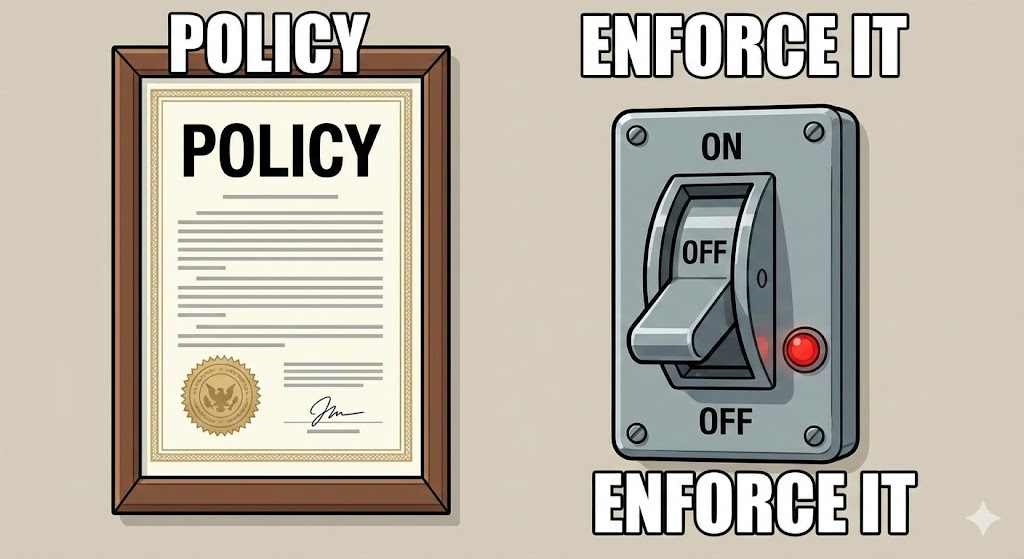
Encryption is one of the most effective digital controls to prevent data disclosure. Use strong standards such as TLS 1.3 for in-transit data and AES-256 for data at rest.
- Ensure all traffic is over HTTPS with valid certificates.
- Encrypt files and databases with an enterprise key management system.
- Apply encryption for backups and archived storage.
Example: Generating Encrypted Backups
باش
#Using OpenSSL to encrypt a database dumppg_dump mydb | openssl enc -aes-256-cbc -salt -out mydb.dump.enc
This control mitigates data disclosure even if backups are stolen or exposed.
Network Segmentation and Zero Trust Architecture
Why Separation Matters
Network segmentation limits the blast radius of intrusions by separating workloads and controlling east-west traffic. Together with Zero Trust (never trust, always verify), it requires authentication and authorization for every communication.
Effective digital security controls include:
- Micro-segmentation using software-defined networking
- Zero Trust policies for internal and external access
- Firewall rules with least-privileged flow permissions
Vulnerability Management and Patch Controls
Attackers often exploit unpatched vulnerabilities — and the speed of exploitation has accelerated in recent years.
Key controls include:
- Automated scanning for missing patches and outdated software.
- Prioritization of high and critical CVE vulnerabilities.
- Timely patch deployment.
Example Vulnerability (2025 Scenario):
Many ICS devices (Industrial Control Systems) have been found with vulnerabilities that allow command execution, credential disclosure, and unauthorized access. Proper segmentation and patching are recommended mitigations.
Monitoring, Logging, and Threat Detection
Digital Security Controls for Anomaly Detection
- Intrusion Detection/Prevention Systems (IDS/IPS) — Monitor for suspicious network patterns and block known exploits.
- SIEM Tools — Correlate logs from multiple sources to detect complex attacks.
- Behavioral Analytics — Use ML/AI to identify deviations from normal patterns.
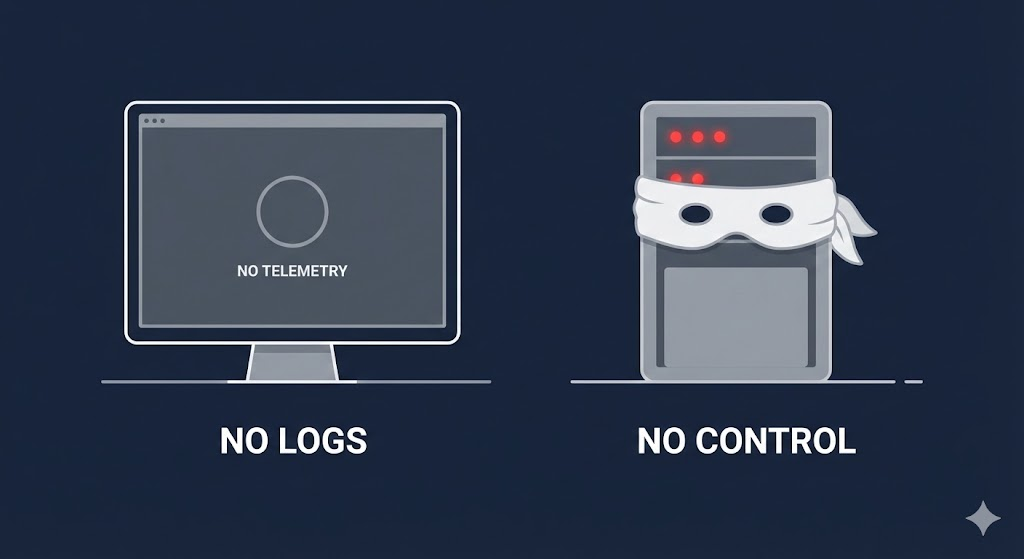
These tools detect incidents you cannot prevent and trigger automated responses.
Attack & Defense Sample — Detecting Suspicious Login Patterns
Attack Simulation: Brute-Force Login Attempts
باش
#Simulate repeated login failures for i in {1..100}; do curl -X POST -d "user=admin&pass=wrong$i" <https://auth.example.com/logindone>
Without detection, authentication logs accumulate without alerts.
Defensive Control: Alert on Excessive Failures
باش
#Example pseudo-SIEM ruleWHEN failed_logins > 10 WITHIN 1_minute: alert("Suspicious login pattern detected")
This helps flag brute-force attempts before compromise.
Incident Response Controls
Incident response is a critical digital security control that ensures teams can act quickly when prevention fails.
Core elements include:
- Defined playbooks for different incidents
- إجراءات الاحتواء الآلي
- Forensic-ready logging and evidence preservation
Example automation using a script:
باش
#Example: Isolate compromised host by updating firewalliptables -A INPUT -s 192.168.1.100 -j DROP
This can be incorporated into automated response workflows.
Compliance and Governance Controls
Many sectors require digital controls for regulatory reasons:
- GDPR, HIPAA, PCI DSS — each mandates specific data protections.
- NIST and ISO standards provide prescriptive control lists.
These requirements drive control implementation across identity, data, and incident domains.
Digital Security Controls Table — High-Impact Controls
| الفئة | Key Controls | Tools / Examples |
|---|---|---|
| Identity & Access | MFA, RBAC, PAM | Key rotation scripts |
| Data Protection | Encryption, KMS | AES-256, TLS 1.3 |
| Network | Zero Trust, Segmentation | Firewalls, ZTNA |
| الضعف | Patching, Scanning | Nessus, OpenVAS |
| الرصد | SIEM/IDS/IPS | Splunk, Suricata |
| الاستجابة للحوادث | Playbooks, Automation | SIEM alerts + scripts |
Advanced Controls: Data Loss Prevention (DLP) and Secrets Management
Complex environments benefit from data-centric controls:
- DLP Solutions — Prevent unauthorized data exfiltration.
- Secrets Scanning and Vaults — Store API keys and credentials in secure stores like HashiCorp Vault.
These address hard problems like accidental leaks and insider threats.
Practical Implementation Example — Automated Secret Rotation
باش
#Example using Vault to rotate a secretvault write auth/aws/role/myapp \\ credential_type=iam_user \\ policy=readonlyvault lease revoke -prefix auth/aws/creds/myapp
Rotating credentials systematically reduces exposure windows.
Conclusion — Digital Security Controls Are Continuous
Digital security controls aren’t one-time configurations — they form a continuous lifecycle of assessment, deployment, monitoring, and iteration. They include:
- Prevention (access controls, encryption)
- Detection (SIEM, IDS)
- Response & Recovery (playbooks, automation)
By aligning controls to established frameworks (NIST CSF, ISO/IEC 27017, CIS) and incorporating real-world monitoring and automation, organizations can build resilient defenses against evolving threats.
 Arabic
  English
  German
  French
  Spanish
  Portuguese
  Japanese
  Korean
  Hindi
Hindi  Turkish
  Hebrew