Private ip addresses are reserved IPv4 address ranges that cannot be routed on the public internet and are used to segregate internal network traffic, but in modern cloud and security contexts they also represent high-value targets for attackers and misconfiguration risks when not properly validated.
Understanding these private IP ranges and their implications is essential for AI-driven security engineers, penetration testers, and threat hunters working in 2025 environments with microservices, zero-trust networks, and automated attack surface expansion.
What Private IP Addresses Are and Why They Matter
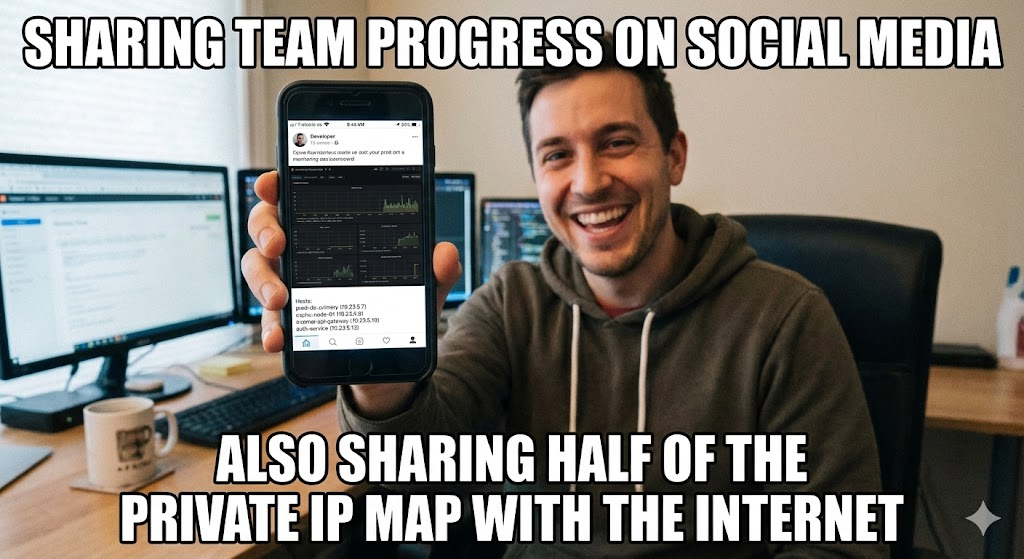
Private IP addresses, defined by RFC 1918, consist of non-routable IPv4 ranges that internal networks use to avoid IP exhaustion and isolate traffic from the public internet. The standard private IPv4 address ranges are:
| Range | CIDR | Typical Use |
|---|---|---|
| 10.0.0.0-10.255.255.255 | /8 | Large enterprises, cloud VPCs |
| 172.16.0.0-172.31.255.255 | /12 | Medium networks, segment isolation |
| 192.168.0.0-192.168.255.255 | /16 | Home and small office networking |
These addresses are widely adopted in on-premises networks, cloud virtual private clouds (VPCs), Kubernetes pods and services, backend microservices, and zero-trust segmentation boundaries. They are not reachable via the public internet unless misconfigured with NAT or exposed through services. (RFC 1918: https://datatracker.ietf.org/doc/html/rfc1918)
This isolation is often misconstrued as a security boundary, but it’s not inherently protective—especially when attackers exploit logic flaws to trick infrastructure into interacting with internal services.
Security Risks: SSRF and Internal Metadata Access
One of the most dangerous classes of vulnerabilities involving private IP addresses is Server-Side Request Forgery (SSRF). According to the OWASP API Security Top 10, SSRF allows attackers to induce a server to make HTTP requests to internal or external resources that are not directly accessible, often revealing sensitive data and internal services. (OWASP API7:2023 SSRF: https://owasp.org/www-project-api-security/)
In a coordinated SSRF attack wave observed in 2025, over 400 IPs were detected targeting multiple SSRF vulnerabilities across platforms, allowing attackers to pivot into internal private networks and extract cloud metadata and credentials. These attacks highlight how SSRF combined with private IP spaces can become a catastrophic entry point. technijian.com
Example Exploitation
Cloud providers expose metadata services on internal IPs like 169.254.169.254, which, if fetched from a vulnerable server, can divulge credentials.
python
import requests# Unsafe SSRF usageresp = requests.get("<http://169.254.169.254/latest/meta-data/>")print(resp.text)
Without validation to block private IPs, user-controlled URLs could lead to this internal metadata being leaked.
CVE Highlight: CVE-2025-8020 and private-ip Package Bypass
A high-impact vulnerability CVE-2025-8020 affects the widely used npm package private-ip, which aims to check if an IP belongs to a private range. Versions up to 3.0.2 fail to classify some internal ranges correctly, opening an SSRF bypass where attackers can still reach internal hosts because multicast or other reserved blocks are not recognized. advisories.gitlab.com
This example shows that even utilities intended to detect private IP addresses can be flawed, and underscores why AI-assisted dependency analysis and risk scoring are crucial parts of modern security pipelines.
When Private IP Address Logic Backfires
Too often, developers assume:
“If internal services run on private IPs, they’re safe from outsiders.”
This assumption fails as soon as an attacker finds a way to proxy requests inside the trust boundary—e.g., through SSRF, open proxies, or compromised credentials. Once inside, private IPs become pathways for lateral movement.
Consider a simple Node.js internal API exposed without authentication:
javascript
app.get("/internal/secret", (req, res) => { res.send("Highly sensitive configuration"); });
If an SSRF vulnerability elsewhere in the stack allows mesh requests to this endpoint, the result is a catastrophic data leak.
Defensive Strategies Against Private IP Abuse
Recognizing that private IP boundaries are not security controls, engineers should implement layered defenses:
Validate and Block Requests to Reserved Ranges
Before performing outbound requests based on user input, resolve and verify that the destination is not a reserved or internal IP:
javascript
import dns from "dns";
import ipaddr from "ipaddr.js";
function isInternal(ip) {
const addr = ipaddr.parse(ip);
return addr.range() === "private" || addr.range() === "linkLocal";
}
// Example of checking resolved IP
dns.lookup("example.com", (err, address) => {
if (isInternal(address)) {
throw new Error("Refusing to send request to internal IP");
}
});
Using robust libraries (e.g., ipaddr.js) helps avoid incomplete validation logic. (See Snyk SSRF analysis: https://security.snyk.io/vuln/SNYK-JS-PRIVATEIP-1044035) security.snyk.io
Network Segmentation and Microsegmentation
Using firewalls and modern cloud security groups, restrict which internal private IP ranges can communicate with critical services. Zero Trust networks enforce policies at the identity and service level, not just at the IP range boundary.
Rate Limiting and Behavioral Anomaly Detection
Internal scanning of private networks is often a precursor to horizontal movement. Implement monitoring that alerts on unusual patterns such as:
nmap -sn 10.0.0.0/8
Scans like this from internal sources should trigger high-severity alerts.
Private IP Addresses and Cloud Metadata Risks
Cloud metadata endpoints (AWS, GCP, Azure) are classic private IP targets. Applying platform-specific mitigations—like AWS IMDSv2 token enforcement—prevents metadata leaking even if SSRF endpoints exist.
curl -X PUT "<http://169.254.169.254/latest/api/token>" -H "X-aws-ec2-metadata-token-ttl-seconds: 21600"
Making metadata retrieval require a session token greatly reduces risk.
Real-World Impact: Internal API Exploits
GitLab and other platforms have historically had SSRF flaws that allowed internal API enumeration via private IPs, exposing sensitive endpoints and configurations. The key lesson is that internal IPs should not be trusted for authentication decisions, and logical access control must apply uniformly.
Why AI and Automated Pentesting Matter Now
The complexity of modern attack surfaces, combined with fragmented microservices communicating over private IPs, means engineers cannot rely on manual checks alone. Automated tools that reason about internal logic flows, cross-reference dependency vulnerabilities, and simulate SSRF exploitation are essential.
Penligent: AI-Driven Detection of Private IP Risks
Des plateformes comme Penligent transform how security teams approach internal risk validation. Rather than writing bespoke tests for every combination of private IP logic, Penligent uses AI to:
- Detect SSRF exposure to private, link-local, or multicast IP ranges
- Analyze API endpoints for unsafe URL handling
- Validate that internal API protections are enforced
- Integrate into CI/CD to catch regressions early
By automating the discovery and verification of potential misuse of private IP boundaries, Penligent provides both depth and scale that manual analysis struggles to match.
Treat Private IP Addresses as Security Boundaries, Not Panaceas
Private IP addresses have practical value for organizing internal traffic and conserving IPv4 space. But in modern infrastructure, especially in cloud and distributed microservices, they must be treated as part of the attack surface, not a security guarantee.
Proper validation, network controls, continuous monitoring, and automated testing—especially when augmented with AI tools like Penligent—are essential to mitigating the risks presented by private IP misuse.