
In the sophisticated realm of modern web architecture, the JSON Web Signature (JWS) stands as the cryptographic backbone of authentication protocols like OAuth 2.0 and OpenID Connect. For security engineers, red teamers, and AI researchers, the ability to perform a raw json web signature decode is merely the entry point into a complex matrix of cryptographic implementation flaws and logical vulnerabilities.
While developers view JWS as a trusted token carrier, security professionals recognize it as a prime attack surface. A token is only as secure as its verification logic. If you can decode it, you can analyze it; if you can analyze it, you can potentially manipulate it.
This comprehensive guide moves beyond basic online decoders. We will dissect the RFC 7515 specifications, analyze critical vulnerabilities like the “Psychic Signatures” (CVE-2022-21449), and explore how next-generation AI platforms like पेनलिजेंट are automating the exploitation of JWS logic flaws.
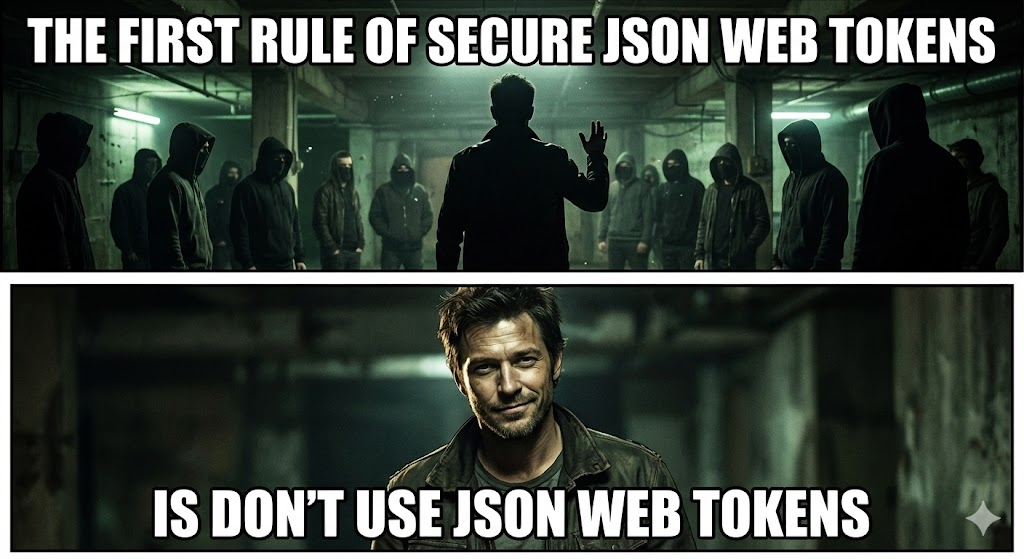
The Engineering Behind the String: Deconstructing Base64Url
When you perform a json web signature decode operation, you are technically reversing a Base64Url encoding. Unlike standard Base64, JWS uses a URL-safe alphabet (replacing + साथ - और / साथ _) and omits the padding characters (=).
Understanding this distinction is crucial for building custom security tools. A standard Base64 decoder will choke on a JWS signature.
The Structure
A JWS is constructed as: BASE64URL(UTF8(JWS Header)) || '.' || BASE64URL(JWS Payload) || '.' || BASE64URL(JWS Signature)
To an attacker, the Header is the most interesting segment. It dictates how the server should process the token.
| Field | विवरण | Security Risk |
|---|---|---|
alg | Algorithm (e.g., HS256, RS256) | Critical. Can be manipulated to None or confused (HMAC vs RSA). |
kid | Key ID | Vulnerable to SQL Injection or Path Traversal if used to lookup keys. |
jku | JWK Set URL | Vulnerable to Server-Side Request Forgery (SSRF) and Key Injection. |
cty | Content Type | Used in nested tokens, adding parsing complexity. |
Building a Robust Tool: Python Implementation
Relying on web-based debuggers is operational security (OpSec) suicide during a professional engagement. You need offline, scriptable tools. Below is a production-grade Python script designed to json web signature decode tokens while handling padding errors gracefully—a common issue in captured traffic.
Python
`import json import base64 import sys
class JWSDecoder: def init(self, token): self.token = token self.parts = token.split(‘.’)
def _pad_base64(self, data):
    """Ensures correct padding for Base64Url decoding."""
    missing_padding = len(data) % 4
    if missing_padding:
        data += '=' * (4 - missing_padding)
    return data

def decode_segment(self, segment):
    try:
        # Replace URL-safe chars with standard Base64 chars
        segment = segment.replace('-', '+').replace('_', '/')
        padded = self._pad_base64(segment)
        decoded_bytes = base64.b64decode(padded)
        return json.loads(decoded_bytes)
    except Exception as e:
        return {"error": f"Decoding failed: {str(e)}", "raw": segment}

def analyze(self):
    if len(self.parts) != 3:
        return "Invalid JWS format. Expected 3 distinct parts."

    header = self.decode_segment(self.parts[0])
    payload = self.decode_segment(self.parts[1])
    signature_hex = self.parts[2] # Signature is binary, keeping as raw hex/string often useful

    return {
        "Header": header,
        "Payload": payload,
        "Signature_Sample": signature_hex[:10] + "..."
    }
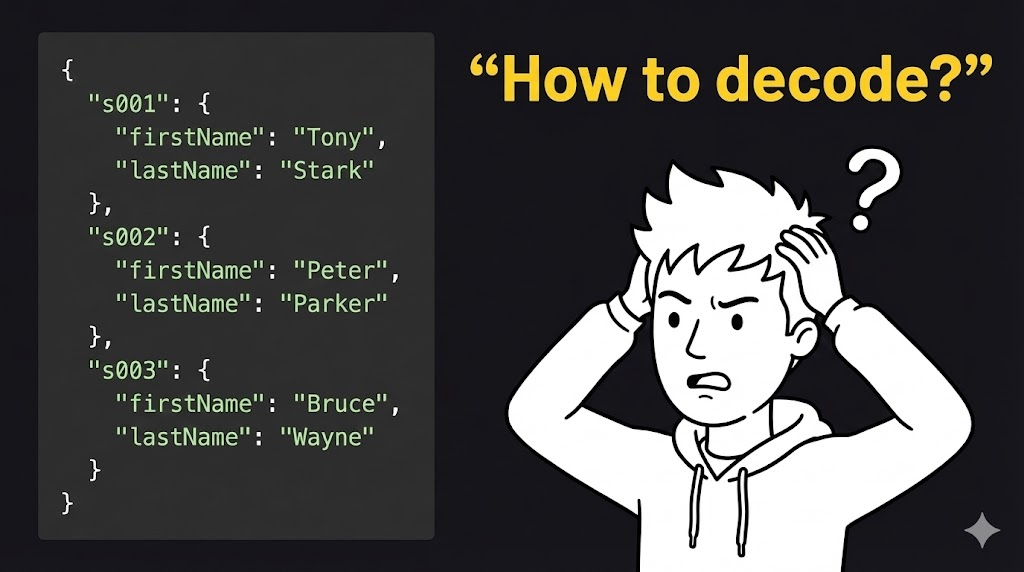
Usage
token = “eyJhbGciOiJIUzI1NiIsInR5cCI6IkpXVCJ9.eyJzdWIiOiIxMjM0NTY3ODkwIiwibmFtZSI6IkpvaG4gRG9lIiwiaWRtaW4iOmZhbHNlfQ.InvalidSignatureForDemo” decoder = JWSDecoder(token) print(json.dumps(decoder.analyze(), indent=2))`
The Critical Gap: Decoding vs. Verification
The most prevalent security fallacy in JWT implementation is confusing decoding with verification.
- Decoding converts the Base64Url string into readable JSON. Anyone can do this.
- Verification recalculates the signature using the
algspecified in the header and the server’s secret key.
If an application performs a json web signature decode to read the user_id पहले verifying the signature, an attacker can modify the payload and gain unauthorized access. This “Time-of-Check to Time-of-Use” (TOCTOU) style race condition in logic is subtle but devastating.
Advanced Exploitation: Beyond Alg: None
While the Alg: None attack is well documented, modern libraries block it by default. Hardcore security engineers focus on cryptographic implementation flaws and complex logic bypasses.
1. The “Psychic Signatures” (CVE-2022-21449)
In 2022, a catastrophic vulnerability was discovered in Java’s implementation of ECDSA (Elliptic Curve Digital Signature Algorithm).
The Math:
ECDSA signature verification involves a mathematical equation:
$$v = r^{-1}(zG + rQ) \mod n$$
Where $(r, s)$ is the signature pair.
The Flaw:
The implementation failed to check if $r$ or $s$ were zero. If an attacker manually constructed a token where the signature values $r=0$ and $s=0$:
- The equation collapses to $0 = 0$.
- The verification returns TRUE के लिए any payload and any public key.
This allowed attackers to bypass authentication entirely on any Java 15-18 system simply by zeroing out the signature. This highlights why manual analysis and decoding are vital—standard libraries would just reject the token, but a security researcher needs to see why logic holds.
2. Key Confusion Attack (HMAC vs. RSA)
This attack exploits the server’s trust in the alg header.
- Server Expectation: The server holds a Public Key (for verifying RS256) and a Private Key (for signing).
- The Attack: The attacker grabs the server’s Public Key (available at
/jwks.json). - The Forgery: The attacker modifies the header to
HS256(Symmetric HMAC). - The Execution: The attacker signs a malicious token using the Public Key as the HMAC secret.
- The Failure: The server sees
HS256, fetches its known “key” (which happens to be the Public Key file), and verifies the HMAC signature using that file. The verification passes.
3. JKU Header Injection
If the JWS Header contains "jku": "<https://attacker.com/keys.json>", and the server fetches keys from this URL to verify the signature, the attacker controls the verification process. They sign the token with their own private key and tell the server where to find the matching public key.
Automating the Impossible: AI-Driven JWS Pentesting with Penligent
For a human pentester, checking every permutation of these attacks is exhausting. You must test for:
- Algorithm confusion (RSA -> HMAC, ECDSA -> HMAC)
kidinjection (SQLi, Directory Traversal)jkuwhitelist bypasses- Hundreds of known CVEs (like CVE-2022-21449)
यहीं पर पेनलिजेंट.ai represents a paradigm shift.
Context-Aware Fuzzing
Unlike traditional scanners that blindly fire payloads, Penligent’s AI agents utilize a “Reasoning Loop.”
- Deep Semantic Analysis: When the AI encounters a JWS, it performs a json web signature decode to understand the application’s context. Is there a
rolefield? Is there atenant_id? - Logic Inference: The AI infers the backend technology stack (e.g., detecting Java headers implies a high probability of CVE-2022-21449 vulnerability).
- Adaptive Payload Generation:
- It generates specific payloads (e.g., changing
role: userकोrole: admin). - It intelligently manipulates the signature (e.g., attempting the “Psychic Signature” zero-value exploit).
- It validates the success of the attack by attempting to access protected endpoints with the forged token.
- It generates specific payloads (e.g., changing
The Penligent Advantage: The platform automates the tedious “Decode -> Modify -> Sign -> Test” loop, allowing security engineers to focus on high-level architecture rather than script maintenance. It essentially acts as a 24/7 Red Team member that never forgets a specific CVE check.
Hardening Strategies for the Architect
To defend against these sophisticated vectors, engineers must adopt a defense-in-depth approach:
- Hardcode Algorithms: Do not trust the
algheader. Explicitly define that your verification function only acceptsRS256(or your chosen algorithm).Python `# BAD jwt.decode(token, key) GOOD jwt.decode(token, key, algorithms=[“RS256”])` - Validate Key IDs (kid): Ensure the
kidheader maps to a strictly defined whitelist of keys in your Key Management Service (KMS). Never use thekiddirectly in a database query or file path. - Enforce Key Rotation: Regularly rotate signing keys to mitigate the impact of a compromised private key.
- Monitor for Padding Anomalies: A high volume of decoding errors (due to bad Base64Url padding) in your logs often indicates an active fuzzing attempt.
निष्कर्ष
The command to json web signature decode is the starting line, not the finish line. For the elite security engineer, JWS represents a dynamic battlefield of cryptographic primitives and implementation logic.
Whether it is the mathematical void of ECDSA zero-values or the logic trap of Key Confusion, the vulnerabilities are real and devastating. By leveraging deep manual analysis combined with AI-driven automation tools like पेनलिजेंट, security teams can ensure their authentication layers remain impervious to the evolving threat landscape of 2025.

 Hindi
Hindi  English
  German
  French
  Spanish
  Portuguese
  Japanese
  Korean
  Arabic
  Turkish
  Hebrew