
Looking for PentestGPT.ai, HackerAI or Hacker AI? The hosted PentestGPT.ai service has an official subscription migration route to HackerAI.co. In this guide, “PentestGPT” refers to the separately maintained GreyDGL/PentestGPT open-source project unless the .ai domain is specified. If you used the hosted service, compare HackerAI’s current plan, execution route and migration limits rather than treating it as an unrelated replacement.
The best PentestGPT alternative is the one that changes the part of the workflow you need to improve. Shortlist Penligent for a packaged desktop Web assessment workflow, HackerAI for its hosted assistant and execution choices, Strix for another source-accessible agent route, Burp Suite Professional for tester-directed Web investigation, or ZAP for a configurable proxy and automation workflow. Keeping current PentestGPT is also a valid outcome if you can operate it well.
Current PentestGPT already documents autonomous execution. Switching simply to “get an agent” is therefore an incomplete requirement. Compare installation ownership, target access, supervision, evidence, output rights and the cost of repeating the work.
Documentation checked November 7, 2026; hosted-brand migration checked November 8, 2026. Published by Penligent. This is a buying and evaluation guide, not a hands-on product ranking. Sample workloads and cost calculations are illustrative.
Jump to: shortlist - choose by requirement - cost and free access - first trial - offline budget exercise - evaluation workbook - よくあるご質問
PentestGPT alternatives compared by operating model
| Route | Evaluate it when | What you still own | First decision-changing check |
|---|---|---|---|
| Keep PentestGPT | Framework access and control matter, and the current mode fits the task. | Runner, backend access, target preparation and evidence review. | Can the selected revision produce a reproducible, useful session? |
| 寡黙 | You want a desktop project, agent-supervision and finding-review workflow for Web testing. | Supported environment, target authorization, test identities and acceptance review. | Can one prepared task yield evidence you can explain and hand off? |
| HackerAI | You prefer its hosted assistant and local or cloud Agent choices. | Execution choice, target access, data-processing review and use within plan limits. | Does the selected route fit your environment and operating responsibilities? |
| Strix | You want to evaluate another agentic framework or its separate managed route. | For local use, Docker, model access, runner configuration and review. | Can you retain and independently verify the generated artifacts? |
| Burp Suite Professional | You want direct tester control of requests, investigation and automated scanning. | Testing expertise, authentication setup, investigation and final conclusions. | Does the manual and automated workflow improve your actual assessment? |
| ザップ | You want a configurable Web proxy and repeatable automation route. | Context, authentication, scan configuration, operation and triage. | Does the configured workflow reach the intended authenticated surface? |
Verify the route against the PentestGPT project, HackerAI plans, Strix documentation, Burp Suite Professional そして ZAP’s getting-started guide. These products are not interchangeable merely because they all appear in security-tool searches.

Start with the reason for replacing PentestGPT
If installation is the problem, identify whether it is a one-time dependency issue or a continuing maintenance burden. If evidence is the problem, inspect a sample handoff before changing runners. If the current tool cannot reach the target, verify the network boundary before buying another cloud execution route.
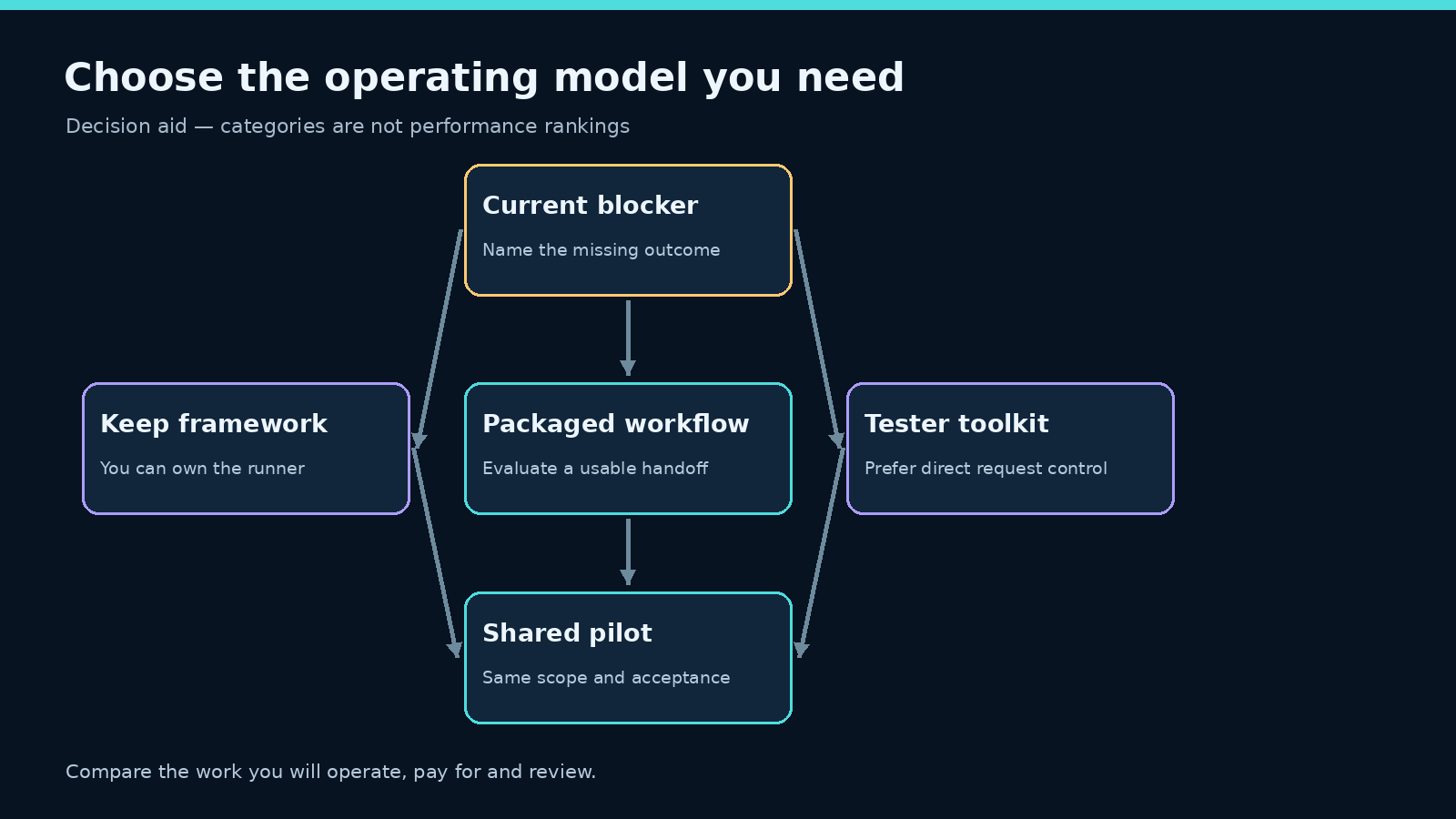
| Your requirement | Useful shortlist | Avoid assuming |
|---|---|---|
| Inspect and modify the runner | Current PentestGPT and source-accessible agent routes such as Strix. | That source access eliminates model or infrastructure costs. |
| Use a packaged assessment interface | Penligent and the appropriate HackerAI route. | That a desktop interface proves fully local model processing. |
| Control individual Web requests | Burp Suite Professional or ZAP, with appropriate tester expertise. | That a proxy workflow is a like-for-like autonomous agent replacement. |
| Automate an existing repeatable Web check | A configured ZAP workflow or a verified supported product integration. | That every plan or tool supports the same CI and authentication inputs. |
| Deliver a customer-accepted report | Any route whose evidence, export rights and review responsibilities meet the engagement. | That a report format or compliance label guarantees acceptance. |
What changed in current PentestGPT
The maintained project distinguishes autonomous Claude Code or Codex execution from its modernized legacy interactive mode. Its documented pentest pipeline includes reporting, and it retains sessions. An alternative guide should therefore compare present operating requirements rather than use the original research system as a permanent feature matrix.
There is also a practical revision check: the README advertises a Docker launch, while the checked Makefile marks the maintained framework’s docker-run path as pending. Check executable code and the selected revision before repeating the advertised command. That discrepancy is an installation question, not evidence of another product’s detection advantage.
Free alternatives and the actual cost boundary
“Free” can describe source code, a limited task, a manual tool edition or a hosted allowance. It does not answer whether the complete workflow is free. Separate model usage, execution, support, report access, review and retesting before comparing prices.
| Route | Cost basis to inspect | What a sticker price omits |
|---|---|---|
| ペンテストGPT | Source license plus chosen backend and runtime. | Setup, model consumption, upkeep and reviewer time. |
| HackerAI | Published hosted plan and separately enabled Extra Usage. | Whether the selected allowance and execution route fit the workload. |
| Strix local | Source route, model API usage and Docker execution. | Infrastructure ownership and evidence acceptance work. |
| Burp Suite Professional | Current product license and any separately scoped features. | Tester labor and engagement delivery. |
| ザップ | Tool operation, configuration and review. | The time needed to maintain useful authenticated coverage. |
| 寡黙 | Task and credit allowance, billing period, report and retest entitlement. | Application preparation, review and workload-dependent consumption. |
For a Penligent pilot, the current pricing page lists one Free task, a $99.90 monthly Pro option with 13,000 credits, and Pro report-export and retest features. The $19.90 top-up adds 2,000 credits to the existing trial task; it adds neither a task nor Pro features. Compare the actual plan with your next required action.
HackerAI’s monthly pricing starts with a limited Free plan and lists Pro at $29, Pro+ at $60 and Ultra at $200. Those amounts are not interchangeable with another vendor’s credits or with a consultant’s scoped quote. Compare a common workload and record what is included.
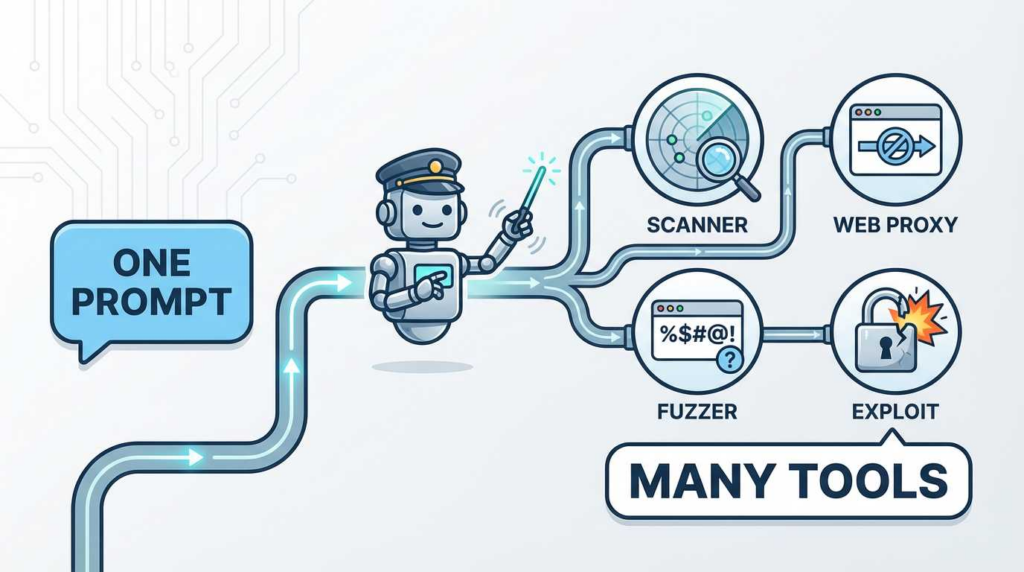
Use the first trial to answer a buying question
Prepare a narrow authorized Web workflow before opening the tool. Choose one business rule, such as whether an ordinary user can access only their own synthetic record. Prepare two working identities, a known owner-access control, a time and spending boundary, and a reviewer who can inspect the output.
The trial should answer a concrete question: can this route help your team turn that task into a defensible result? A larger target and a longer finding list can obscure the answer if nobody can explain which identity was active or what policy the reported behavior violated.
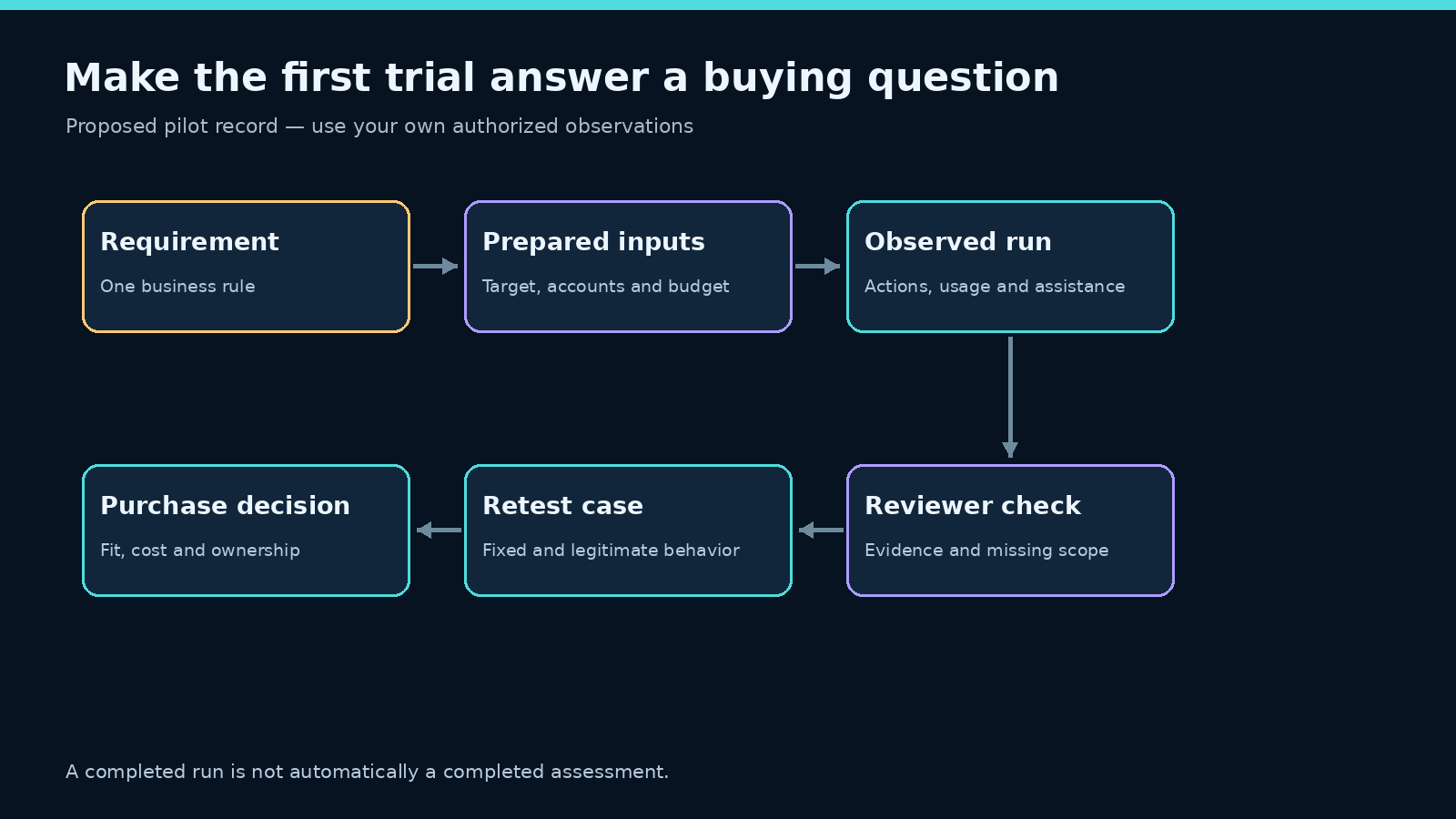
| ステージ | Collect | Decision |
|---|---|---|
| Prepare | Target build, fixture, accounts, permissions and constraints. | Is the task ready to run? |
| Observe | Actual actions, relevant outputs, usage and operator interventions. | Did the intended work happen? |
| レビュー | Identity, ownership, expected rule, observed protected content and limitations. | Can another engineer verify the conclusion? |
| Retest | Fixed build, same boundary case and legitimate-use control. | Did remediation restore the intended behavior? |
| Choose | Total effort, required entitlements and support ownership. | Does this route fit repeated use? |
For authorization cases, OWASP recommends server-side permission checks on every request. A pilot should preserve evidence of the relevant rule rather than accept a success badge or an HTTP status as a sufficient security conclusion.
An offline budget model you can change
This Python example compares hypothetical operating arrangements. It does not encode vendor plans or estimate detection performance. Replace its invented inputs with your pilot’s measured effort and current quotes. It uses Decimal arithmetic and makes the one-time setup cost visible across the chosen horizon.
from dataclasses import dataclass
from decimal import Decimal

@dataclass(frozen=True)
class Budget:
    name: str
    monthly_fixed: Decimal
    variable_per_run: Decimal
    setup_hours: Decimal
    review_hours_per_run: Decimal

def total(budget, months, runs_per_month, hourly_rate):
    if months < 1 or runs_per_month < 1:
        raise ValueError("Use a positive planning horizon and run count")
    if hourly_rate < 0:
        raise ValueError("Hourly rate cannot be negative")
    values = (budget.monthly_fixed, budget.variable_per_run,
              budget.setup_hours, budget.review_hours_per_run)
    if any(value < 0 for value in values):
        raise ValueError("Budget inputs cannot be negative")
    runs = months * runs_per_month
    cash = budget.monthly_fixed * months + budget.variable_per_run * runs
    labor = (budget.setup_hours + budget.review_hours_per_run * runs)
    return cash + labor * hourly_rate

example = Budget("synthetic route", Decimal("20"), Decimal("5"),
                 Decimal("2"), Decimal("0.5"))
assert total(example, 1, 4, Decimal("60")) == Decimal("280")
assert total(example, 3, 4, Decimal("60")) == Decimal("600")
zero_labor = Budget("synthetic cash only", Decimal("20"), Decimal("5"),
                    Decimal("0"), Decimal("0"))
assert total(zero_labor, 1, 4, Decimal("60")) == Decimal("40")
print("Three synthetic budget checks passed")
print("One month:", total(example, 1, 4, Decimal("60")))
print("Three months:", total(example, 3, 4, Decimal("60")))
Run the saved program locally with Python 3. Its output is a calculation of the supplied assumptions. A lower result does not imply better coverage, a faster product or fewer false positives. Keep those outcomes in separate columns and retain the original units behind every cost entry.
A practical selection workbook
Expand the sections that match your reason for considering alternatives. The workbook is designed to produce a reviewable decision without forcing every buyer into the same ranking.
Evaluate the five alternatives without confusing their roles
Penligent: evaluate the packaged Web assessment workflow
A packaged desktop route is relevant when you want a project-oriented interface and an explicit place to supervise activity and inspect findings. Prepare the supported environment and a bounded task before evaluating convenience. A polished interface cannot compensate for an unreachable target or an unknown permission model.
Begin by confirming that the installed client and runtime are appropriate for your machine. Then use a small authorized Web environment with synthetic accounts. Inspect the task activity and the evidence available in the selected plan. Do not assume that a trial includes every export, retest, collaboration or enterprise capability shown elsewhere in the product family.
The purchasing question is whether the packaged workflow reduces work that your team actually performs. If your main difficulty is maintaining framework dependencies, record setup and recovery time. If it is handing findings to developers, have a second engineer review an artifact. Avoid converting a general impression of ease into an unsupported claim of superior detection.
HackerAI: distinguish hosted use from operating the repository
A hosted customer and a team deploying the application from source inherit different responsibilities. The hosted plan can remove some application operations from the customer. Repository deployment requires the services and credentials documented by the project, and their operation remains part of the team’s cost.
について HackerAI repository lists required model, execution, database, storage, identity and background-runtime services. Treat that list as a deployment map. Do not present it as a sign-up checklist for every hosted user, and do not imply that downloading the repository makes every component self-contained.
Its trust documentation distinguishes local commands, E2B cloud execution and processing by model and other service providers. Decide which route fits your environment before testing sensitive workflows. “Local” is a property of a specific component, not a complete description of where every artifact and model input travels.
For the pilot, verify the chosen worker’s target access and record the applicable plan limits. If the route cannot reach an internal staging application, changing the prompt will not fix the network architecture. Resolve that prerequisite with the owner before interpreting the attempt as a security-testing result.
Strix: compare source and managed routes separately
Strix is relevant when you want another agentic tool and are prepared to evaluate its actual deployment. Its local quick start calls for running Docker and an LLM API key, while the project separately describes cloud and enterprise routes. Decide which of those you are evaluating.
For local use, retain the runner revision and provider configuration, then check the artifacts produced by an authorized task. A repository feature list is a starting point for the test, not proof that every listed capability succeeded in your environment. Record interruptions and manual repairs alongside successful steps.
For managed use, inspect the offered scope and delivery responsibilities directly. Do not transfer assumptions from the source route to the managed route or in the opposite direction. The relevant model choices, integration paths and support arrangements may differ even when the product name is shared.
Burp Suite Professional: retain direct testing judgment
Burp Suite Professional is a different operating choice from a framework that drives a staged autonomous run. Its official product description combines tester-controlled Web investigation, automated scanning and reporting. It can be an alternative to the work you hoped to automate without being an equivalent agent architecture.
Use it in the shortlist when direct control of requests and interpretation is valuable to the operator. Measure the complete investigation rather than only scanner runtime. The tester’s ability to recognize a business rule, prepare identities and reject a misleading observation remains central to the result.
Check the exact edition and any separately offered agentic features before budgeting. A supplier’s product family can contain multiple tools with different licenses and responsibilities. Avoid attributing every feature in that family to the particular license you are comparing.
ZAP: configure the context before judging coverage
ZAP is useful when you want a configurable Web proxy and automation route that your team can maintain. Its documentation provides the starting point, and the relevant authentication and automation documentation should guide the actual setup. The value depends on configuration and operator judgment.
For an authenticated application, verify a working owner-only control before evaluating scan results. A technically successful run against a login page can produce little useful authenticated coverage. Retain the context and session checks so a later engineer can understand what surface the automation reached.
Use a small repeatable case first, then expand deliberately. A free tool can be an economical choice when the team can support its configuration. That statement does not make maintenance time disappear. Include the engineer who updates the context after an authentication or application change.
Keeping PentestGPT can be the right decision
A replacement is unnecessary when the existing framework already meets the requirement at an acceptable operating cost. First identify the specific failure you want to remove. A dependency repair, better fixture or clearer review process may solve the problem without changing the runner.
Current PentestGPT is not frozen at the original paper’s architecture. Check its maintained modes and executable path. If source access and control are important, compare the alternatives against those benefits rather than treating every packaged product as an automatic upgrade.
A useful decision record may conclude that the team will keep the framework for research and add a separate tester toolkit or packaged workflow for delivery. Complementary use is reasonable when responsibilities and duplicated cost are clear. It becomes confusing only when the team claims one tool is doing work that another operator or product actually performed.
Build a pilot around the application rule, not a feature checklist
Select a rule with an observable outcome
Choose a rule that the application owner can state without relying on a particular tool. Examples include an ordinary user reading only their own invoice, a revoked invitation no longer granting entry, or a read-only role being unable to change a protected field. Use synthetic data and approved actions for the first evaluation.
Keep the first case narrow enough that a reviewer can inspect the relevant evidence. If the pilot spans dozens of workflows, an ambiguous result can be hard to diagnose. A narrow case does not replace a full assessment; it establishes whether the proposed workflow can support the unit of work you plan to repeat.
Record legitimate exceptions. A cross-owner read may be permitted by a sharing relationship or support role. Without that policy context, the same response could be a vulnerability or expected behavior. The owner should confirm the rule before the candidate is scored.
Use controls that reveal setup failures
Include a successful owner-access control and a correctly protected cross-owner case where the fixture permits it. The first establishes that the session and target work. The second helps identify overconfident findings that equate an endpoint name or status code with a security failure.
Repeat the control near the disputed observation when session state can change. A control from the beginning of a long run may not establish that the same identity remained active later. Preserve enough timing and context to connect the requests without exporting unnecessary secrets.
If the control fails, label the dependent test blocked. Do not count it as an application pass simply because no protected data was returned. A failed prerequisite means the test did not answer the intended question.
Keep discovery and verification distinct
An evaluator may know a seeded weakness to score discovery, but should not silently provide it to one candidate. Decide whether the test is blind discovery, guided investigation or reproduction of a supplied finding. Each is useful, and each requires a different interpretation.
For blind discovery, hold input context constant and preserve all hints. For guided investigation, record which route or hypothesis was supplied. For reproduction, focus on whether the evidence supports the claim and whether the reviewer can repeat it. Do not publish a reproduction success as an unaided discovery result.
A product that helps reject an incorrect finding can also create value. Record rejected candidates and the reason for rejection. A comparison that rewards only positive findings encourages noise and misses the cost of validating confident but unsupported claims.
Define stop and recovery conditions
Agree on the time and consumption boundary before the run. Decide who can repair access and which changes require the owner to review the task again. A small, well-instrumented pilot should not drift into a different assessment because an agent discovered another hostname or a tempting link.
After an interruption, verify the current build and identity before continuing. A resumed session can retain useful history while the target has changed. Treat persistence as a convenience that needs validation, not as proof that every saved assumption remains true.
Preserve unfinished work explicitly. A comparison can reasonably favor a route that makes incomplete scope understandable, even when both candidates encounter the same authentication failure. The buyer is evaluating recovery and handoff as well as successful execution.
Use a common record
Illustrative pilot record — maintain beside the chosen tool

Decision: the requirement this trial should settle
Target: approved origin, build and fixture revision
Identity: roles, ownership and supported session handoff
Inputs: the exact context and hints supplied
Limits: actions, time, spend and stop conditions
Execution: route, version, model configuration and actual activity
Assistance: every material operator correction
Evidence: owner control, boundary observation and relevant content
Review: confirmed, rejected, blocked or inconclusive
Handoff: reviewer effort, export availability and missing information
Retest: fixed-build case and legitimate-use control
Decision: adopt, retain, complement or gather another observation
This is not a schema promised by any product. Use it to make a comparison portable across interfaces and deployment models. The record should remain intelligible even when the original evaluator is absent.
Compare real operating cost without inventing credit equivalence
Start with a workload and a horizon
Write the number of tasks, expected target size and review obligations before assigning prices. A single pre-release check and a consultancy’s monthly customer assessments create different operating costs. Choose a planning horizon long enough to expose recurring maintenance but short enough that the assumptions remain credible.
Separate initial setup from recurring work. The first framework installation may take more time than later runs, while a hosted route may have a recurring seat charge. Show both the first period and a steady-state period. A comparison that silently chooses the favorable horizon can reverse the apparent result.
Use the first pilot to replace estimates with measurements. Keep an estimate column for unknowns rather than forcing precision. If report reconstruction has not been tested, mark it unmeasured. A transparent gap is more useful than an invented cost per accepted finding.
Keep different usage units separate
Product credits, model tokens, subscription response limits and consultant hours are different units. Do not convert them using an arbitrary exchange rate. Record the raw usage, apply the applicable rate, and compare the resulting total for the same workload.
Retries and failed runs still consume resources. Include them in the budget even if the final attempt succeeds. At the same time, preserve the reason for a failure so a target outage is not confused with a model limitation or product defect.
Some costs are stepwise rather than linear. A plan upgrade, extra seat or infrastructure allocation may change the monthly total when usage crosses a threshold. A simple per-run average can conceal that step. Model the plan you would actually purchase, including commitment and renewal terms.
Value review time honestly
Have a second engineer inspect a finding and record the work needed to accept or reject it. Count time locating the request, reconstructing identity and clarifying policy. This labor can dominate a narrow assessment even when execution is inexpensive.
Do not assume that a longer report creates more value. A concise result with traceable evidence may be cheaper to review than a large narrative full of uncertain claims. Evaluate the receiving engineer’s task rather than the number of pages exported.
Record the role doing the work. A senior assessor and an application developer may have different internal cost assumptions and responsibilities. Keep those assumptions visible; a common hourly rate is a budgeting convenience, not a claim that the work is interchangeable.
Include the remediation loop
A useful assessment normally leads to a decision: reject a candidate, fix a defect, accept a residual risk or investigate further. Include the cost of reaching that decision. The cheapest first execution can become an expensive route if the output cannot support action without extensive reconstruction.
For a fixed issue, budget a repeat check against the recorded build and fixture. Confirm the chosen plan’s retest and artifact-access boundaries. A free trial may show the investigation workflow without including every delivery feature needed for recurring customer work.
Keep support effort in the record. If a route requires a specialist to recover a run, that may be acceptable, but it changes ownership and scheduling. Record the actual interaction rather than assuming either that all support is included or that the team can resolve every issue internally.
Interpret the offline budget example
The sample program calculates cash plus an assigned labor cost. Its first-month result includes all setup hours once. Its three-month result spreads the same setup across more runs. The arithmetic demonstrates a planning relationship; it does not tell you which candidate has those characteristics.
Replace every synthetic input before using it for procurement. If a product charges by a task allowance or credits, enter the fixed and variable costs for the actual plan rather than guessing a token conversion. If usage is uncertain, calculate several explicit scenarios and retain the assumptions.
Keep quality outside the cost formula until you have an agreed acceptance measure. A low total for unusable evidence is not a bargain. Conversely, a higher cost may be justified by a requirement that cheaper routes cannot satisfy. State that requirement instead of hiding it inside a subjective score.
Check data processing, deployment and maintainability
Map each data destination
Trace where the task brief, credentials, relevant tool output, screenshots and final artifacts travel. The execution machine is only one component. A local runner may use a remote model; a hosted interface may retain conversation history; an export may create another copy with different access controls.
Start with synthetic records so the pilot can answer workflow questions without importing unnecessary customer data. If a real engagement needs sensitive inputs, confirm the actual configuration and applicable supplier terms through the organization’s normal process. Do not infer a processing guarantee from a desktop icon or a self-hosted repository.
Ask the question at the component level. Which system runs commands? Which provider receives model context? Where are durable artifacts stored? Who can access a shared task link? These answers are more useful than a single yes or no response to “is it local?”
Distinguish configuration from architectural possibility
A product may describe several deployment options while the route available to a particular buyer supports only one. Verify the released offering, plan and support boundary. A contact-sales option is an invitation to clarify requirements, not proof that a specific configuration can be delivered immediately.
Likewise, source access can make a modification possible without making it maintained or inexpensive. If the team plans to replace a provider or storage service, estimate the implementation and ongoing support work. Do not treat hypothetical customization as an existing feature in the comparison table.
Document the configuration used during the pilot. A later buyer should be able to distinguish the tested route from other options in the same product family. That distinction is essential when a supplier updates its defaults or adds a new managed service.
Assign a maintenance owner
For a framework, identify who updates dependencies, tracks backend changes and investigates runner failures. For a configured proxy or automation route, identify who repairs authentication and context after application changes. For a packaged product, identify who checks supported versions, plan allowances and evidence access.
Keep the maintenance task proportional to the workload. A team running one assessment each quarter may prefer a different arrangement from a team maintaining daily checks. The same setup effort has different significance at those frequencies.
Test a benign failure recovery before treating the route as operational. Examples include an expired test session or an intentionally unavailable staging service. The exercise should reveal what the operator sees, which artifacts remain and how the task can be resumed or repeated. It should not require disrupting production.
Protect the distinction between context and authority
A target page, tool output or downloaded document can contain text that attempts to redirect an agent. The application content is task data, not permission to broaden the assessment. Maintain the authorized scope independently of the text that the model encounters.
Evaluate how the operator notices and handles suspicious direction changes. A product’s marketing description of autonomy does not establish a universal approval boundary. Use the controls and environment available in the actual route, and keep the first trial narrow enough to inspect its actions.
Record any requested expansion of scope as a separate decision. A discovered link or hostname does not automatically become an approved target. This is part of operating an assessment responsibly, regardless of whether the actions are proposed by a framework, a hosted agent or a human tester.
Keep an exit path
Before adopting a workflow, confirm how the team can retain the artifacts it needs and end a run or subscription under the applicable terms. Export availability, retained sessions and shared access are practical operating requirements. Check them in the chosen edition rather than assuming parity across the product family.
A useful exit test is simple: can another authorized engineer understand the assessment after the original operator stops using the tool? If the answer depends on a personal account or an undocumented conversation, improve the handoff before expanding use.
Turn the trial into a decision for your team
A solo tester’s decision
A solo tester often needs to minimize the cost of getting to a useful first result. Identify whether the immediate job is learning, investigation or delivery. A source-accessible framework can be attractive for understanding internals; a packaged interface can be attractive for managing work; a direct request toolkit can be attractive for precise investigation.
Prepare the smallest task that demonstrates the desired benefit. Do not spend the trial discovering that the target requires a session the runner does not have. Keep the first result, manual corrections and actual consumption in a short record. Several comparable tasks will reveal more about fit than a broad promise of autonomous coverage.
Choose a recurring plan only when the workflow has a recurring job. If the next requirement is a customer report, confirm that entitlement before committing. If the next requirement is a framework experiment, preserve the code and configuration needed to repeat it.
An application team’s decision
A product team should connect the pilot to a real release question. Select a changed permission boundary or a known workflow, name the engineer receiving the result, and define what evidence would support the release decision. Keep that decision narrower than the security of the whole application.
Measure the full loop from preparation to accepted evidence and fixed-build verification. Runtime alone can be misleading when setup and reconstruction dominate the engineer’s work. A route that produces a concise, reproducible handoff may be useful even when it does not generate the largest finding count.
Decide where the workflow belongs in the team’s process. An investigative tool used by a security engineer, a repeatable release check and an external assessment are different arrangements. Avoid asking one pilot to prove all three.
A consultancy’s decision
A consultancy needs to preserve professional review and customer acceptance. Ask a colleague to reproduce a sanitized sample finding without the original conversation. Record missing context, unsupported impact claims and the work required to produce the agreed deliverable.
Separate product output from assessor judgment. The assessor may narrow severity, reject a false positive or add a business-impact explanation. Those contributions matter and should remain visible in the operating model. The product’s role is easier to assess when the human work is recorded honestly.
Check the client’s scope, evidence-handling and report requirements before selecting a plan. A software-generated document is not automatically equivalent to every independently delivered engagement. Make the acceptance criteria concrete rather than relying on a generic compliance phrase.
A research team’s decision
A research team should retain inspectable intermediate artifacts and pin the experiment’s configuration. Separate discovery, reproduction and evidence interpretation. A single success count can conceal very different failure modes, especially when manual assistance varies.
Keep both vulnerable and correctly protected cases. A candidate that reports every route as suspicious may look active while creating a poor review burden. Include blocked access and permitted sharing so the evaluator can tell whether the system understands the policy rather than matching a superficial pattern.
If a hosted service changes over time, retain the date and settings rather than claiming a permanently reproducible model snapshot. That limitation does not make the experiment useless. It changes what conclusions can reasonably be drawn from it.
Write the adoption record
State the chosen route, the requirement it satisfied, the evidence reviewed and the remaining limits. Include total effort and a named owner for ongoing operation. The record should allow a colleague to understand why the decision made sense without needing to repeat the entire evaluation.
Retain a reason to reconsider. A different application architecture, workload, processing requirement or supplier plan can change the answer. A good comparison creates a decision that can be updated, not a permanent league table detached from the work.
If the pilot does not settle the requirement, identify the smallest missing observation. That may be an export check, one fixed-build retest or a confirmed execution boundary. Gather that observation instead of restarting an unbounded search through more product names.
Work through three illustrative purchasing cases
Case one: an application team needs a release check
Consider a hypothetical team that changes its invoice-sharing feature every few weeks. It wants an engineer to review one ownership boundary before release. The team already has a staging environment, synthetic accounts and a developer who owns the feature. Its constraint is the time needed to organize the test and turn the result into a usable remediation record.
The first requirement is a bounded task with reliable identity and evidence. A packaged assessment workflow, a maintained agent framework or a tester-operated toolkit could all be viable. The choice should follow a pilot that measures preparation, intervention, review and fixed-build verification, rather than a feature count.
The team should create two related fixtures: one ordinary private invoice and one intentionally shared invoice. A candidate must distinguish the prohibited read from the permitted sharing case. This tests whether the workflow can preserve application policy, not merely whether it can send a request with another identifier.
Suppose the first pilot produces a useful candidate but leaves the reviewer unable to identify which account made the request. The next step is to repair the evidence handoff and repeat the narrow case. Increasing target size would not answer the missing question. A purchasing decision should wait for the corrected handoff, not be justified by a larger finding list.
The adoption record should state the selected route, its tested task and the person who maintains the fixture after a feature change. It should also preserve the untested scope. The release team can then use the same record to evaluate a future product or framework change without pretending that the original pilot assessed the whole application.
Case two: a consultancy needs customer-ready evidence
Consider a hypothetical consultancy evaluating tools for a recurring Web engagement. Its assessors already know how to investigate requests. The constraint is preparing a defensible handoff, retaining evidence under the client’s rules and repeating the relevant case after a fix.
The consultancy should first define the deliverable. Does the client require a particular scope statement, evidence format, reviewer identity or remediation meeting? These requirements can disqualify an otherwise convenient route. A report-export feature is relevant, but it does not settle the entire delivery obligation.
Use an approved synthetic fixture for the tool pilot and ask an assessor who did not run it to reproduce the conclusion. Record the time spent finding the active identity, locating the protected value and reconstructing the policy. The exercise measures the handoff, including the human review the consultancy will still perform.
Suppose two routes both identify the same seeded condition. One retains a trace that is easy to sanitize; the other requires the operator to reconstruct several steps manually. The consultancy can record that difference as an artifact and labor observation. It should not turn it into a claim that one product generally discovers more vulnerabilities.
The final choice may combine tools: an agent for an approved investigation, a proxy for precise reproduction and an assessor’s reviewed report. That is a legitimate workflow if cost and attribution are clear. Do not credit the agent with manual follow-up that the assessor performed or imply that the proxy alone generated the professional conclusion.
Case three: a researcher needs a controllable runner
Consider a hypothetical researcher studying how an agent responds to contradictory observations. The researcher needs source access, repeatable configuration and visibility into intermediate state. A packaged interface may be less important than the ability to inspect and change the runner.
The first question is whether current PentestGPT already provides a suitable experiment boundary. If it does, replacing it merely to obtain another agent label adds maintenance without improving the study. If it does not, another source-accessible route can be evaluated against the exact missing capability.
Pin the revision and create an interpretation task with known synthetic evidence. Keep the tool interface constant when isolating model behavior. If the researcher changes both the runner and the model, the result belongs to the combined system rather than one component.
Suppose a candidate reaches the correct final answer only after receiving a manual hint about the relevant record. Preserve that assisted attempt separately from the original. The hint can reveal useful recovery behavior, but it does not establish unaided discovery performance.
The research record should contain fixture versions, inputs, interventions, outputs and failure categories. A product’s general benchmark or repository popularity is not a replacement for those artifacts. The appropriate choice is the route that lets the researcher investigate the intended mechanism at a manageable operating cost.
Apply the same minimum acceptance floor
The three buyers have different priorities, but each needs a working prerequisite, a traceable observation and an honest statement of limits. Establish that floor before assigning preferences. A cheap or convenient route that cannot support the required conclusion is not an acceptable candidate for that particular job.
After the floor is met, preferences can differ. The application team may value a compact review loop. The consultancy may value artifact portability and customer handoff. The researcher may value inspectability and modification. These differences explain why a universal alternatives ranking is less useful than a requirement-led shortlist.
| Illustrative buyer | Primary acceptance question | Useful retained artifact |
|---|---|---|
| Application team | Can the release engineer verify the changed business rule? | Versioned fixture and a concise fixed-build result. |
| Consultancy | Can another assessor reproduce and deliver the conclusion? | Sanitized evidence bundle and reviewed handoff record. |
| Researcher | Can the experiment’s behavior and failure be investigated? | Pinned configuration, intermediate artifacts and assistance log. |
Turn the pilot into a narrow recommendation
Write a recommendation that names the workload and the observations that support it. “Use this route for our staging ownership check because the reviewer could reproduce the result and the plan covers our handoff” is more useful than “this is the best AI pentesting tool.” The first claim can be revisited when the requirement changes.
Keep measured and unmeasured cost separate. A pilot may establish setup time and artifact quality while leaving steady-state consumption uncertain. Record that uncertainty and choose a bounded next workload. Do not multiply one unusually easy task into a confident annual forecast.
Define the event that would trigger another comparison. Examples include a new authentication architecture, a customer requirement for a different deployment boundary, a significant change in assessment volume or a supplier plan change. This turns the alternatives guide into an operating decision rather than an endless search for a new winner.
All three cases above are invented decision examples. They do not describe customer results, product tests or performance measurements. Use their structure with observations from your own authorized environment, and retain whichever route already meets the requirement if a replacement does not improve it.
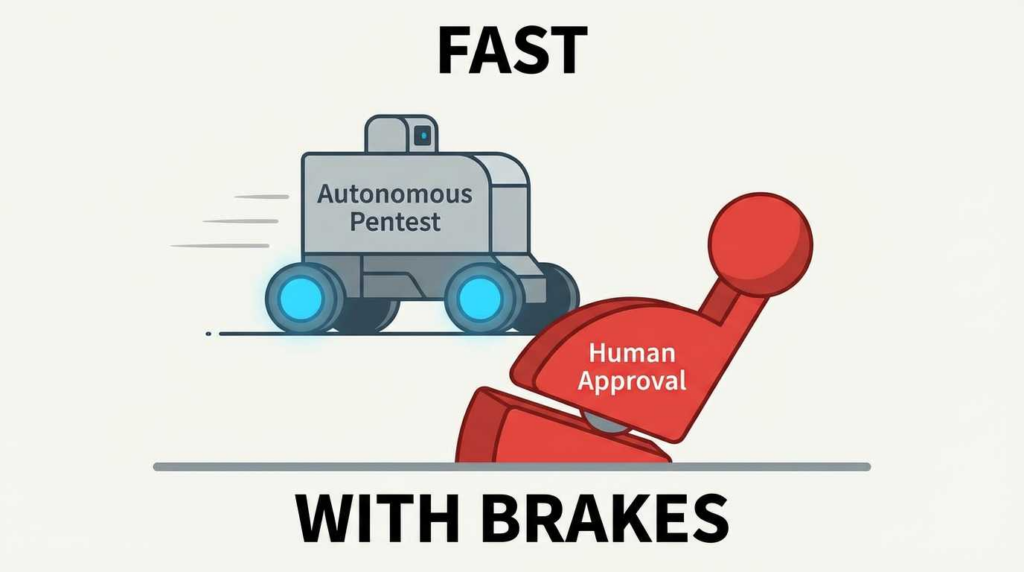
A migration record that protects the working baseline
Keep the existing workflow available while evaluating a replacement. Preserve one accepted artifact and the configuration that produced it. The baseline does not need to be perfect; it needs to represent the work the team currently relies on. Without it, an attractive new demonstration can displace a useful capability that nobody remembered to test.
Map the existing inputs to the proposed route. A saved session, proxy context, target list and product project are different objects. Identify what can be carried over, what must be recreated and what should be discarded because it is stale. Do not assume that similarly named fields have identical semantics.
Choose a small overlap period with a defined end condition. Running two tools indefinitely can duplicate spend and create conflicting finding queues. The overlap should answer specific questions, such as whether the new reviewer can retrieve evidence and whether the fixed-build case remains reproducible.
Give findings stable identifiers across that period. If both routes report the same condition, reconcile them as one reviewed issue with multiple observations. Counting duplicate reports as separate discoveries exaggerates both coverage and review workload. Keep provenance so the team can still inspect how each route reached its conclusion.
Record what will happen to historical artifacts. A later engineer may need the original evidence after the subscription or framework environment changes. Confirm the chosen plan’s access and export behavior before treating the migration as complete. Keep confidential material in the owner’s approved storage rather than creating unnecessary public copies.
Test one recovery path before retiring the baseline. A session refresh, a failed worker or a missing report attachment can expose an operational dependency that the successful demo never touched. Use a benign staged condition and record the recovery action and remaining limits.
Assign an owner for updates to the fixture, authentication method and evaluation record. A migration that works today can decay when the application changes. Maintaining the evidence contract is often more valuable than preserving every historical prompt verbatim.
Finally, write the reason for the switch in terms of observed work. State which constraint improved, which costs changed and which responsibilities remain with the team. If the pilot did not improve the original requirement, keeping the current route is a valid decision. The purpose of considering alternatives is to improve a workflow, not to create change for its own sake.
Use the same record when revisiting the choice later. It should identify the old and new routes, the tested task, the accepted artifacts, the overlap period and the rollback condition. This makes a future reassessment narrower and cheaper because the team can investigate the changed requirement instead of restarting an unrestricted search.
Frequently asked questions
What are the best PentestGPT alternatives?
- Useful candidates include Penligent, HackerAI, Strix, Burp Suite Professional and ZAP, depending on whether you need a packaged assessment workflow, hosted execution, a framework or direct tester control. Compare a shared task rather than assigning a universal winner.
Is there a free PentestGPT alternative?
- Free access exists in several forms, including source routes, limited trials and tools such as ZAP. Check model, infrastructure, task, export and review costs separately.
Do I need an alternative to get autonomous execution?
- Not necessarily. Current PentestGPT documents autonomous workflows. First identify the missing outcome: setup, supervision, supported inputs, evidence or delivery.
Which alternative is best for a beginner?
- Choose a route whose setup and operating responsibilities you understand. Start with a small authorized lab or staging task and working identities. A simple interface does not remove the need to review actions and evidence.
Are Burp Suite and ZAP equivalent to autonomous agents?
- No. They are relevant alternatives for Web testing work, but their operator responsibilities and automation models differ. Compare the job you need completed rather than assuming architectural equivalence.
Can I use a free trial to deliver a customer report?
- Only if the chosen plan’s output rights, evidence access and review process meet the engagement. Trial execution and report export can have different entitlements.
How should I choose after the first pilot?
- Review what actually ran, whether a second engineer could verify the conclusion, total operating effort, and the plan needed for remediation and retest. Retain the current tool if an alternative does not improve the requirement that prompted the evaluation.
Does this guide establish native mobile testing support?
- No. The proposed pilot covers an authorized Web workflow. It does not establish APK or IPA analysis, device instrumentation or native mobile coverage. Confirm the actual target type and supported workflow for each candidate before purchasing.
A useful alternative changes a real constraint. Select the route that your team can operate repeatedly and whose evidence supports the next engineering decision.
 Japanese
 English
 German
 French
 Spanish
 Portuguese
 Korean
 Hindi
 Arabic
 Turkish
 Hebrew