
AI penetration testing is useful when it helps an authorized team move from a test hypothesis to evidence another person can review. An agent that executes tools can do more than draft advice, but execution alone does not establish coverage, correctness or a safe operating boundary. Evaluate those properties on your application before buying a larger plan or replacing an existing assessment.
Reviewed October 24, 2026. This guide is published by Penligent. It compares evaluation questions and current public product descriptions; it does not report an independent seven-product benchmark. Earlier unsupported rankings, performance estimates and a fictional timed exploitation scenario have been removed. No product trial or exploit reproduction was performed for this revision.
Start with the assessment you actually need
A developer checking an owned staging application, a consultant delivering a client report and a company commissioning an independent assessment are buying different outcomes. Decide which outcome you need before comparing agent counts or autonomy labels. Write down the target, available identities, forbidden actions, required evidence and the person who will accept the result.
NIST SP 800-115 provides a framework for planning security tests, analyzing findings and developing mitigation strategies. The OWASP ウェブ・セキュリティ・テスト・ガイド provides web-testing methodology. Use an explicit test plan to identify what was assessed and what remains outside the engagement; an AI-generated report is not a substitute for that record.
For an initial software trial, choose a disposable application you own and can restore. Use synthetic data and dedicated accounts. Set a spending limit and a stop condition before execution. Do not give an agent production credentials simply because a demonstration looked convincing; first establish what the workflow can access and what its records expose.
Compare outcomes instead of declaring a universal winner
| Decision | Evidence to request | Weak substitute |
|---|---|---|
| Authenticated coverage | Successful login, account role and reachable application actions | An HTTP 200 from the login page |
| Finding validity | Recorded request, observed result, expected policy and independent replay | A severity label or plausible explanation |
| Operator control | Observed response to a harmless stop or scope change | A screenshot of a pause button |
| Reporting | Exported evidence, limitations, redaction and reproducible steps | A polished executive summary |
| 修復 | The original test repeated against the changed deployment | A package update with no application retest |
| コスト | Actual spend, failed runs and reviewer effort for the same scope | Estimated findings per dollar |
Apply the same acceptance standard to each candidate. A login failure must remain a coverage gap, not a clean result. A suspected vulnerability must remain unconfirmed until its evidence supports the stated impact. A tool that reports uncertainty accurately can be more useful than one that produces a confident but unreproducible answer.
What the current product pages establish
Penligent’s product page describes black-box testing, agent workflows, browser-based verification, operator intervention and editable PDF or Markdown reporting. These are supplier descriptions, not comparative performance results. Confirm the functions available in your installed release and selected plan, then inspect the artifacts from your own authorized trial.
Other candidates in the earlier version of this guide remain valid products to investigate. The following links lead to their official sites. The retained images are archived illustrations from the original article, not screenshots captured during this review, proof of current feature availability or evidence of endorsement. The order is not a ranking.
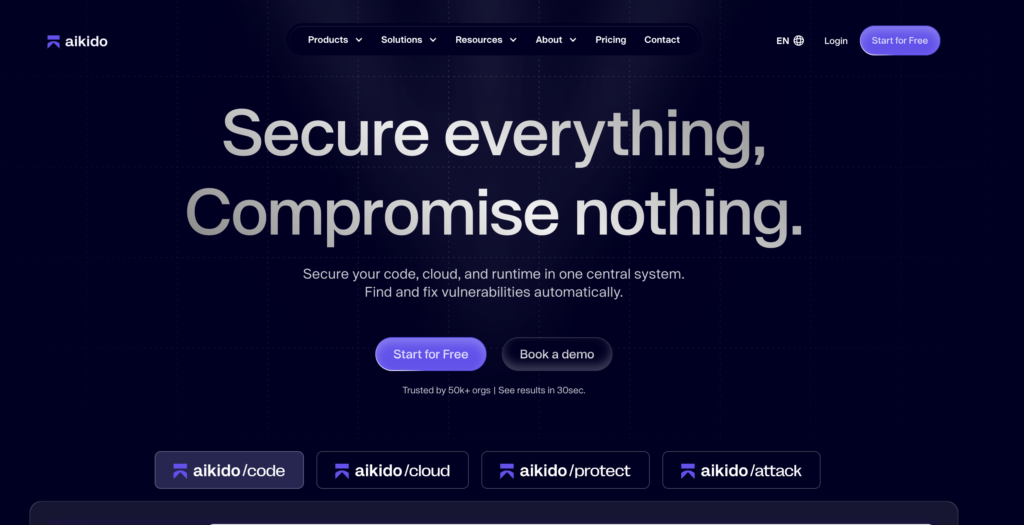
Aikido’s official product information is the starting point for current scope, delivery model and commercial terms. Ask for a demonstration of the specific workflow you need rather than relying on this older illustration.
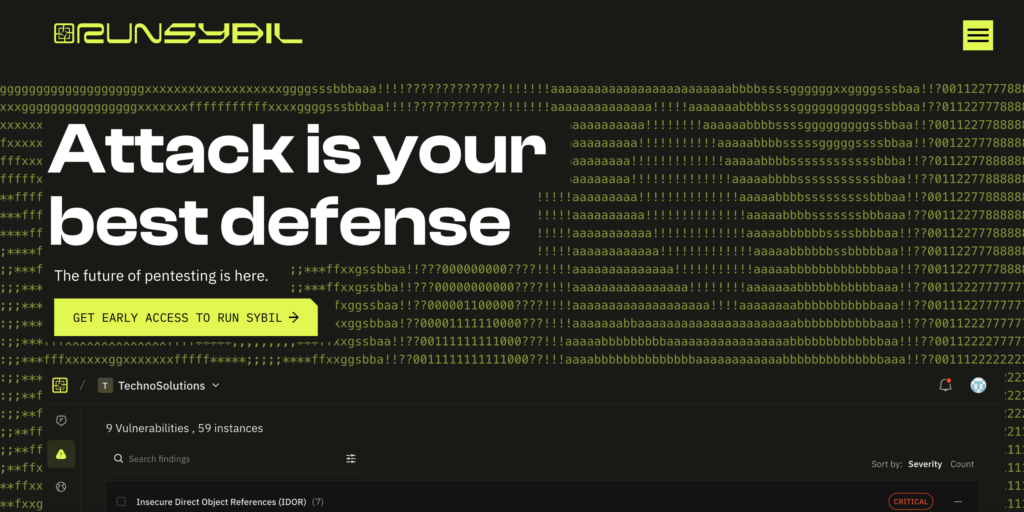
RunSybil’s official product information is the starting point for current scope, delivery model and commercial terms. Ask for a demonstration of the specific workflow you need rather than relying on this older illustration.
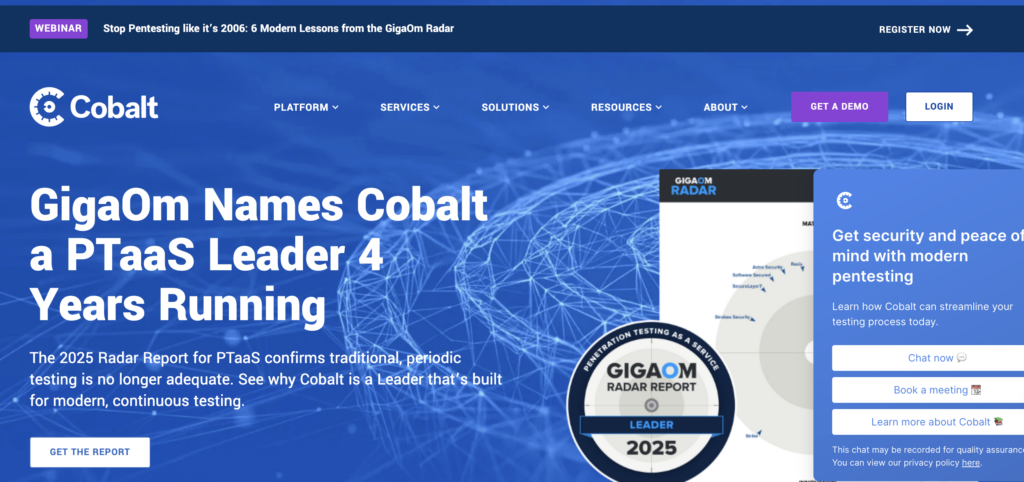
Cobalt’s official product information is the starting point for current scope, delivery model and commercial terms. Ask for a demonstration of the specific workflow you need rather than relying on this older illustration.
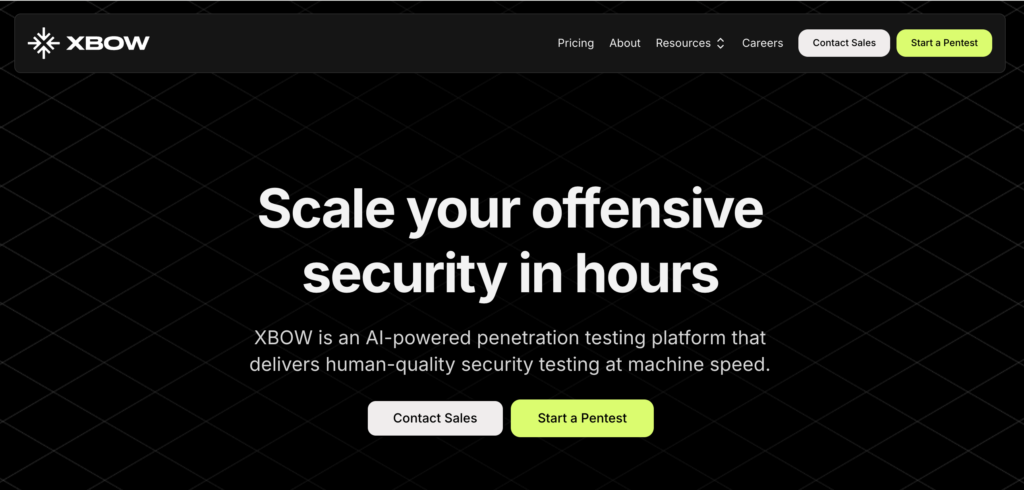
XBOW’s official product information is the starting point for current scope, delivery model and commercial terms. Ask for a demonstration of the specific workflow you need rather than relying on this older illustration.
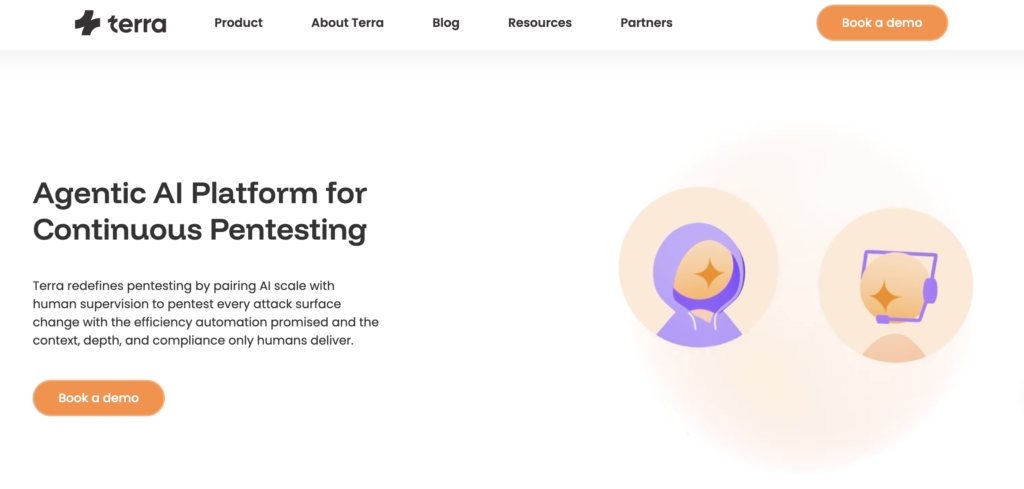
Terra Security’s official product information is the starting point for current scope, delivery model and commercial terms. Ask for a demonstration of the specific workflow you need rather than relying on this older illustration.
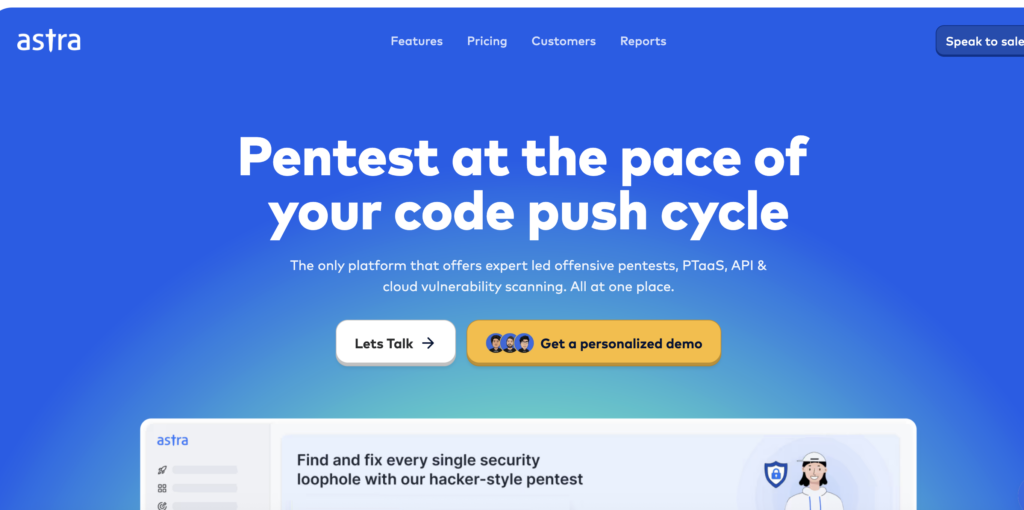
Astra Security’s official product information is the starting point for current scope, delivery model and commercial terms. Ask for a demonstration of the specific workflow you need rather than relying on this older illustration.
A small trial that can disprove a sales claim
Prepare one known vulnerable lab case and its patched control. Give the candidate the same authorized scope and test identities. Define the expected result in advance. The vulnerable case asks whether the workflow can produce a defensible finding; the patched control asks whether it recognizes that a familiar vulnerability no longer reproduces. Record both outcomes, including an incomplete result.
For an object-authorization example, create two synthetic accounts and one object owned by each. The expected policy permits each account to read its own object and denies access to the other object. Use the application’s normal test interface and retain redacted evidence. Confirm ownership and returned content: a status code alone does not establish a cross-account disclosure. This is a proposed lab procedure, not a test executed for this article.
Illustrative acceptance record — fill from your own authorized trial
Target and deployment: __________
Allowed identities and actions: __________
Vulnerable control result: __________
Patched control result: __________
Authentication or coverage gaps: __________
Evidence replayed by reviewer: __________
Actual spend and review time: __________
Decision and unresolved conditions: __________
Then rehearse an intervention during harmless work. Narrow scope or request a stop and inspect what happens to queued and running tasks. Do this in the lab, with an agreed recovery procedure. Acknowledgment in a chat is not the same observation as execution stopping. Keep external network and credential restrictions in place throughout the evaluation.
When a paid plan makes sense
Pay for a larger allowance or additional capability when a small trial demonstrates a task you expect to repeat, within a cost you can accept. First inspect what consumed credits, what failed and how much review remained. Record cash spend separately from the optional value assigned to your time. If no findings were accepted, report that result instead of constructing a favorable cost-per-finding ratio.
Check the billing period, renewal, credit limits, task limits and export access in the current checkout. A displayed annual monthly equivalent is a different commitment from a monthly subscription. This guide gives no guaranteed number of targets, accepted findings, bug-bounty rewards or prevented incidents for a subscription. If the required workflow does not work during evaluation, resolve that gap before increasing spend.
Keep a professional assessment when independence, contractual responsibility, specialist judgment or customer requirements call for it. A software report does not automatically satisfy an auditor or customer, and automation does not establish that every business-logic path was tested. Ask the recipient what evidence and scope they require before choosing a delivery model.
Reports should make uncertainty visible
Export one finding and give it to a reviewer who did not watch the run. They should be able to identify the application version, account context, expected behavior, observed behavior and reproduction steps. Protect credentials and personal data, but retain enough context to distinguish two different accounts or deployments. If a crucial artifact is missing, keep the finding unresolved.
After remediation, replay the relevant test against the replacement deployment and retain the result. A negative test is meaningful only when the intended path was reached. Expired credentials, missing fixtures and network failures can all produce a superficially reassuring result without exercising the fix. Record them as limitations and repeat the test after restoring the required state.
Questions before choosing an AI pentesting workflow
Does a tool-running agent replace all manual testing? No universal replacement is established here. Match the engagement requirements, evidence and remaining judgment to the actual scope. A product can support repeatable work while a separate professional assessment remains necessary.
Which product has the lowest false-positive rate? This article has no controlled comparison that answers that question. Measure confirmed, rejected and inconclusive results on the same test set, with a stated definition of a finding.
Can a trial use a public third-party target? Only with authorization covering the intended activity. For initial evaluation, a restoreable owned lab makes scope, evidence and cleanup easier to control.
How should I compare prices? Compare actual commitment, included capabilities, observed consumption and review effort for an equivalent task. Avoid treating a hypothetical enterprise price or an assumed breach saving as measured ROI.
What if the tool finds nothing? Review coverage and execution before interpreting the result. No accepted finding, incomplete authentication and a completed assessment with no demonstrated issue are different outcomes.
Watch the workflow, then validate your own result
The retained Penligent video is a product demonstration. It is not a seven-tool benchmark or evidence for a guaranteed outcome on your application. Use demonstrations to understand the interface, then use the bounded trial and acceptance record above to make the purchase decision.
A useful purchase gives you an outcome you can explain: a defined assessment, reviewable evidence, a clear view of unfinished work and a repeatable way to verify fixes. Buy against that record, and expand the deployment only when the results justify it.
 Japanese
 English
 German
 French
 Spanish
 Portuguese
 Korean
 Hindi
 Arabic
 Turkish
 Hebrew