Why people search “cve 2024 3094” and what they actually need
When “cve 2024 3094” spikes, most engineers aren’t looking for a textbook definition. They are trying to answer a blunt operational question:
Is anything in my environment running the backdoored XZ/liblzma artifacts, and how do I prove it with evidence that will stand up in a post-incident review?
CVE-2024-3094 is not the usual “patch a buggy function and move on” story. It is a supply-chain compromise where malicious code was discovered in upstream XZ release tarballs beginning with 5.6.0, delivered through a build-time injection path that modifies liblzma during compilation. The result is a compromised library that can affect software linked against it. (NVD)
That single sentence is also why the highest-click phrasing you keep seeing across top analyses tends to cluster around a few repeated terms:
“XZ backdoor”
“XZ Utils backdoor”
“liblzma backdoor”
and sometimes “sshd backdoor” (because early reporting focused on OpenSSH-adjacent impact paths) (Akamai)
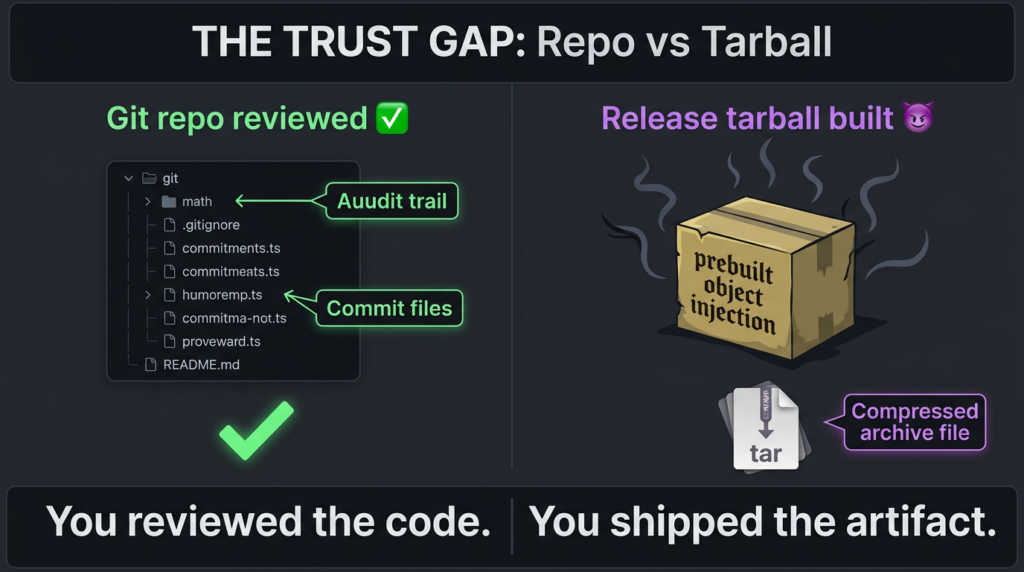
If you only remember one practical lesson: this incident punished anyone who treated “source repo review” as equivalent to “release artifact trust.” Multiple writeups emphasize that the malicious logic lived in the release artifacts and the build machinery, not as an obvious, reviewable change in the public repository history. (NVD)
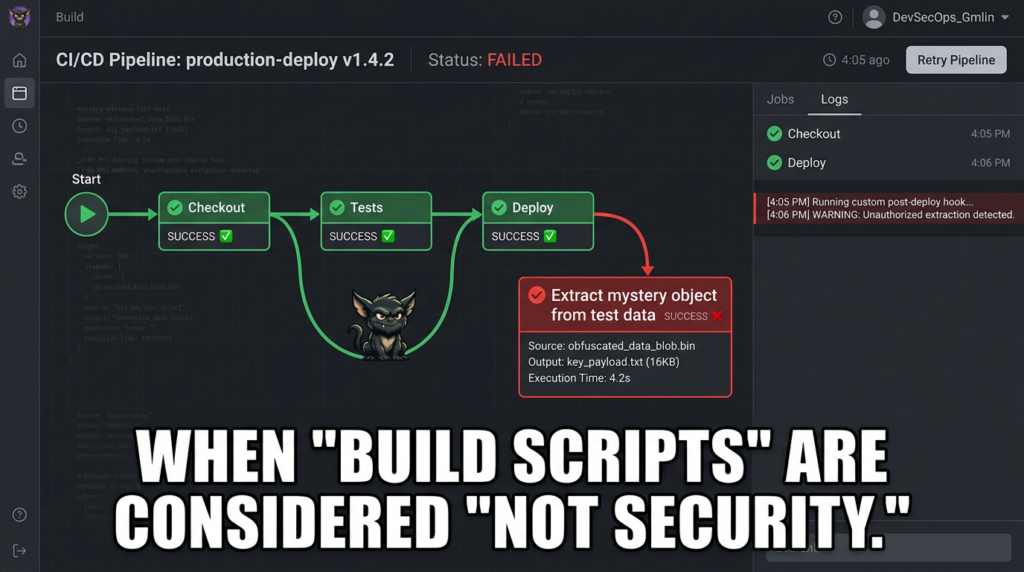
The NVD description is unusually direct: malicious code in upstream tarballs (starting with 5.6.0) used obfuscated build logic to extract a prebuilt object file from disguised test material, then modified functions during the liblzma build, producing a compromised library that can intercept/modify data interactions for software linked against it. (NVD)
Upstream (tukaani.org) states the high-confidence affected window in plain language: XZ Utils 5.6.0 and 5.6.1 release tarballs contain a backdoor. (Tukaani)
So the “what” is straightforward. The dangerous part is the “where”:
Where it was inserted: the release tarballs and their build-time behavior, not only normal source review paths. (NVD)
Where it lands in reality: distro packages, CI base images, container images, internal mirrors, and any dependency graph that pulled those versions in “just because they were the latest.”
That is why “only two versions” is not the comfort it sounds like. It is an incident about propagatione não apenas presença.
Timeline, in the only way that matters for response teams
You can read long narratives about the social engineering angle later. For incident response, the key timeline is about sinais, containmente reversion:
The disclosure thread on Openwall’s oss-security captures the initial discovery context: odd liblzma symptoms, SSH logins consuming CPU, and the realization that upstream xz tarballs had been backdoored. (Openwall)
Analysts rapidly converged on the affected upstream versions being 5.6.0 and 5.6.1. (NVD)
Major vendor/community responses emphasized downgrading/reverting away from the compromised releases as the practical remediation (because you are not “patching a bug,” you are removing malicious artifacts). Akamai’s summary explicitly recommends downgrading to an uncompromised release and treating this as an urgent supply-chain event. (Akamai)
One more timeline note that keeps biting teams long after the March 2024 headline: residual exposure in images.
In 2025, reporting highlighted that vulnerable XZ artifacts still showed up in Docker Hub images long after the initial incident, illustrating how supply-chain residue persists in the places teams least expect—especially old tags and derivative images. (Notícias do Hacker)
If your program stops at “we updated hosts,” you are doing it halfway.
How the backdoor hid in plain sight, artifact reality vs repository comfort
Every serious technical analysis circles the same theme:
The attacker didn’t need to win code review if they could win release engineering.
The NVD description points to extra build instructions and extraction/injection behavior during liblzma build. (NVD)
Upstream’s fact page reinforces that the compromised artifacts were the release tarballs for 5.6.0/5.6.1. (Tukaani)
And longer technical breakdowns explain how the compromise targeted OpenSSH-adjacent execution paths in affected environments. (LWN.net)
You do not need every micro-detail to act. You need the correct mental model:
Two worlds existed
The world reviewers looked at (repo history, normal source files)
The world users installed (tarballs, distro packages, build outputs)
The bridge between those worlds was the exploit surface If the release process can add or transform content in a way that reviewers don’t routinely verify, you’ve created a high-leverage insertion point.
Build-time behavior is a first-class security boundary If your security program treats build scripts, autotools macros, and “test archives” as harmless, you are giving attackers an unmonitored runway.
This is also why many writeups describe CVE-2024-3094 as a near-miss with outsized implications: it demonstrates a patient, long-term path to control a widely deployed, low-level library, not a smash-and-grab exploit. Akamai explicitly calls out the long-term credibility-building effort and notes that specific attribution was not established. (Akamai)
What was actually affected, and why “affected” is a three-layer question
Most internal debates about CVE-2024-3094 come from mixing three different meanings of “affected.”
Layer 1: Version presence
Do you have xz/liblzma version 5.6.0 or 5.6.1 installed anywhere?
That’s the easiest part. It’s also the part teams over-index on.
Layer 2: Artifact provenance
Are you running binaries/libraries built from the compromised tarballs (or derivative packages built from them) in environments where the malicious behavior exists?
This is where distro packaging and build flags matter.
Layer 3: Reachable execution paths
Is any process on your system actually able to reach the malicious code path in a way that creates a security impact (often discussed in relation to OpenSSH-adjacent flows)?
Technical writeups emphasize OpenSSH targeting and environment specifics. (LWN.net)
If you’re writing a response report, the correct structure is:
We validated version absence/presence across X
We validated artifact provenance for Y high-risk pipelines
We validated runtime reachability in Z exposed services
That’s how you avoid a “false reassurance” postmortem.
Quick reference table, what to check first
What you are checking
Por que é importante
Fastest evidence
Installed xz/liblzma version
Confirms the known-bad window
package manager query, xz --version
liblzma library file identity
Helps detect drift across images
file path + hash + package ownership
OpenSSH and dependency chain
Establishes whether SSH is in a plausible impact path
sshd -V, ldd/service dependencies
Containers and base images
Residual risk persists via old tags
scan image layers for xz/liblzma version
CI build inputs
The incident is “supply chain,” not just “prod hosts”
SBOM/provenance, lockfiles, mirror logs
This “evidence-first” posture aligns with how official descriptions frame the incident: malicious code in release tarballs and the liblzma build producing modified functions. (NVD)
Why include Alpine even if some analyses focus on glibc/x86_64 build conditions? Because in a supply-chain event you inventory first, then apply constraints. Overconfident scoping is how “edge cases” become next quarter’s incident.
Container reality: your real exposure might be in Docker image history
The 2025 reports about vulnerable XZ remnants in Docker Hub images are a useful reminder: even when distros revert quickly, old layers and old tags can persist and be re-used. (Notícias do Hacker)
Why bother? Because the incident’s risk discussion often involves how the compromised library could be reached in specific environments, and serious technical breakdowns focus on the OpenSSH-adjacent targeting. (LWN.net)
Decision table: what to do when you find something
Finding
Risk interpretation
Ação imediata
Follow-up evidence
No xz/liblzma 5.6.0/5.6.1 anywhere
Low likelihood of this specific compromise
Document sweep, close incident
Keep SBOM/provenance checks
Found 5.6.0/5.6.1 on dev branch / non-prod
High supply-chain hygiene signal
Quarantine, downgrade, purge caches
Identify how it entered (mirror/CI/base image)
Found 5.6.0/5.6.1 in container images
Residual exposure risk
Delete/rebuild images, rotate base images
Scan registries, lock tags, SBOM
Found in prod hosts
Urgent
Isolate, downgrade/revert, rebuild from trusted sources
Validate SSH exposure paths, monitor auth logs
Akamai’s guidance emphasizes downgrading to an uncompromised release and treating this as a supply-chain event, not a routine patch day. (Akamai)
The response playbook, written the way your future self will thank you for
Step 1: Containment with minimal debate
Freeze CI builds that may pull “latest” base images.
Block promotion of new images until you can prove their dependency hygiene.
Snapshot lists of currently running images/tags and host package inventories.
Step 2: Remove known-bad versions fast
On Debian-like systems:
# Example: force downgrade to a known-good version available in your repo
sudo apt-get update
sudo apt-cache policy xz-utils | sed -n '1,120p'
sudo apt-get install --only-upgrade xz-utils

# If you need an explicit version, your repo must provide it:
# sudo apt-get install xz-utils=5.4.5-0.3
On RPM systems, the exact downgrade command depends on your repo and distro policies, but the principle remains: revert to a known-good package version from a trusted repository.
Step 3: Purge supply-chain residue
Delete old image tags known to contain vulnerable packages.
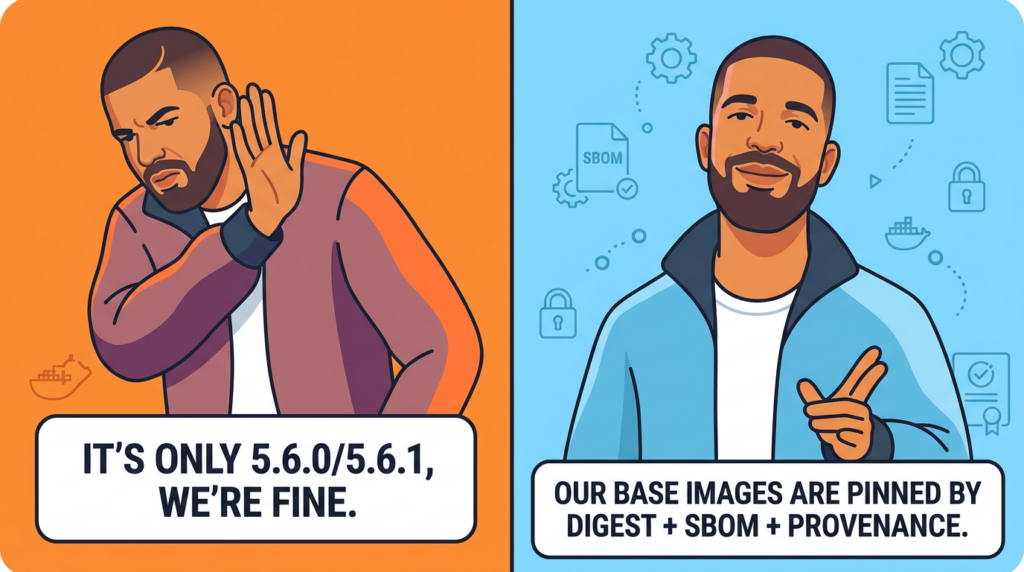
Rebuild images from a pinned, vetted base.
Re-scan registries periodically (residue returns via “historical artifacts” and forks). (TechRadar)
Step 4: Prove you’re clean, don’t just claim it
Your report should include:
Host inventory sample size and coverage ratio
Package version distribution (counts by version)
Image tag list, scan results, and deletion/rebuild evidence
Any exceptions and risk acceptance notes
This is exactly what CVE-2024-3094 forces teams to operationalize: provable posture, not comfort.
What top analyses get right, and what you should copy into your internal writeup
Several widely cited writeups converge on a few practical insights:
Treat this as a supply-chain compromise, not a conventional vulnerability NVD explicitly describes malicious code in upstream tarballs and a build-time injection that produces modified liblzma functions. (NVD)
The attacker’s advantage was time and trust, not a clever one-day exploit Akamai highlights a long-term contribution arc and credibility-building before maintainer-level influence, noting that attribution is not established. (Akamai)
The “blast radius” is constrained in versions, but not necessarily in propagation JFrog notes the infection was limited to 5.6.0 and 5.6.1 releases, but still frames it as a major distribution-level risk because those releases can enter ecosystems quickly. (JFrog)
Residual risk persists in containers and derivative artifacts Later reporting about Docker images retaining vulnerable artifacts demonstrates why supply-chain response must include registry hygiene and not stop at OS updates. (Notícias do Hacker)
If you want a tight sentence to use in internal comms:
“CVE-2024-3094 wasn’t ‘a bad patch’; it was a compromised release artifact pipeline. Our job is to prove which artifacts entered our build graph, remove them, and prevent that class of artifact-from-source drift from happening again.”
A short, useful comparison: CVE-2024-3094 vs Log4Shell
It’s tempting to say “this is the biggest thing since Log4Shell,” and some coverage does frame it that way, but operationally they attack different weak points. (Cato Networks)
Log4Shell (CVE-2021-44228) was an application-layer vulnerability with broad internet reachability in many environments.
XZ/liblzma (CVE-2024-3094) is about low-level trust and release engineering—less about “is the port open,” more about “did we ingest a poisoned component into foundational infrastructure.”
Both are ecosystem events. But the controls you harden differ:
Log4Shell pushes you toward faster patch SLAs, WAF/egress controls, and runtime exploit detection.
XZ pushes you toward provenance, reproducible builds, stronger artifact verification, dependency pinning, and registry hygiene.
If your team felt the pain of CVE-2024-3094, it was probably not because running xz --version is hard. It was because evidence collection is fragmented:
hosts vs containers vs CI
owners split across infra/app/security
and “we think we’re fine” doesn’t satisfy audit, leadership, or customers
Penligent’s practical value in incidents like this is not “AI that guesses.” It’s AI that helps you execute and document: turning a response checklist into tasks that gather artifacts, validate exposure paths, and produce a report you can reuse. If your workflow includes asset discovery and verification steps, you can treat supply-chain events as structured investigations instead of ad-hoc war rooms.
If you want a supply-chain-focused way to think about it: CVE-2024-3094 proved that the boundary moved from “code review” to “artifact reality.” Your incident tooling should move the same way—inventory what is deployed, verify what is reachable, and preserve evidence.
For Penligent’s own writeups that are directly relevant to CVE-2024-3094 and build-pipeline trust, see the internal links section at the end (two dedicated articles on this incident are already published on penligent.ai). (Penligente)
CVE-2026-110447 affects Nextcloud installations with the Collabora Online built-in CODE Server application, richdocumentscode. The official advisory identifies unauthenticated operating-system command

 Portuguese
  English
  German
  French
  Spanish
  Japanese
  Korean
  Hindi
Hindi  Arabic
  Turkish
  Hebrew