
Microsoft Agent Framework supply chain attack response starts with the Python environment, then follows the identities it could reach. OX Security e Soquete reported malicious PyPI agent-framework releases 1.26.1 and 1.26.2 on November 17, 2026. The reported payload uses Python startup hooks, so searching application code for a direct import is an incomplete exposure check.
This is a package-release compromise. It does not establish that Microsoft or Azure infrastructure was breached. The practical question is whether a compromised artifact reached an environment and whether that environment initialized while useful credentials were available.
Which files distinguish the two malicious releases?
| Release | Reported startup path | Investigation consequence |
|---|---|---|
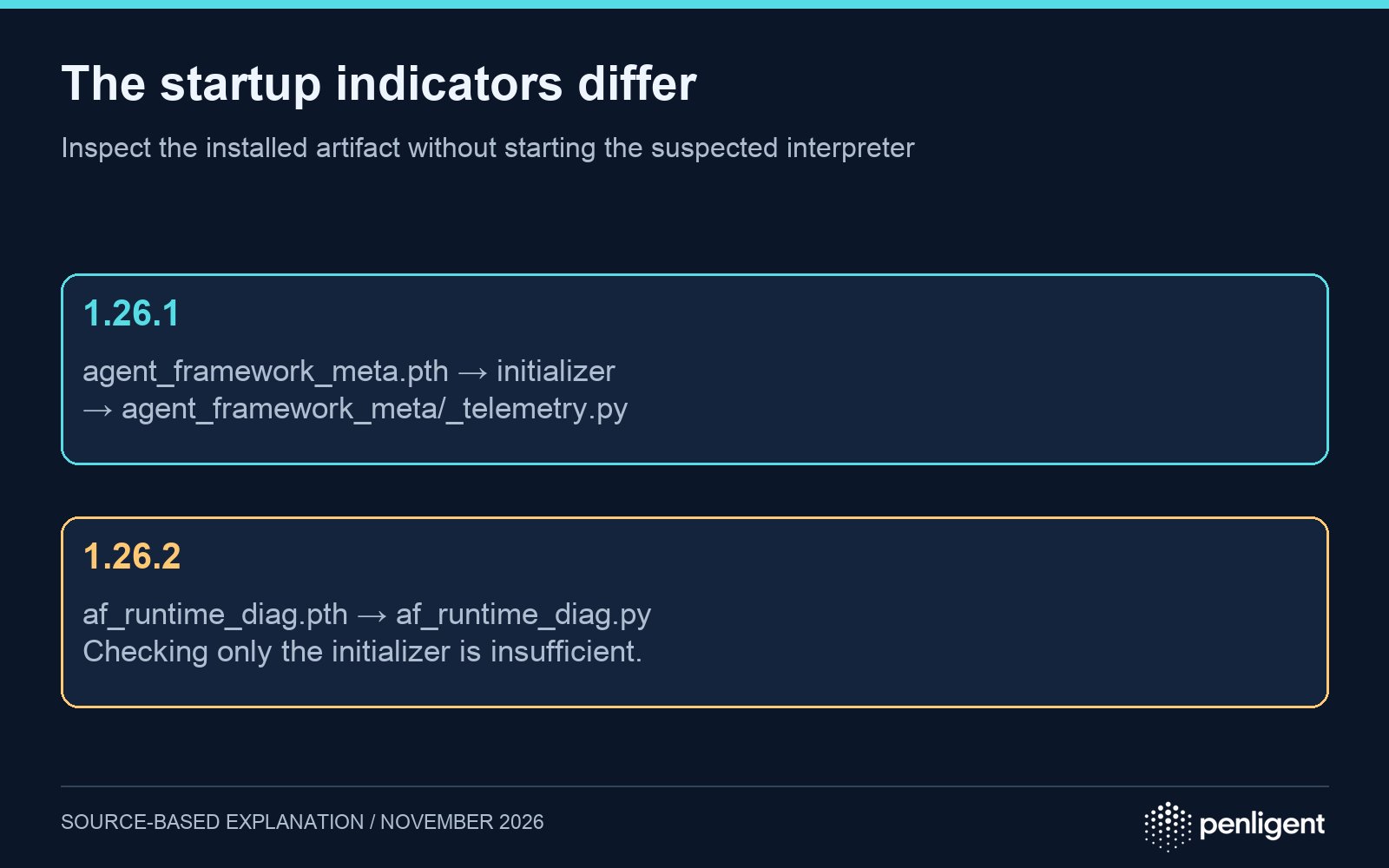
| 1.26.1 | agent_framework_meta.pth → package initializer → agent_framework_meta/_telemetry.py | Inspect the hook and package files together. |
| 1.26.2 | af_runtime_diag.pth → af_runtime_diag.py | A restored legitimate package initializer is not a clean bill of health. |
The version-specific paths above come from the original package analysis. The second release changes the startup footprint: an indicator list limited to the first package layout can miss it. Inspect archived wheels, installed files, lockfiles, package caches and image layers without launching the suspected Python interpreter.
Build an exposure ledger before rotating at random
A package inventory identifies where to look; it does not prove what happened. Create one record per virtual environment, container image, CI job or developer workstation. Keep three evidence states separate: artifact present, startup potentially occurred, and identity misuse observed. Treat an unlogged startup window as uncertainty rather than as evidence of safety.
- Artifact: record the wheel digest, installed version, source index, dependency path and build or deployment identifier. Preserve a copy under incident-handling controls.
- Execution window: correlate environment creation and Python process activity with job and host timelines. Include ephemeral runners and cached base images, not only long-lived services.
- Identity reach: list environment secrets, mounted credential files, Azure managed identities and CI federation available in that window. Record owner, permissions and revocation action for each.
The researchers describe collection of local and process-environment secrets and attempts to obtain cloud or CI credentials; Socket documents expanded GitHub Actions OIDC targeting in 1.26.2. Use the original technical report for exact indicators and payload details. Do not execute the payload to see whether a machine is affected.
Prioritize by reachable authority, not machine count
A short-lived build job with production federation can matter more than several isolated development environments. Rank records by the authority reachable during the exposure window, whether the environment started, and the quality of available evidence. This prioritization is an incident-response recommendation, not a claim that every reachable credential was stolen.
Isolate suspicious workloads, preserve relevant evidence and revoke or rotate credentials that may have been exposed. For federated identities, examine the resulting cloud sessions and trust policies as well as static secrets. Removing a package cannot undo an already issued token or an attacker action completed with it.
Verify both artifact recovery and identity containment
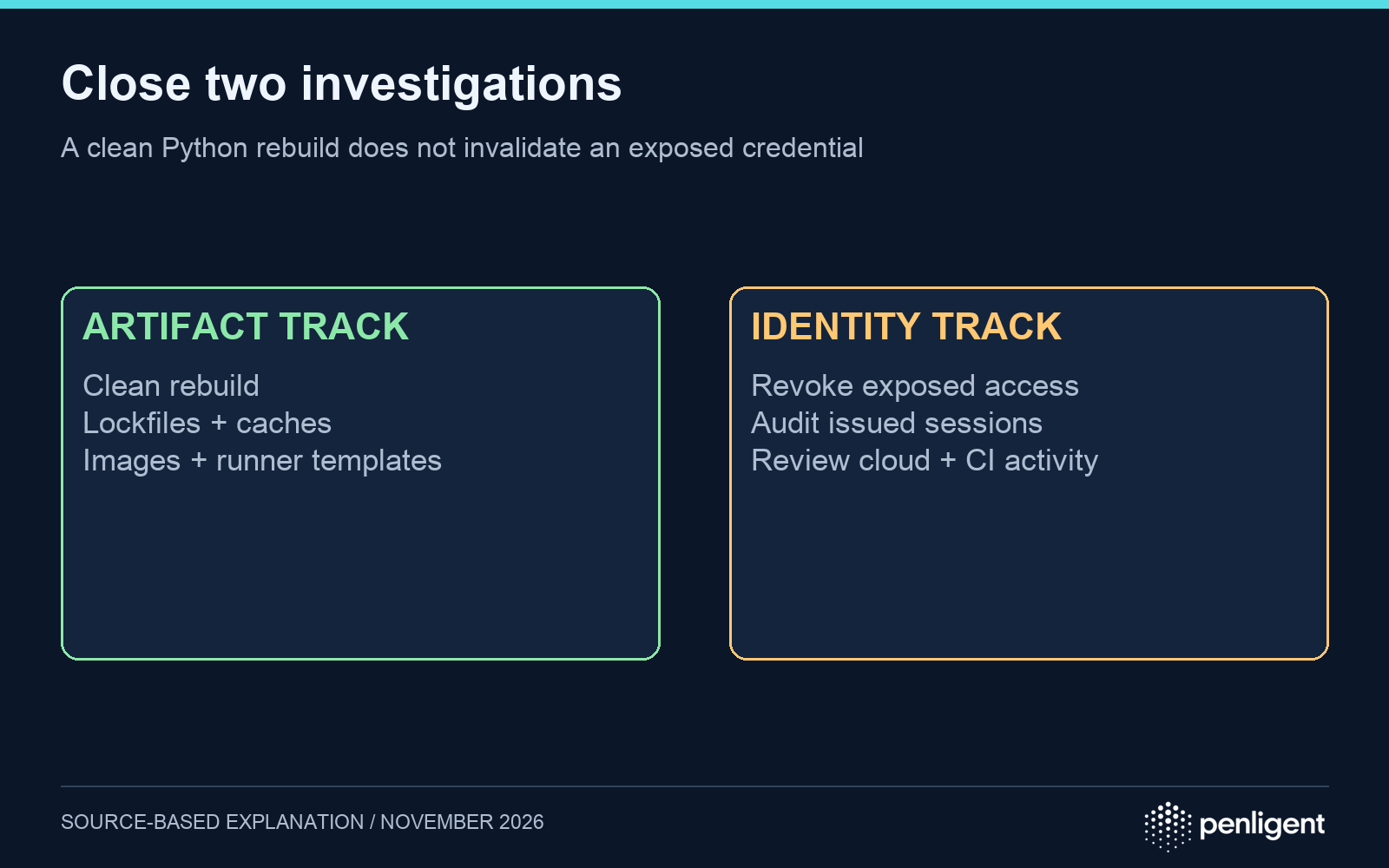
Rebuild from a trusted dependency set in a clean environment. Check that lockfiles, wheel caches, base images and runner templates no longer reintroduce either malicious release or its startup files. Version 1.26.0 is a pre-incident reference in reporting, not a blanket recommendation to downgrade every deployment; use the current trusted maintainer guidance for replacement selection.
Close the identity track separately: confirm revoked authorizations no longer work, review Azure and CI audit events across the exposure window, and investigate unusual token issuance, secret access or workflow changes. State what telemetry was unavailable. A quiet log source that never collected the relevant events cannot demonstrate absence of compromise.
For authorized follow-up validation, Penligente can be evaluated as part of a scoped security workflow. Define the identities, systems and evidence required before any automated testing; an application check alone cannot certify credential containment.
The following Penligent 3.0 video is a general product workflow demonstration. It is not incident evidence or proof that a specific compromise was remediated.
Methodology, November 18, 2026: AI-assisted synthesis of the linked original research, with version and prerequisite checks. No malicious package was executed and no first-hand incident investigation is claimed.
 Portuguese
 English
 German
 French
 Spanish
 Japanese
 Korean
 Hindi
 Arabic
 Turkish
 Hebrew