
Beyond “Free Software”: The Technical, Legal, and Operational Risks of Warez Repositories
Executive Summary
GetIntoPC has established itself as a monolithic entity in the software distribution ecosystem, providing unauthorized access to premium software suites ranging from CAD tools to IDEs. For the uninitiated, it represents a valuable resource for cost-saving. For the cybersecurity professional, however, it represents a massive, unregulated supply chain vulnerability.
This report moves beyond generic advice. We will not simply tell you that “piracy is bad.” Instead, we will dissect the technical architecture of cracked software, analyze the economic incentives of warez distribution, and explain the specific, sophisticated malware mechanisms that often accompany these downloads.
We postulate that for any entity operating within the digital economy—be it an individual developer, a creative freelancer, or an enterprise—the use of GetIntoPC constitutes an unacceptable operational risk, comparable to plugging an infected USB drive into a production server.
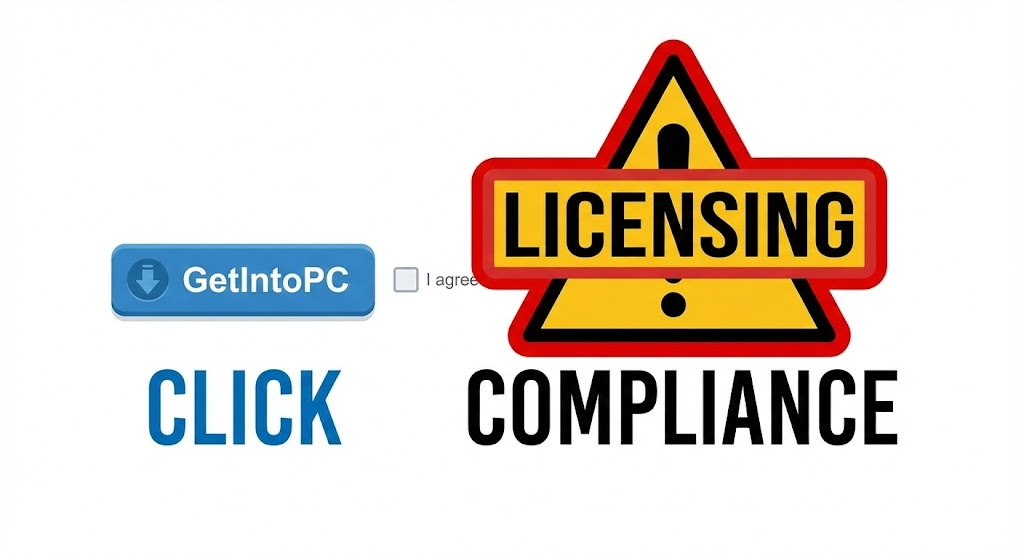
The Ecosystem of the “Scene” vs. The Distributor
To understand the risk, one must first understand the supply chain of pirated software. GetIntoPC is not a “cracker.” They are a distributor. This distinction is critical for risk assessment.
The “Scene” (The Source)
The unauthorized copying of software originates from organized groups known as “The Scene” (e.g., CODEX, R2R, EMPRESS). These groups operate under strict, albeit illegal, meritocratic rules. Historically, Scene groups prioritized reputation and technical prowess over profit. A release from a reputable Scene group, verified by its NFO (information) file and checksum, was often “clean” in the sense that it contained the crack but no additional malware.
The Distributor (The Middleman Risk)
GetIntoPC is a web-based indexer. They scrape releases from The Scene and torrent trackers, repackage them, and host them on direct download servers.
The Security Gap:
When you download a file from GetIntoPC, you are not downloading directly from the cracker. You are downloading from a third-party middleman who has:
- Physical access to the binary: They can modify the installer.
- Economic incentive: Hosting terabytes of data is expensive. The “free” model relies on monetization, often through ads, but frequently through “Pay-Per-Install” (PPI) affiliate bundles or silent crypto-mining botnets.
The Trust Chain Failure:
In cybersecurity, trust is transitive.
- Vendor trusts their Code Signing Certificate.
- Scene Group breaks the Certificate.
- Distributor repackages the broken code.
- User executes the code.
By the time the file reaches the end-user, the Chain of Trust has been broken twice. There is zero cryptographic guarantee that the binary matches the original Scene release.
Anatomy of a Crack – How Software Protection is Bypassed
To understand why cracked software is inherently unsafe, we must analyze how a “crack” functions at the Assembly level.
1. The Patch (Binary Modification)
Most software protection (DRM) works by checking a license key against a mathematical algorithm or calling a server (license.adobe.com) to verify status.
A cracker uses a debugger (like x64dbg) to find the specific JNE (Jump if Not Equal) or JZ (Jump if Zero) instruction that handles the license check.
- Original Code:
IF License_Valid == False GOTO Error_Message - Patched Code:
IF License_Valid == False GOTO Start_Program(Forced Jump)
The Risk: To apply this patch, the digital signature of the executable (.exe) or library (.dll) must be broken. Once the signature is invalid, the operating system (Windows) can no longer verify if only the jump instruction was changed, or if 5MB of malicious shellcode was appended to the file.
2. DLL Hijacking & Sideloading
Many cracks on GetIntoPC don’t modify the main .exe. Instead, they replace a legitimate DLL (e.g., steam_api64.dll or amtlib.dll) with a modified version.
When the application launches, it unknowingly loads the malicious DLL. This DLL mimics the functions of the original (so the app doesn’t crash) but strictly returns “True” for all license checks.
The Risk: This is the perfect vector for persistence. The malicious DLL runs with the privileges of the main application. If you run Photoshop as Administrator, the cracked DLL also has Administrator rights. It can spawn background threads to download payloads while you edit photos.
3. The “Keygen” (The Trojan Horse)
Key generators are executable programs that reverse-engineer the licensing algorithm to generate valid serial keys.
The Reality: Keygens are almost essentially indistinguishable from malware behaviorally. They are packed with obfuscators (like VMProtect) to hide their logic. Because they look like malware to AV scanners, users are conditioned to “Ignore the warning.” This is the ultimate social engineering feat: convincing the user to disable their own shields.
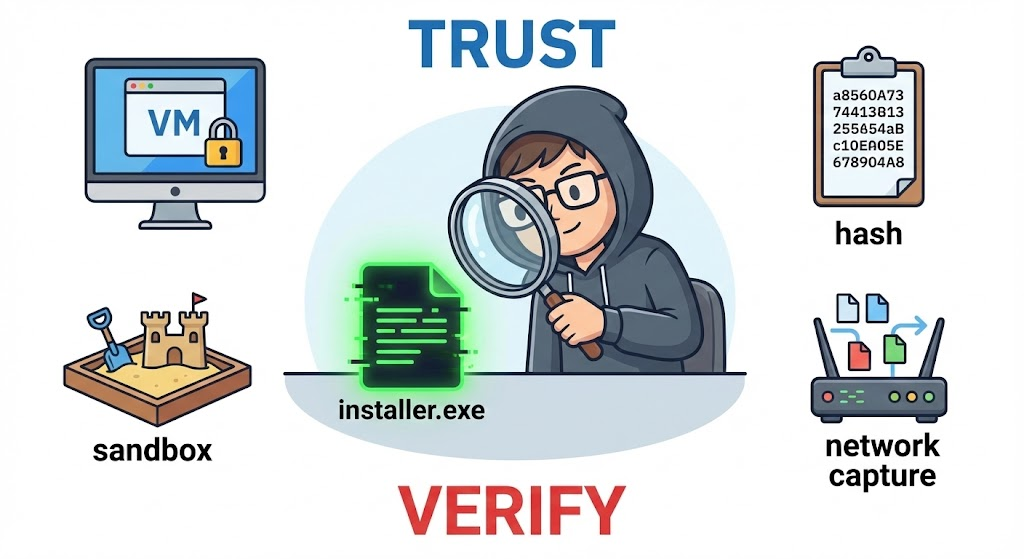
The Threat Landscape – What Actually Lives Inside?
It is a myth that all viruses “brick” computers. Modern malware, especially the kind found in 2024-2026 era software dumps, is designed to be Silent, Persistent, and Profitable.
1. Info-Stealers (RedLine, Raccoon, Vidar)
This is the single biggest threat to developers and IT professionals. These stealers do not crash your system. They run once, extract data, and self-delete (or go dormant).
Target Data:
- Browser Storage: Session cookies (bypassing 2FA on Gmail, AWS, Azure, GitHub), saved passwords, autofill data.
- Files: Recursively searching for
wallet.dat,id_rsa(SSH keys), and text files containing “password” or “secret”. - Application Data: Discord tokens, Telegram session files, Steam session files.
Scenario: You download a cracked IDE. A stealer grabs your Chrome session cookies. Even though you have 2FA enabled, the attacker imports your cookies and logs into your AWS console as you, spinning up 100 EC2 instances for mining.
2. Cryptojacking (The Resource Parasite)
Silent miners (like XMRig variants) are configured to run only when the user is idle or when Task Manager is not open. They cap CPU usage at 50-60% to avoid suspicion.
Impact: It drastically reduces hardware lifespan, increases electricity bills, and causes subtle system instability.
3. Botnet Recruitment
Your machine becomes a “zombie” node in a larger network.
- Residential Proxies: Attackers sell your IP address as a residential proxy. Criminals use your internet connection to commit credit card fraud or launch DDoS attacks. If law enforcement investigates, the IP address traces back to you.
4. Ransomware (The Nuclear Option)
While less common in “high quality” cracks to ensure longevity, ransomware like Djvu/Stop is frequently bundled in lower-tier software cracks. These encrypt your entire filesystem and demand payment. Note that modern ransomware also exfiltrates data before encryption (Double Extortion).
Technical Evasion Techniques (FUD)
Why do VirusTotal or Windows Defender sometimes report these files as “Clean”?
Polymorphism and Metamorphism
Attackers use polymorphic engines to change the binary code of the malware every time it is downloaded. The function remains the same, but the file signature (Hash) changes. This defeats signature-based antivirus detection.
Crypters and Packers
Malware is often wrapped in a “Crypter.”
- Encrypted Layer: The malware payload is encrypted on the disk. AV scanners cannot read it.
- Stub: A small, innocent-looking program (the Stub) runs first.
- Memory Injection: The Stub decrypts the payload directly into RAM (never writing the virus to the hard drive) and uses techniques like Process Hollowing (replacing the memory of a legitimate process like
svchost.exeorcalc.exewith malicious code).
To the user (and often the AV), it looks like calc.exe is running. In reality, it is a C2 beacon.
The “Air-Gap” Fallacy and Virtual Machines
Many advanced users believe they are safe because they use a Virtual Machine (VM) or a Sandbox (like Windows Sandbox).
Why this is insufficient:
- VM Escape Vulnerabilities: sophisticated malware checks if it is running in a VM (checking for VMware drivers, specific MAC addresses). While full VM escapes are rare, they are not impossible.
- Shared Resources: If you enable “Shared Folders” or “Shared Clipboard” between Host and Guest, many ransomware strains can encrypt the Host drive via the network share.
- Network Propagation: If the VM is in “Bridged” network mode, it sits on your LAN. A wormable exploit (like EternalBlue variants) can spread from the VM to your NAS, your smart TV, and your main PC.
The Golden Rule: If you must analyze malware, it should be done on a dedicated, physical machine on a segregated VLAN (Guest Network) with no access to your primary infrastructure.
Legal and Compliance – The Business Risk
For businesses, the risk extends beyond technical compromise into existential legal threats.
The Audit Trail
Software vendors (Adobe, Autodesk, Dassault Systèmes) embed telemetry in their software. Even cracked versions often fail to disable low-level “phone home” packets.
- Scenario: An architect uses a cracked version of AutoCAD. The software sends a heartbeat to Autodesk with the IP address and MAC address of the corporate network.
- Result: The company receives a legal audit request. The Business Software Alliance (BSA) can levy fines often totaling 3x the MSRP of the software for every installed instance, plus legal fees.
Supply Chain Poisoning
If a developer uses a cracked tool (e.g., a text editor, database client, or IDE) on a machine used to write code for the company:
- Malware infects the developer’s machine.
- Malware injects a backdoor into the source code being committed to the company GitHub.
- The backdoor is deployed to production.
- The company faces a massive data breach.
This is not hypothetical. The infamous CCleaner and SolarWinds attacks were results of compromised development environments.
Conclusion: The Only Winning Move
The ecosystem of GetIntoPC and similar warez sites is built on a foundation of deception. The promise of “free” is a lure used to distribute compromised code.
For the security engineer, the enthusiast, and the professional, the verdict is absolute:
No software from GetIntoPC can be trusted. The probability of a file being clean is statistically insignificant compared to the catastrophic impact of a compromise.
The Path Forward: Legitimacy and Open Source
- Embrace FOSS: The open-source community provides enterprise-grade alternatives (Blender, KiCad, VS Code, DaVinci Resolve, Linux).
- SaaS Subscriptions: Shift to monthly billing models which are easier to budget than perpetual licenses.
- Hardening: If you are a security researcher analyzing these files, assume total compromise. Use isolated VLANs, deep-freeze software (like Deep Freeze), and never input personal credentials.
Appendix: Indicators of Compromise (IoC) Checklist
If you suspect a machine has been compromised by a GetIntoPC download, look for these signs:
- Exclusions in Windows Defender: Malware often adds its own installation folder to the Defender “Exclusion” list via PowerShell scripts.
- Modified Hosts File: Check
C:\\Windows\\System32\\drivers\\etc\\hosts. Cracks often blockadobe.comorautodesk.comto prevent license checks, but they may also redirect security update sites. - Startup Items: Check Task Manager -> Startup for “Program” (entries with no name/icon) or scripts running from
AppData/Roaming. - High GPU Usage at Idle: Indicates a cryptominer.
- Disabled Updates: Windows Update service is permanently disabled.
 English
  German
  French
  Spanish
  Portuguese
  Japanese
  Korean
  Hindi
Hindi  Arabic
  Turkish
  Hebrew