
The wrong question ruins this comparison before it starts
Most comparisons in this category collapse into the wrong question. They ask whether the cheaper tool is “good enough,” whether the open-source tool is “basically the same,” or whether a system that can autonomously exploit a vulnerable lab target must therefore be the better product. That framing misses the engineering problem. In 2026, the important question is not whether an AI-assisted pentesting tool can do something impressive in isolation. The important question is whether it can operate as a reliable part of a real security workflow, preserving context across recon, auth, exploitation, validation, reporting, and retesting without creating more operational drag than it removes. That is the same direction you see in the PentestGPT research, in current practitioner-facing explainers from Aikido, and in current product comparisons from Escape: context, exploitability, business logic, and reproducible evidence are what separate a demo from a tool that security teams actually keep using. (USENIX)
That is also why Shannon AI pentesting tool vs Penligent is a useful comparison. Publicly documented Shannon materials show a focused, technically interesting autonomous AI pentester built around white-box analysis and proof-by-exploitation. Publicly documented Penligent materials show a broader productized platform framing itself as an end-to-end AI-powered penetration testing agent with integrated tooling, operator controls, customizable reporting, and a workflow designed for repeated use rather than one-off experimentation. Those are not identical categories, even if the marketing vocabulary overlaps. If you compare them only on the surface label of “AI pentesting,” you will misunderstand both of them. (GitHub)
The fairest way to evaluate them is to step back from branding and measure each tool against what recognized security guidance still says penetration testing is supposed to do. NIST SP 800-115 remains clear that technical security testing is about planning tests, conducting them, analyzing findings, and developing mitigation strategies, not just generating alerts. OWASP’s Web Security Testing Guide still treats web testing as a discipline that spans information gathering, architecture and framework mapping, authentication, authorization, input handling, session management, and business logic. OWASP’s current Top 10 and API Security guidance reinforce the same message: the hardest modern failures are often access control, authorization, state, and logic, not just reflected payloads or old-school scan signatures. (NIST-Ressourcenzentrum für Computersicherheit)
That broader frame matters because many current “AI pentesting” claims still boil down to one of three narrower things. First, some tools are really scanner-plus-chatbot products, where the model mainly interprets existing output. Second, some are research or open-source agent frameworks that are genuinely interesting but optimized for specific operating assumptions, such as source-code access or a lab-style workflow. Third, some are productized offensive platforms that try to collapse reconnaissance, validation, reporting, and operator control into a repeatable system. Shannon, at least in its publicly documented Lite form, fits most naturally into the second category. Penligent is publicly positioned in the third. That does not make one automatically superior. It does mean the comparison should be about fit, workflow depth, and total operational value, not a shallow “free versus paid” argument. (GitHub)
What the public sources agree on about AI pentesting in 2026
One of the most useful things about the current AI pentesting market is that even competing sources are converging on the same evaluation criteria. The PentestGPT paper showed that LLMs can materially improve certain penetration-testing sub-tasks, especially using tools, interpreting outputs, and proposing next actions, but it also highlighted a central weakness: models struggle to preserve the full context of an engagement across time and subtasks. The paper’s response to that problem was architectural, not magical: break the workflow into interacting modules to reduce context loss. That is a foundational insight for any serious comparison in this space. (USENIX)
Aikido’s explainer reaches a very similar conclusion from a product angle. It argues that “Pentest GPT” is not just a chatbot with a security prompt. It becomes meaningful when the model is wired into actual tools and data sources, can reason across multi-step attack paths, and can connect scanner output, exploitation logic, and remediation into something coherent. In other words, the model is the reasoning layer, but the value lives in the system wrapped around it. (Aikido)
Escape’s 2026 comparison pages land on the same operational criteria with more emphasis on modern application behavior. Their current writing repeatedly highlights business-logic flaws, authenticated flows, state transitions, exploitability proof, asset linkage, and developer-ready remediation. Whether or not you agree with Escape’s product positioning, the useful part is the framework: a credible AI pentesting system should be able to model application behavior, survive authentication complexity, discover authorization problems such as BOLA and IDOR, provide evidence, and support continuous retesting as software changes. That is an unusually practical lens for comparing Shannon and Penligent, because it makes the decision less ideological and more grounded in real application security work. (Escape)
This convergence across academic research, OWASP guidance, and current market explainers is important because it exposes a common buyer mistake. Many engineers still instinctively compare tools by asking which one can produce the most dramatic exploit demo. But in day-to-day security work, the harder and more expensive problem is almost never “can a model propose an attack.” It is “can a system keep state, understand scope, avoid wasting time, generate trustworthy evidence, and produce output another engineer can act on.” Once you adopt that frame, the center of gravity shifts away from price and novelty and toward architecture, workflow design, and operational discipline. (USENIX)
What Shannon actually is, based on public documentation
The most concrete, verifiable public artifact for Shannon is the KeygraphHQ/shannon repository. There, Shannon Lite is described as an autonomous, white-box AI pentester for web applications and APIs that analyzes source code, identifies attack vectors, and executes real exploits to prove vulnerabilities before production. Its documented model is clear and refreshingly specific: source-aware testing, live exploitation, and a strict “no exploit, no report” philosophy. Shannon’s architecture is documented as a four-phase workflow of reconnaissance, vulnerability analysis, exploitation, and reporting, using Anthropic’s Claude Agent SDK within a multi-agent system. It integrates source-code analysis with browser automation and command-line tooling, and its reports include only validated findings with reproducible proof-of-concept artifacts. (GitHub)
That public README also gives Shannon real credibility, because it does not pretend to be universal. It states that Shannon Lite is white-box only and expects access to the application’s source code and repository layout. It also states that the current version specifically targets a bounded set of vulnerability classes: broken authentication and authorization, injection, XSS, and SSRF. It explicitly says Shannon Lite will not report issues it cannot actively exploit, such as vulnerable third-party libraries or insecure configurations, and notes that deeper graph-based analysis belongs to Shannon Pro. For readers evaluating tools honestly, those limitations are not a weakness in the documentation. They are a strength, because they define the product’s center of gravity. (GitHub)
Shannon also publishes concrete performance and operating assumptions. The README says a full run typically takes around 1 to 1.5 hours and may cost around $50 when using Anthropic Claude 4.5 Sonnet, depending on model pricing and application complexity. It warns that output quality depends heavily on the model, that alternative providers may produce inconsistent results, and that the tool is optimized primarily around Anthropic Claude models. It also warns that Shannon is not a passive scanner, that it may have mutative effects on targets, and that it is intended for sandboxed, staging, or local development environments rather than production. Those are not side notes. They are a material part of total cost of ownership and deployment fit. (GitHub)
The repo also publishes benchmark and sample-report claims. Shannon says it identified more than 20 vulnerabilities in OWASP Juice Shop, over 15 high or critical issues in both c{api}tal API and OWASP crAPI, and scored 96.15 percent, or 100 out of 104 exploits, on a hint-free, source-aware variant of the XBOW security benchmark. Those are impressive published claims, and they explain why Shannon has drawn attention in hands-on writeups and security media. At the same time, they reinforce the exact point this article is making: Shannon is strongest when framed as a focused, source-aware, exploit-validating autonomous tester, not as a general answer to every AppSec or pentesting workflow. (GitHub)
There is one more detail in the public docs that matters for a serious security buyer. Shannon Lite is released under AGPL-3.0, and the repo explains that while internal use is free, managed-service scenarios trigger the AGPL’s source-sharing requirements for modified core software. The same docs also warn that, like any AI system reading code, Shannon Lite is susceptible to prompt injection from content in the scanned repository. That means Shannon’s “free” profile comes with specific licensing, engineering, and threat-model implications. Open source is absolutely a feature. It is not the same thing as zero operational cost or zero security risk. (GitHub)
What Penligent actually is, based on public documentation
Penligent’s public documentation positions it differently. Its official overview page describes Penligent as a professional-grade, end-to-end AI-powered penetration testing agent that merges tools like nmap, Metasploit, Burp Suite, and SQLmap into an AI-driven workflow. The same page describes a unified flow from asset discovery to vulnerability scanning, exploit execution, attack-chain simulation, and final report generation. Instead of centering the public story on source-aware white-box exploitation, Penligent centers it on a broader operational workflow: natural-language interaction, tool orchestration, context retention, execution, and report output. (Sträflich)
Its public pages also emphasize usability and productization in ways that are materially different from Shannon Lite’s repo-first posture. The official overview states that users can speak to the AI naturally, without syntax or scripts, and that the agent understands context, recommends next steps, executes tools, interprets output, adapts strategy, and produces a compliance-ready report. The homepage reinforces that positioning with explicit workflow language such as Find Vulnerabilities, Verify Findings, Execute Exploits, and shows report-generation and export features with fully customizable editing. It also highlights operator control with the wording Edit prompts, lock scope, and customize actions for your environment. Those signals matter because they point to a platform designed not just to run offensive logic, but to make that logic governable and deliverable across different user profiles. (Sträflich)
Penligent’s official overview also claims broader environment and workflow support: Windows, macOS, and Linux support, AI-assisted installer and setup, visual attack chains, dynamic risk ranking, collaboration features, and export formats mapped to standards and frameworks. Some of those claims are inevitably vendor claims rather than independent lab validation, but they still tell us what category the product is trying to occupy. This is not positioned as a narrowly scoped white-box exploit engine. It is positioned as a broader productized offensive workflow system intended to reduce friction from tool setup through reporting. Public Penligent materials and recent Penligent comparison articles consistently reinforce the same point: integrated tooling, exploit verification, reporting, operator control, and a continuous workflow matter more than whether the interface is simply “AI flavored.” (Sträflich)
That difference in public posture is what makes the phrase “more systematic” meaningful here. A system is not just a collection of features. In security operations, a system reduces transitions. It reduces the number of times a human has to reframe context between recon and validation, between an exploit attempt and a report, between a finding and a retest. Public Penligent materials are unusually explicit about trying to collapse those transitions. Shannon Lite’s public docs, by contrast, are explicit about building a strong source-aware exploitation engine. Those are both legitimate product choices, but they solve different layers of the security workflow. (Sträflich)
The comparison changes depending on whether you mean Shannon Lite or Shannon Pro
One fairness issue has to be addressed directly. When people say “Shannon,” they often mix together three different things: the public Shannon Lite repo, the broader Keygraph positioning around Shannon Pro, and various secondary writeups that summarize Shannon as a general autonomous AI pentester. If you are comparing Shannon Lite to Penligent, you are comparing a public, AGPL, white-box, source-aware exploit-validation framework to a productized end-to-end platform. If you are comparing Shannon Pro to Penligent, the comparison becomes more direct, because Shannon Pro’s public README claims broader AppSec features including SAST, SCA, secrets scanning, business-logic testing, static-dynamic correlation, CI/CD integration, and self-hosted deployment. (GitHub)
That means an intellectually honest comparison cannot just say “Shannon is a free open-source pentester and Penligent is paid.” That statement is too shallow to be useful. The public Shannon Lite artifact is indeed open and free to run internally under AGPL terms, but the same public docs also say it depends on model APIs, takes significant runtime, expects source access, targets specific vulnerability classes, and warns about prompt injection and mutative effects. Meanwhile Shannon Pro, at least by public claim, expands into a much broader platform category. Penligent, by public claim, is already positioned in that broader category. So the real question is not “free versus paid.” It is which layer of the workflow are you actually buying or adopting. (GitHub)
A structured comparison, Shannon Lite, Shannon Pro, and Penligent
| Dimension | Shannon Lite, public repo | Shannon Pro, public claims | Penligent, public claims |
|---|---|---|---|
| Core model | Autonomous white-box AI pentester for web apps and APIs | All-in-one AppSec platform with autonomous pentesting plus static analysis capabilities | End-to-end AI-powered penetration testing agent |
| Primary input assumption | Source code and repository layout expected | Source-aware plus broader AppSec pipeline | Workflow-centered product, asset discovery through reporting |
| Publicly emphasized strengths | Source-aware exploit validation, no exploit no report, reproducible PoCs | Static-dynamic correlation, SAST, SCA, secrets, business logic testing | Integrated tooling, natural-language operation, exploit verification, customizable reports, operator controls |
| Publicly documented coverage limits | Lite targets auth/authz, injection, XSS, SSRF and does not cover everything, especially unexploitable static/config issues | Broader by claim than Lite | Broader operational workflow by claim than Lite |
| Reporting model | Verified findings only, saved logs, prompt snapshots, Markdown deliverables | Correlated findings with source code locations by claim | One-click reports with customizable editing, export and workflow delivery |
| Operator model | Single-command autonomous run with staging-oriented caution | Commercial platform | Agentic workflows you control, prompt editing, scope locking |
| Deployment posture | AGPL internal use, model API keys, repo-centric setup | Commercial, self-hosted runner model by claim | Product platform across major desktop OSes by official overview |
| Best-fit buyer | Security engineer with source access and tolerance for framework-style setup | Org wanting broader integrated AppSec from Keygraph | Individual or team wanting lower-friction end-to-end offensive workflow and deliverables |
The table above is distilled from Shannon’s README and public product-line notes, along with Penligent’s official overview and homepage materials. It is not a substitute for a private proof of concept, but it is enough to show why the lazy “free is better” conclusion does not survive contact with the actual documentation. (GitHub)
Why free and cheap are not the same as better
Security engineers learn this lesson over and over in other categories, and AI pentesting is no exception. A tool can have zero license cost and still create a higher total cost of ownership once you include environment setup, model spend, engineering time, operational review, artifact management, retraining of users, and the friction of translating raw output into something another team can consume. Shannon Lite’s own public documentation gives us enough data points to see that clearly: it has model costs, nontrivial runtime, bounded coverage, source-code assumptions, and staging-only caution for mutative effects. Those are all perfectly reasonable tradeoffs for the kind of tool it is. They are also all forms of cost. (GitHub)
This is the central reason the “free beats paid” thesis falls apart in real teams. If your organization wants a source-aware autonomous exploit engine for internal applications and your engineers are comfortable owning the framework layer, Shannon Lite can be an excellent fit. But if your organization wants a repeatable workflow that a broader set of users can run, constrain, report on, and hand off with less friction, then a more productized system can be cheaper in practice even when the sticker price is higher. That is not a philosophical point. It is a workflow-economics point. The more security work depends on transitions between people and stages, the more value accumulates around systems that reduce those transitions. (Sträflich)
Open source also solves a different problem than productization. Open source can maximize transparency, hackability, and control. Productization can maximize adoption, repeatability, safety controls, and stakeholder delivery. Sometimes those values align. Sometimes they trade off. Shannon Lite’s AGPL model and repository-centered setup are attractive precisely because they expose more of the mechanics to an expert user. Penligent’s public materials are attractive for the opposite reason: they emphasize collapsing the mechanics into a guided workflow with operator boundaries and report outputs. Which one is “better” depends on whether your bottleneck is offensive ingenuity or operational continuity. (GitHub)
The real engineering dimensions that matter more than brand
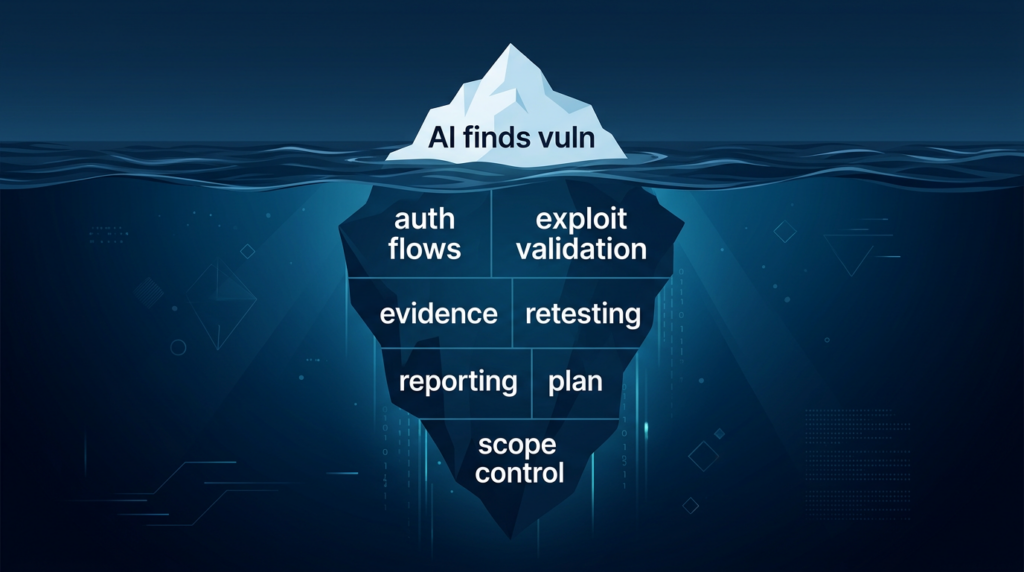
The first dimension is context retention. The PentestGPT paper made this problem explicit two years ago: LLM systems can be surprisingly competent at local subtasks while still failing at the whole engagement because they lose context across steps. Any tool that cannot maintain a stable internal model of targets, identities, endpoints, and hypotheses will end up repeating work or hallucinating confidence. Shannon tries to address this with a multi-agent architecture and structured phases. Penligent’s public materials address it through integrated workflow and tool orchestration. The important point is not which buzzword you prefer. The important point is whether the tool prevents context from leaking out into scratchpads, chats, or manual retest rituals. (USENIX)
The second dimension is authentication and authorization resilience. OWASP API guidance continues to treat Broken Object Level Authorization as the number-one API risk for a reason. Real applications fail at roles, object references, tenant boundaries, and state transitions. Escape’s 2026 writing repeatedly emphasizes that AI pentesting becomes meaningfully different from traditional DAST when it can model sessions, roles, and states rather than just crawl URLs and fire payloads. Shannon Lite’s public scope includes auth and authz classes, which is a positive signal. Penligent’s public materials emphasize end-to-end workflows, attack-chain simulation, and verification, which also point in the right direction. But any serious buyer should test these claims directly against role changes, token refresh, tenant isolation, and stateful flows, because that is where “AI pentest” products most often reveal whether they are substantial or superficial. (OWASP)
The third dimension is evidence quality. Shannon’s “no exploit, no report” policy is one of the strongest parts of its public design. Penligent’s public materials similarly emphasize verification and report output rather than just raw findings. This matters because modern security teams are drowning in signal. They do not need another engine that produces plausible but unverified alerts. They need systems that distinguish hypothesis from validated impact and that leave behind artifacts another engineer can reproduce. In practice, this is where many AI products quietly fail. They can generate offensive text much faster than they can generate defensible evidence. If you only remember one criterion from this article, remember that one. (GitHub)
The fourth dimension is control. Autonomous offense without operator boundaries is not maturity. It is risk transfer. Shannon’s public documentation is at least honest enough to warn that the tool is mutative and should not be run against production. Penligent’s homepage explicitly foregrounds scope locking and prompt editing. Those details matter because authorized offensive testing is not just about finding issues. It is about doing so inside defensible operating boundaries. For many teams, the real difference between a framework they admire and a platform they adopt comes down to how well the tool supports scope control, logs, exports, and repeatable governance. (GitHub)
What recent CVEs tell us about the kind of tool you actually need
It is easy to lose sight of why this comparison matters until you look at the kinds of vulnerabilities that continue to dominate real defensive work. The last two years of high-impact disclosures make the same point over and over again: version detection alone is not enough, exploit generation alone is not enough, and “AI” alone is certainly not enough. What matters is environment-aware validation, privilege context, role modeling, chainability, and evidence.
Take ConnectWise ScreenConnect CVE-2024-1709. NVD describes it as an authentication bypass using an alternate path or channel in ScreenConnect 23.9.7 and earlier, potentially allowing direct access to confidential information or critical systems. ConnectWise’s own bulletin urged immediate updates to version 23.9.8 or higher. What matters here for a pentesting tool is not just matching the CVE to a version string. It is determining whether the relevant management surface is exposed, whether the affected flow is reachable, what the identity implications are, and what evidence you can hand to the owner fast enough to matter. A cheap tool that only recognizes the CVE is doing the easy 10 percent of the work. (NVD)
PAN-OS CVE-2024-3400 made the same lesson harsher. Palo Alto Networks described it as a command injection vulnerability resulting from arbitrary file creation in the GlobalProtect feature for certain PAN-OS versions and configurations, enabling unauthenticated RCE with root privileges on affected firewalls. That is not a case where “AI-generated payload ideas” are the hard part. The hard part is understanding whether the target configuration and feature set match the advisory, what internet exposure exists, and how to validate risk safely and responsibly in the presence of real production infrastructure. Tools that cannot connect versioning, exposure, reachability, and evidence will always look better in demos than in incidents. (sicherheit.paloaltonetworks.de)
Ivanti Connect Secure CVE-2025-0282 drives the point further. NVD describes it as a stack-based buffer overflow that allows remote unauthenticated RCE on affected Ivanti gateways before patched versions. Ivanti’s January 2025 security update said it was aware of limited active exploitation and published fixes. Once again, what defenders needed was not a prettier explanation of the CVE. They needed rapid validation of whether the vulnerable edge appliance existed, whether exploitation preconditions were present, and whether post-disclosure verification could be automated without creating false confidence. If your AI pentesting workflow stops at “this product might be vulnerable,” you are leaving the hardest operational step unfinished. (NVD)
Now look at Veeam Backup & Replication in March 2026. Veeam’s official KB on vulnerabilities resolved in Backup & Replication 12.3.2.4465 lists multiple high and critical issues, including CVE-2026-21666 und CVE-2026-21667, both described as vulnerabilities allowing an authenticated domain user to perform RCE on the backup server. This matters because it reminds us that real offensive validation often lives in internal infrastructure, role edges, and privileged management platforms, not just shiny public web apps. A tool that is “cheap and autonomous” but weak on identity context, role transitions, or report handoff can still be the wrong tool for the most business-critical risks in the environment. (Veeam Software)
The same pattern appears in newer 2026 application-layer disclosures. NVD describes CVE-2026-26273 in the Known publishing platform as a critical broken-authentication flaw where a password-reset token is leaked in a hidden HTML input field, enabling unauthenticated account takeover. NVD describes CVE-2026-30855 in WeKnora, an LLM-powered framework, as an authorization bypass in tenant-management endpoints that can be exploited after account registration. These are modern examples of what OWASP keeps telling us: the hard failures in contemporary apps are still auth, authz, tenant isolation, and logic. A tool that can only do classic input-based exploit theatrics is not enough. It has to model identity boundaries and application state. (NVD)
That is why the product comparison should not reward the cheapest interface or the flashiest exploit reel. It should reward the tool that helps a security engineer answer the questions that actually matter in live environments: Is the vulnerable component really here. Is it reachable. Under what identity. Across what role boundary. With what blast radius. And can I leave behind a report that another person can verify without re-running my entire thought process. Shannon’s proof-oriented architecture is valuable precisely because it takes exploit validation seriously. Penligent’s broader workflow story is valuable precisely because it takes the full offensive-to-delivery chain seriously. Recent CVEs tell us we need both instincts, but not always from the same product. (GitHub)
Where Shannon is genuinely strong
A fair article should say this clearly: Shannon is not interesting because it is free. Shannon is interesting because it is opinionated in a technically meaningful way. It takes a white-box, source-aware view of offensive testing and combines that with live exploitation and a strict validation threshold. If you have source code, control the environment, and want an autonomous system that can reason over code and then try to prove impact against the running application, Shannon is one of the more serious public artifacts in this space right now. Its published documentation is specific, its constraints are explicit, and its design center is stronger than many generic “AI hacker” pitches. (GitHub)
Shannon is especially compelling for teams that value transparency and are comfortable with framework-style ownership. The AGPL model, repo-based workflow, prompt snapshots, agent logs, and saved deliverables make sense for engineers who want to inspect and control the system rather than consume it as a polished black box. For internal security teams testing their own applications in local or staging environments, that can be a very good trade. The public Shannon docs even make the threat model clearer than some commercial products do, which is a real compliment. They tell you what the tool is for, what it does not cover, how much it may cost to run, and what kinds of operational risks you are taking on. (GitHub)
If your world is source-available internal software and you want a high-agency autonomous tester with strong exploit-verification discipline, Shannon may be closer to the metal in a way that is genuinely useful. In that scenario, paying for a broader platform you do not need can absolutely be wasteful. This article is not arguing that Shannon is weaker because it is open or cheap. It is arguing that Shannon is strongest when used for the job its public documentation actually describes. (GitHub)
Where Penligent looks more systematic
The strongest case for Penligent is not simply “it does more things.” Plenty of weak products do more things on paper. The stronger case is that Penligent’s public materials line up with the operational reality that current guidance and current market writing keep circling back to: offensive work becomes expensive at the handoff points. Recon lives in one pane, scanner output in another, exploit notes in a terminal log, remediation in a ticket, and reporting in a separate editing loop. The more a platform collapses those transitions without removing human control, the more it behaves like infrastructure rather than a clever demo. Penligent’s public positioning is unusually explicit on exactly those points: tool integration, context-aware execution, scope control, verification, and report generation. (Sträflich)
That is what I mean by more systematic. A systematic tool is not one that merely adds more vulnerability categories. It is one that turns a sequence of fragile manual bridges into a repeatable path. Public Penligent materials present the platform as spanning asset discovery, scanning, exploit execution, attack-chain simulation, and final reporting. The homepage shows exportable, editable reporting. The product language highlights scope locking and action customization. Those are the kinds of features that matter when the audience includes not just an individual operator, but engineering managers, auditors, customers, or security teams that need repeatability and shared visibility. (Sträflich)
This is also why “not free and cheap is best” is not a marketing slogan here. It is an engineering claim about system boundaries. If a paid platform reduces setup burden, preserves engagement context better, constrains operator risk more cleanly, and produces outputs that can move directly into remediation or stakeholder communication, it may deliver more value than a free framework even when the free framework is technically excellent in its own lane. That does not diminish Shannon. It simply acknowledges that product completeness und framework elegance are different virtues. Publicly, Penligent appears to be optimizing for the former. Publicly, Shannon Lite appears to be optimizing for the latter. (GitHub)

A practical test plan for evaluating both tools honestly
If you are serious about evaluating Shannon and Penligent, do not buy the sales story from either side. Run a controlled assessment that forces both tools into the same engineering reality.
Start with a target set that includes one ordinary authenticated web app, one API with tenant isolation, one workflow with role switching, and one environment where you can safely test version-aware CVE validation. Then grade both tools on four things: context retention, authenticated-flow resilience, evidence quality, and deliverable quality. This is closer to how NIST and OWASP think about testing than a toy benchmark is. (NIST-Ressourcenzentrum für Computersicherheit)
A simple internal rubric can look like this:
evaluation:
  targets:
    - staging-webapp
    - staging-api
    - role-switch-workflow
    - cve-validation-sandbox

  scoring:
    target_modeling: 20
    auth_and_state_handling: 20
    exploit_validation: 25
    reporting_and_artifacts: 15
    operator_control_and_scope_safety: 10
    retest_repeatability: 10

  pass_conditions:
    - findings must distinguish hypothesis from verified impact
    - reports must include enough evidence for another engineer to replay
    - test runs must stay inside the authorized scope
    - role-based and tenant-based issues must be evaluated explicitly
Then run the same safe, authorized workflow repeatedly instead of relying on a single lucky session:
#!/usr/bin/env bash
set -euo pipefail

TARGET="${1:-https://staging.example.internal}"
SCOPE_FILE="./scope.txt"
ARTIFACTS_DIR="./artifacts/$(date +%F-%H%M%S)"

mkdir -p "$ARTIFACTS_DIR"

echo "[*] Authorized target: $TARGET"
echo "[*] Scope file: $SCOPE_FILE"
echo "[*] Saving artifacts to: $ARTIFACTS_DIR"

# Example pre-checks you want every tool to preserve
curl -sI "$TARGET" > "$ARTIFACTS_DIR/headers.txt"
curl -sk "$TARGET/health" > "$ARTIFACTS_DIR/health.txt" || true

# Replace the following with each product's approved, non-production workflow
echo "[*] Run AI pentest only against owned, staging, or sandbox targets"
echo "[*] Preserve screenshots, request logs, findings, and final reports"
echo "[*] Compare replayability, not just finding count"
This kind of evaluation surfaces the real differences quickly. Did the tool survive login and session changes. Did it understand object-level authorization. Did it produce evidence or just plausible text. Could another engineer replay the result. Did the report need complete manual rewriting. Those questions will tell you more in one afternoon than fifty launch-post comparisons will. They also force the Shannon-versus-Penligent decision back into the world of engineering, which is where it belongs.
The honest answer is that there is no single universal winner, because the products are solving slightly different layers of the problem.
If you are evaluating Shannon Lite as a source-aware autonomous exploit-validation framework, then Shannon is one of the most interesting public tools in the category. Its white-box model, strong exploit-verification standard, explicit scope, saved artifacts, and published benchmark posture make it more serious than a lot of generic AI-offense branding. For source-available internal applications, it can be exactly the right kind of tool. (GitHub)
If you are evaluating Penligent as a productized end-to-end AI pentesting workflow, then the public evidence points in a different direction. Penligent looks more complete as a system: integrated toolchain, natural-language orchestration, operator controls, verification, customizable reporting, and a stronger emphasis on workflow continuity from discovery to delivery. For many individual users, bug bounty operators, or teams that care about repeatability and handoff quality, that system-level completeness is more valuable than a narrower white-box framework, even if the framework is technically elegant. (Sträflich)
If you are evaluating Shannon Pro, the comparison becomes closer, because Shannon Pro’s public claims move significantly beyond Lite into broader integrated AppSec territory. At that point the decision becomes less about open source versus product and more about which platform better fits your environment, operating model, and reporting workflow. But based on the most concrete public materials available today, the strongest clean conclusion is this:
Shannon is compelling when you want a source-aware autonomous exploit engine. Penligent is compelling when you want a more systematic offensive workflow platform.
And that is the deeper point this keyword deserves. In AI pentesting, the cheapest tool is not automatically the best tool. The best tool is the one whose architecture matches the actual shape of your security work.
Further reading
- PentestGPT, Evaluating and Harnessing Large Language Models for Automated Penetration Testing, USENIX Security 2024 (USENIX)
- OWASP Web Security Testing Guide, latest (OWASP)
- OWASP API1:2023 Broken Object Level Authorization (OWASP)
- NIST SP 800-115, Technical Guide to Information Security Testing and Assessment (NIST-Ressourcenzentrum für Computersicherheit)
- Shannon Lite by Keygraph, official GitHub repository (GitHub)
- ConnectWise ScreenConnect 23.9.8 security bulletin (ConnectWise)
- Palo Alto Networks advisory for CVE-2024-3400 (sicherheit.paloaltonetworks.de)
- Ivanti advisory for CVE-2025-0282 and CVE-2025-0283 (Ivanti Innovators Hub)
- Veeam KB4830, vulnerabilities resolved in Backup & Replication (Veeam Software)
- NVD entry for CVE-2026-26273 (NVD)
- NVD entry for CVE-2026-30855 (NVD)
- Penligent, official site (Sträflich)
- Overview of Penligent.ai’s Automated Penetration Testing Tool (Sträflich)
- AI Pentest Tool, What Real Automated Offense Looks Like in 2026 (Sträflich)
- The 2026 Ultimate Guide to AI Penetration Testing, The Era of Agentic Red Teaming (Sträflich)
- PentestGPT vs. Penligent AI in Real Engagements (Sträflich)
- Best AI Model for Pentesting, What Security Engineers Should Actually Use in 2026 (Sträflich)
 German
  English
  French
  Spanish
  Portuguese
  Japanese
  Korean
  Hindi
Hindi  Arabic
  Turkish
  Hebrew